
Sprinkler Lawn Repair: Costs, Causes, DIY Fixes, and Pros
A sprinkler zone that sputters, geysers, or leaves brown patches is costing you water and slowly damaging your turf. In Central Florida, where summer heat and sandy soil dry grass out fast, you want to know what is wrong and who can fix it. Quick sprinkler lawn repair keeps a small leak from turning into a dead lawn and a high water bill.
Here is the short answer. A broken head or clogged nozzle is often a simple DIY fix that costs under $20 in parts. Cracked pipes, bad valves, and wiring faults are different. Those usually call for a licensed irrigation pro , and repairs commonly run from about $75 for a minor fix to several hundred dollars for buried line damage.
Below, you will learn the most common causes of sprinkler failure, how to replace a head yourself, and what repairs typically cost. You will also see when to call a professional. At TWQ, we have installed and repaired irrigation systems across Sebring and Highlands County for over 20 years, so we will point out the warning signs we see most often.
What causes sprinkler systems to fail
Most failures come from a short list of causes. Once you know them, you can tell whether you are facing a weekend DIY job or a call to a sprinkler repair pro .
Damage, clogs, and wear
Mowers, string trimmers, and car tires break more heads than anything else. Heads sit right at grass level, and plastic turns brittle after years of Florida sun. A cracked head or riser shows up as a geyser or a flooded spot. Shifting sandy soil and tree roots can also crack buried lines, which leads to soggy patches and low pressure elsewhere in the zone.
Water quality is the quiet culprit. Well and lake water in Highlands County carries sand, rust, and minerals that clog nozzles and filters . The result is weak spray and dry wedges in the turf. Rust-colored stains on a sidewalk or wall point to iron in your water supply.
Valve and electrical faults
Zones that refuse to start usually point below the surface or to the controller. A stuck valve, a failed solenoid , a chewed wire, or a dead timer battery can all keep water from flowing. Summer lightning also fries controllers more often than people expect. Use the table to match what you see with the likely cause.
| What you see | Likely cause | Who fixes it |
|---|---|---|
| Geyser at one head | Broken head or riser | DIY |
| Weak, uneven spray | Clogged nozzle or filter | DIY |
| Soggy low spot | Cracked line or leaking valve | Pro |
| One zone will not start | Solenoid, wiring, or timer | Often a pro |
| Low pressure in every zone | Partly closed main valve or backflow issue | Check, then pro |
A wet spot or weak spray is your first warning, so act before the grass shows it.
Step 1. Find the problem zone and diagnose it
Before you buy parts, find the failing zone . A 15-minute test run keeps you from digging in the wrong place and tells you whether this is a DIY job or a pro job .
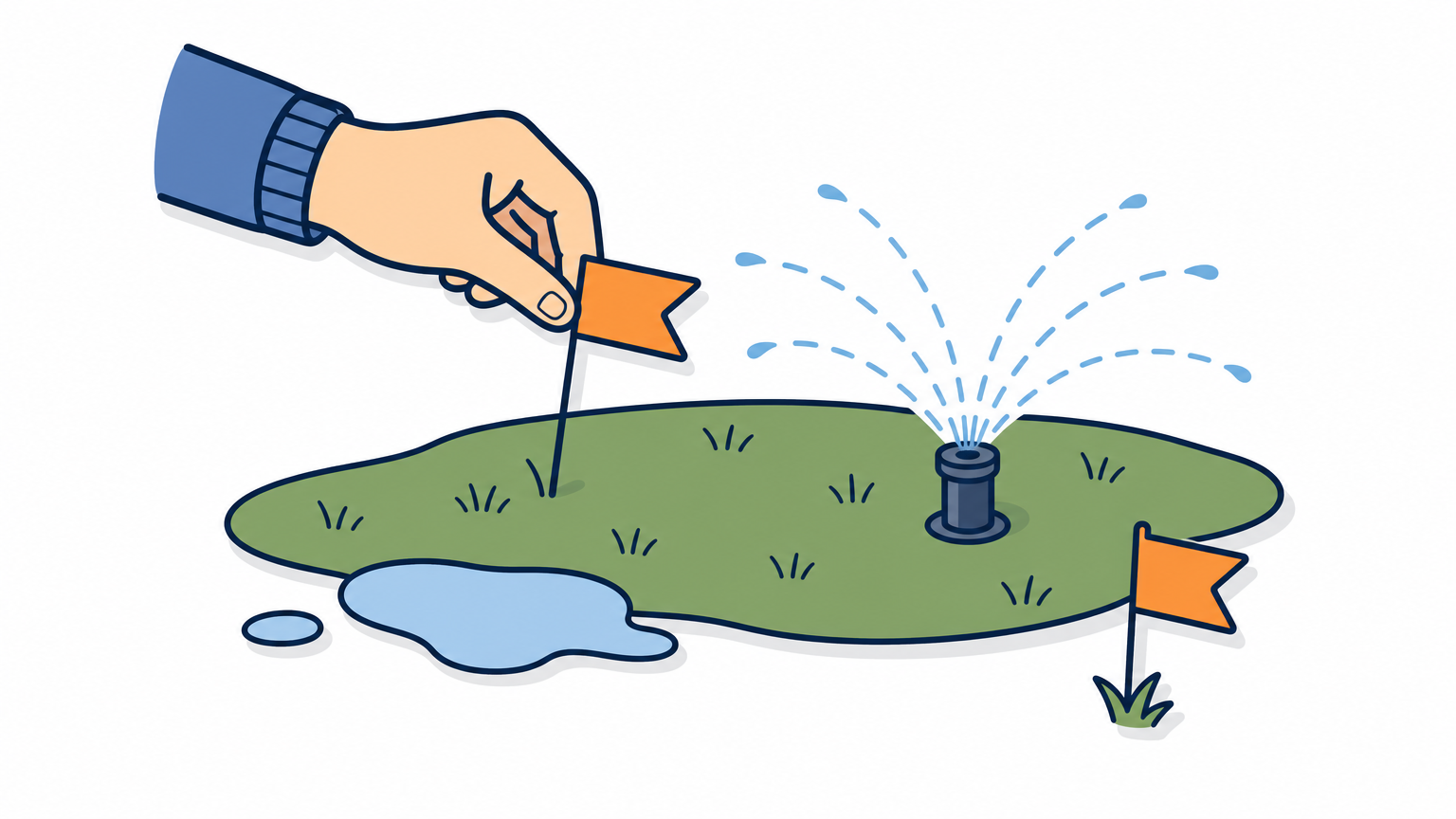
Run each zone and walk the lawn
Turn on the manual cycle and run one zone at a time. Walk the lawn and mark every problem spot with a pin flag:
- Start Zone 1 and let it run for two minutes.
- Look for heads that stay down, tilt, or spray weakly.
- Note geysers, puddles, and water running onto pavement.
- Check that spray patterns overlap and reach the edges.
- Repeat for every zone.
Read the clues
Where the symptom shows up tells you the cause. One bad head usually means damage or a clog. A whole zone that is dead or weak points to a valve, wiring, or a pipe break. Pooling water between heads suggests a buried leak.
Diagnose by zone first, and you will know whether you need a $5 nozzle or a shovel.
Next, check your water meter. Shut off every tap, and if the low-flow dial still spins, you have a hidden leak somewhere in the system. Catching it early is the cheapest sprinkler lawn repair you will ever do.
Step 2. Fix broken heads, clogs, and leaks
Most sprinkler lawn repair at this stage is cheap and quick. You can fix broken sprinkler heads and clogged nozzles with a shovel, a matching replacement head, and a roll of plastic thread tape.
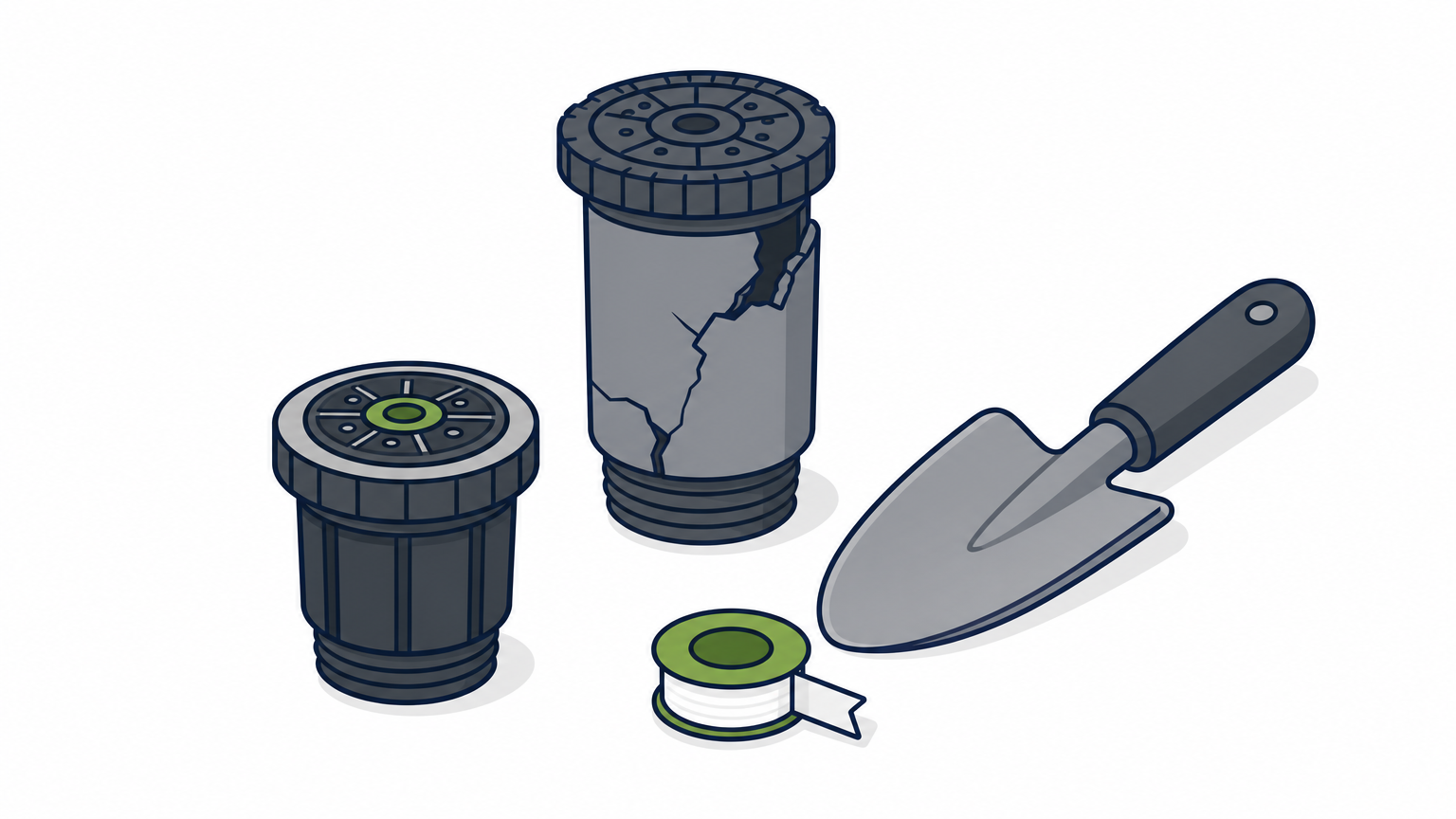
Replace a broken head
Always match the brand and spray pattern of the old head. Then turn off the zone at the controller and follow these steps:
- Dig around the head and lift the sod in one piece.
- Unscrew the broken head from the riser or fitting.
- Run the zone for a few seconds to flush out dirt before the new head goes on.
- Wrap the threads with tape and screw on the new head.
- Set the top level with the grass, backfill, and test.
Flush the line before you fit a new head, or dirt will clog it within minutes.
Clear clogs and small leaks
Clogged nozzles are even easier. Twist off the nozzle, rinse the filter screen under a tap, and clear the opening with a pin. Sand and rust are the usual blockages in Highlands County well water.
Leaks at a fitting often need only a tightened connection or a new coupling. If water keeps pooling after that, you likely have a cracked buried line . Stop digging and call a pro .
Step 3. Check valves, solenoids, and the timer
When a whole zone refuses to start, the fault is usually electrical or inside the valve. These checks take about 20 minutes and need only a screwdriver and a basic multimeter. Run them before you pay for any sprinkler lawn repair call, because a dead zone is often a cheap part.
Start with the timer
Begin at the controller. Confirm the display works, the schedule and run times are right, and the rain sensor is not stuck in "off" mode. A blank screen often means a dead backup battery.
Try a manual start next. A zone that runs by hand but not on schedule has a programming problem , not a broken part.
Test the valve and solenoid
Valves sit in green boxes in the lawn. Leave the water on, then work through this list:
- Open the box and find the valve for the dead zone.
- Turn the solenoid a quarter turn counterclockwise. If water flows, the valve works and the solenoid or wiring is at fault.
- Switch off the controller. Set your multimeter to ohms and touch both solenoid wires. Most read roughly 20 to 60 ohms, so a reading far outside that range means a new solenoid .
- Check every splice for corrosion and swap old wire nuts for waterproof connectors.
If a zone opens by hand but not by timer, the problem is electrical, not the pipe.
Still no flow, or a valve that leaks or sticks open? Plan on a replacement, and consider a pro.
Step 4. Know when to call a pro and what it costs
Signs the job is beyond DIY
Some problems are not worth your weekend. Call a licensed irrigation pro if you find a cracked buried line , a valve that leaks or sticks open, a dead controller, or low pressure in every zone. Stop digging if you hit wiring or pipe you cannot identify.
Typical repair costs
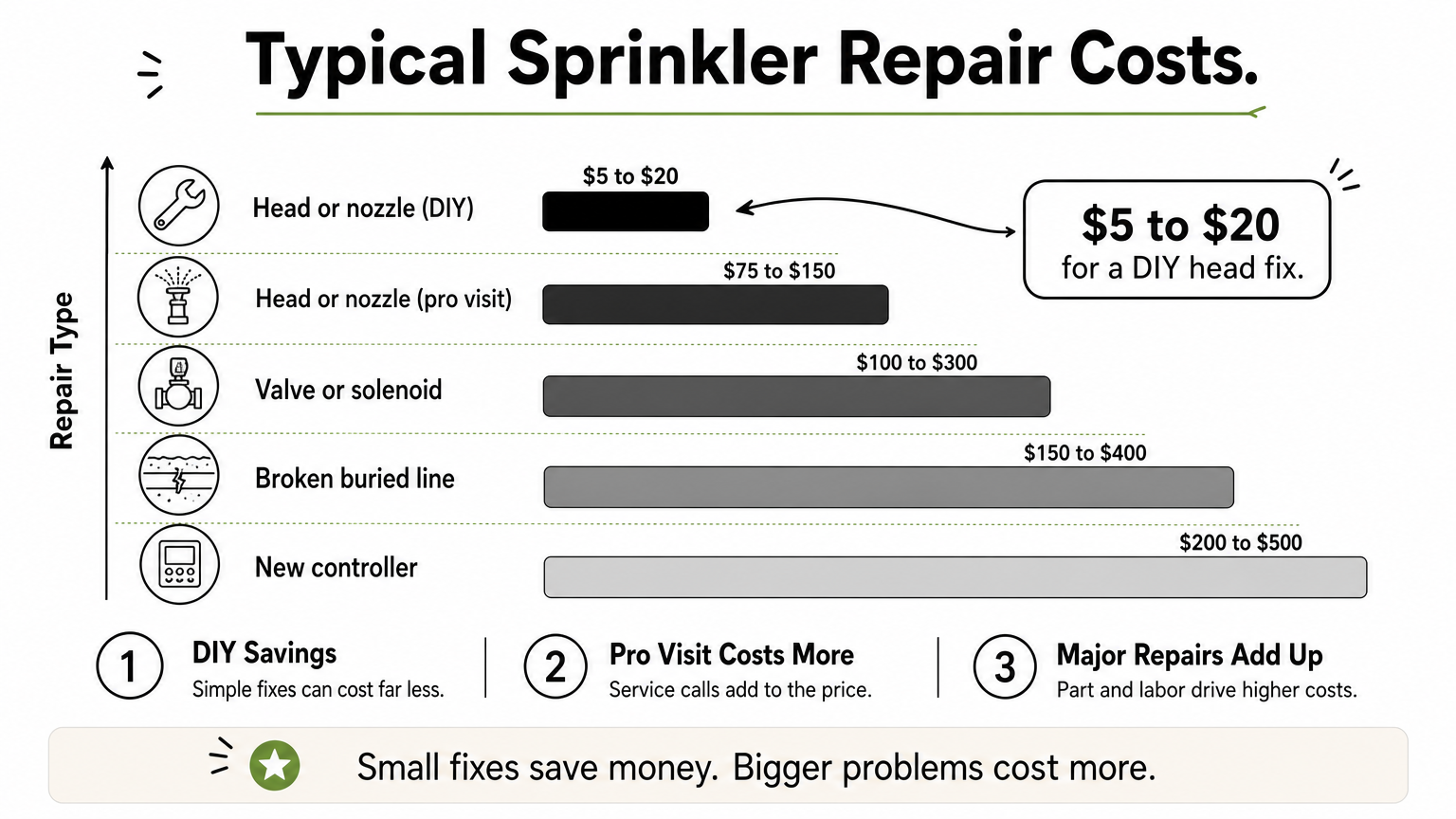
Ballpark sprinkler repair costs in Central Florida look like this:
| Repair | Typical cost |
|---|---|
| Head or nozzle (DIY) | $5 to $20 |
| Head or nozzle (pro visit) | $75 to $150 |
| Valve or solenoid | $100 to $300 |
| Broken buried line | $150 to $400 |
| New controller | $200 to $500 |
Expect higher bills for long trenches or repairs under pavers and concrete. Ask for a written estimate before work starts.
Fix a small leak now, and you pay for a $10 part instead of a $400 line repair.
How to choose a local pro
Vet any local sprinkler lawn repair company before you book. Confirm license and insurance , ask whether the visit fee applies to the repair, and ask if they warranty parts and labor. A good tech finds the cause first and quotes second.
At TWQ, we handle repair and installation for homes and commercial properties across Highlands County.
Keeping your sprinklers running
Healthy turf starts with catching problems early. Walk each zone once a month and you will spot broken heads and clogged nozzles before they dry out the grass. Those fixes are cheap, quick, and well within reach if you own a shovel and a roll of thread tape.
Bigger faults are different. A cracked buried line , a leaking valve, or a dead controller calls for a licensed irrigation pro , and a written estimate keeps the cost clear. Timely sprinkler lawn repair almost always costs less than replacing dead sod.
If you would rather hand the job to someone who knows Central Florida soil and water , schedule your sprinkler repair with TWQ. We will find the cause first , explain the fix, and get your zones running again.