
5 Benefits of Lawn Aeration for Sebring, FL Lawns
The benefits of lawn aeration come down to five things: it relieves soil compaction, improves the flow of water, air and nutrients, builds deeper roots, keeps thatch in check, and helps seed and fertilizer work. Which benefit matters most depends on your lawn. Heavily used yards and new-construction lots gain the most from compaction relief. Spongy, thatchy turf gains from thatch control. Thin lawns that you plan to overseed gain from better seed contact.
The hard part is knowing whether aeration is worth doing on your own lawn. Some lawns need it every year. Others do fine without it, and aerating at the wrong time can stress the grass instead of helping it.
At TWQ, we have cared for lawns in Sebring and across Central Florida for over 20 years, and aeration and overseeding is one of our services. Below, each benefit comes with how it works, the signs to look for, and how to get the most from it, so you can decide for yourself.
1. Relieves soil compaction
Aeration's most important benefit is relieving soil compaction , the squeezing together of soil particles that blocks air, water and nutrients from reaching roots. Foot traffic, mowers, pets and construction all compact soil over time. Turf researchers note that a compacted layer only 1/4 to 1/2 inch thick can noticeably hurt a lawn.
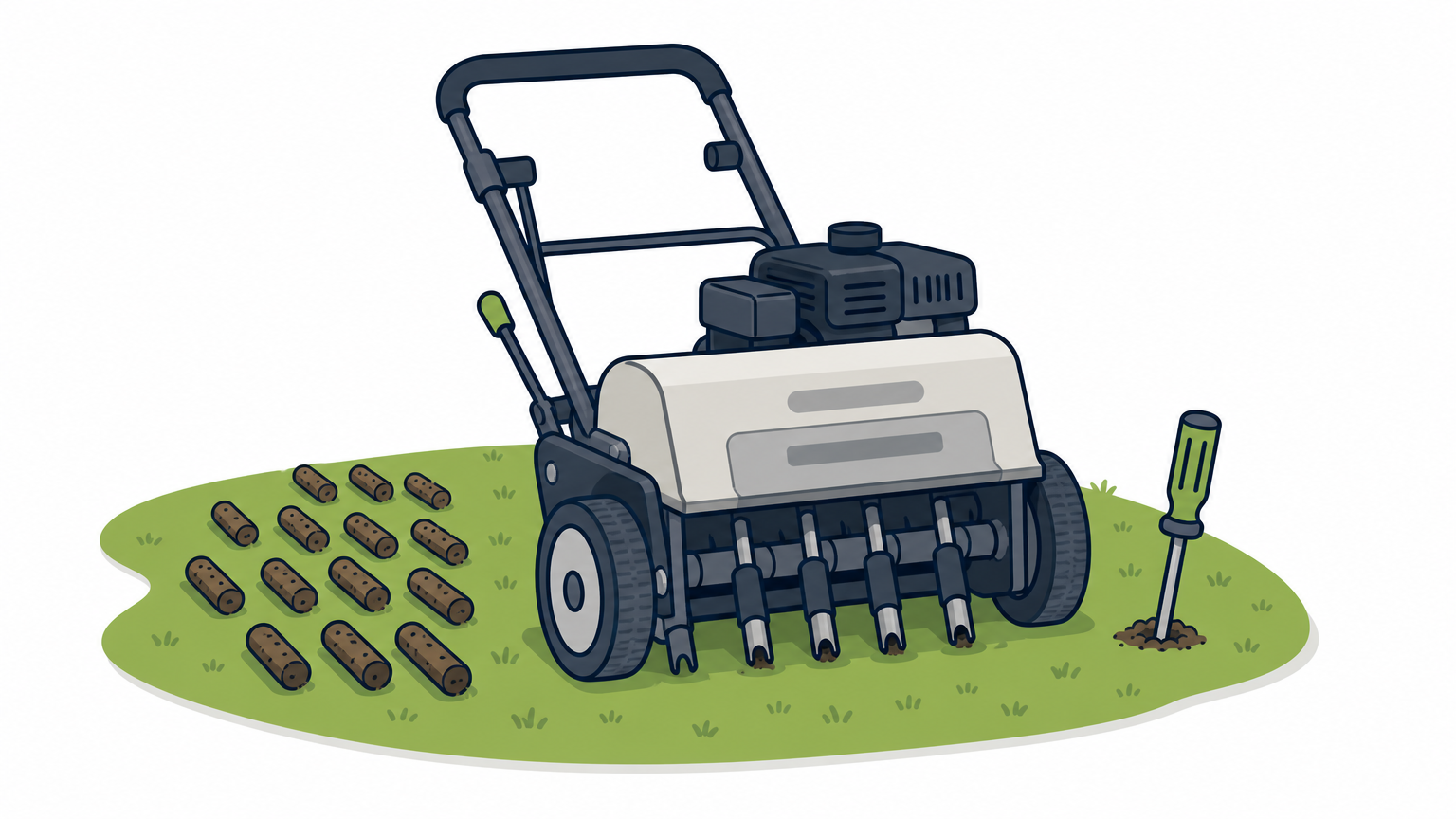
Loosen the soil first, and every other lawn care step works better.
How it works
A core aerator uses hollow tines to pull plugs of soil out of the lawn, ideally about 2 to 3 inches deep. The holes lower soil density and give roots room to push down. Spike aerators and spiked sandals only poke holes and can press soil together around them, so a core aerator is the better tool.
Signs your lawn needs it
Push a screwdriver into the soil by hand. It should slide in easily, and resistance means compaction. Also look for:
- Thin or bare strips along paths, play areas and parking spots
- Water that puddles instead of soaking in
- A yard built on soil that was stripped or driven over during home construction
Many Central Florida lawns sit on sandy soil, which compacts less than clay, so the damage tends to concentrate where traffic does.
Getting the most from it
Aerate when the soil is moist but not soggy, such as the day after rain or irrigation. Make extra passes over the worst areas and skip healthy ones. Leave the plugs on the lawn, where they break down within a few weeks and return organic matter to the surface.
2. Improves water, air and nutrient flow
Aeration opens channels so water, oxygen and nutrients move into the root zone instead of running off or sitting on top. That also helps with drainage, because rain soaks in faster once the surface is perforated.
Roots can only use what actually reaches them.
How it works
Each hole is a direct path past compacted soil and thatch. Water travels down instead of across the surface, and air reaches roots that were starved of oxygen. Fertilizer you apply afterward reaches deeper into the root zone , which makes each application more effective.
Signs your lawn needs it
Look for runoff or puddles after a heavy summer storm, grass that stays dry even after you water, and fertilizer that seems to do little. If your lawn was installed as sod, check for soil layering. Finer imported soil over coarser native soil holds water and disrupts drainage, and aeration breaks that layering up.
Getting the most from it
Time your fertilizer after aeration, not before, so nutrients soak in through the open holes. Keep up your normal watering and mowing routine. Aeration improves how well water is used, but it does not replace irrigation.
3. Builds deeper, stronger roots
Aeration stimulates root growth by giving roots space, air and moisture. Deeper roots mean a lawn that handles heat and dry spells better, which matters through a Central Florida summer.
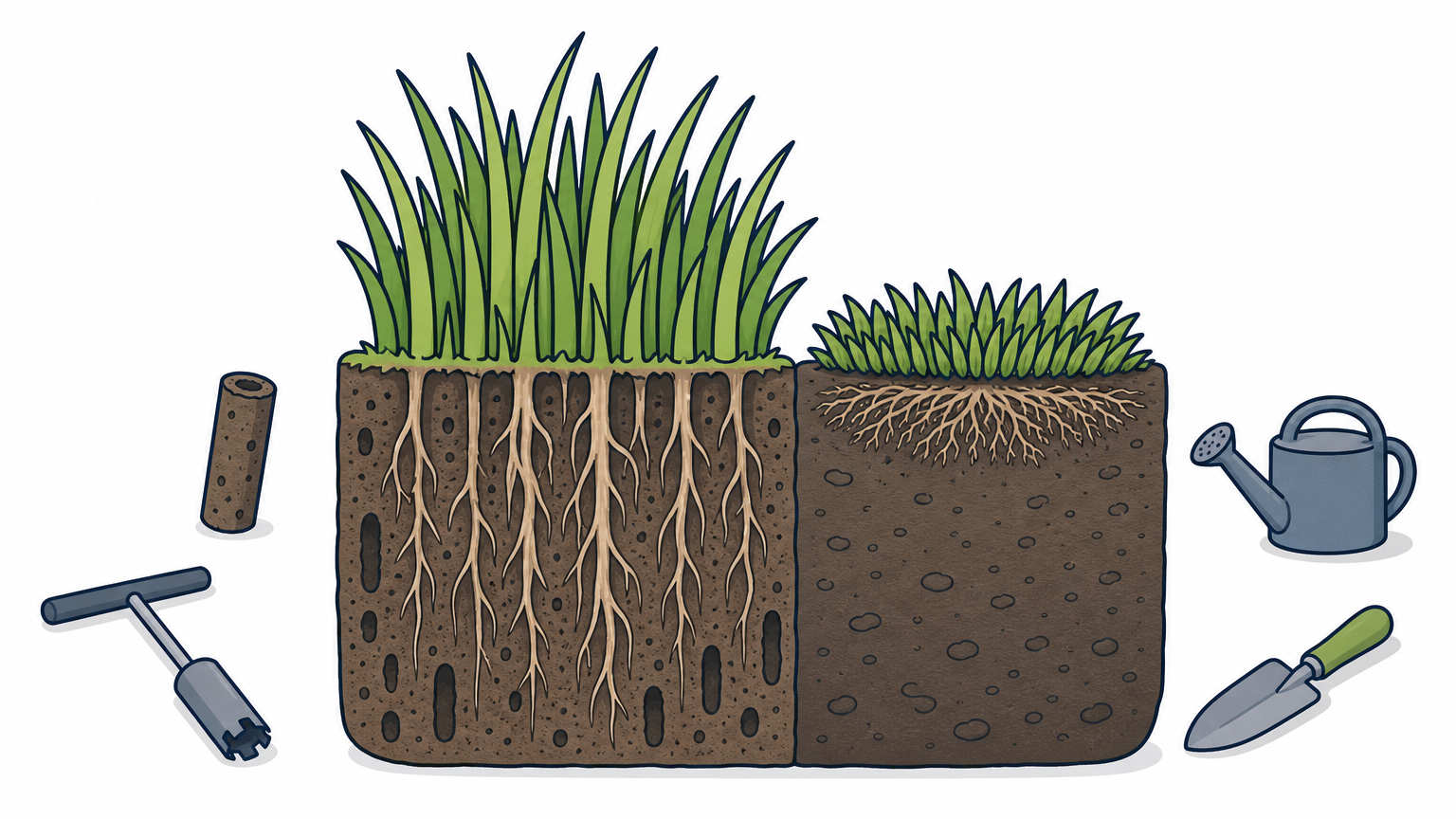
A lawn is only as tough as its roots.
How it works
Roots in compacted soil stay shallow because there is nowhere to go. Once the soil is loosened, roots can grow deeper and branch out . Stressed grass in compacted soil thins and loses color, and it can eventually die out for lack of oxygen, water and nutrients sitting just inches below.
Signs your lawn needs it
Watch for grass that browns quickly in hot, dry weather, thins out year after year, or loses its rich color even though you mow and water correctly. If those symptoms show up alongside hard soil, shallow roots are a likely cause.
Getting the most from it
Timing decides the result. Aerate during active growth so the grass recovers quickly and fills in the open spots. For warm-season grasses common in Florida, that means late spring to early summer . Never aerate a dormant lawn, because it cannot heal the damage.
4. Keeps thatch under control
Core aeration helps manage thatch , the layer of dead stems and roots between the soil and the green blades. Once thatch passes about 1/2 inch, it acts like compaction and blocks air, water and nutrients.
Thick thatch starves roots from above, and aeration breaks it up.
How it works
The tines pull thatch up with the soil plugs and open the layer to air and water. The disturbance also encourages the soil microbes that break thatch down. Aggressive spreaders such as Bermudagrass build thatch faster than most grasses. Heavy thatch can also shelter insects and disease .
Signs your lawn needs it
Cut a slice of lawn about 4 inches deep with a shovel and measure the brown, fibrous layer. More than 1/2 inch means aeration is recommended. Other clues are turf that feels spongy underfoot and dries out quickly.
Getting the most from it
Aeration reduces thatch but will not remove a severe buildup. For thick layers, aerate and then dethatch, or have a pro assess the lawn. Afterward, keep mowing, fertilizing and watering on schedule so thatch does not rebuild.
5. Helps seed and fertilizer work better
Aeration makes overseeding and fertilizing more effective by putting seed and nutrients in direct contact with soil . The result is a thicker lawn that crowds out weeds.
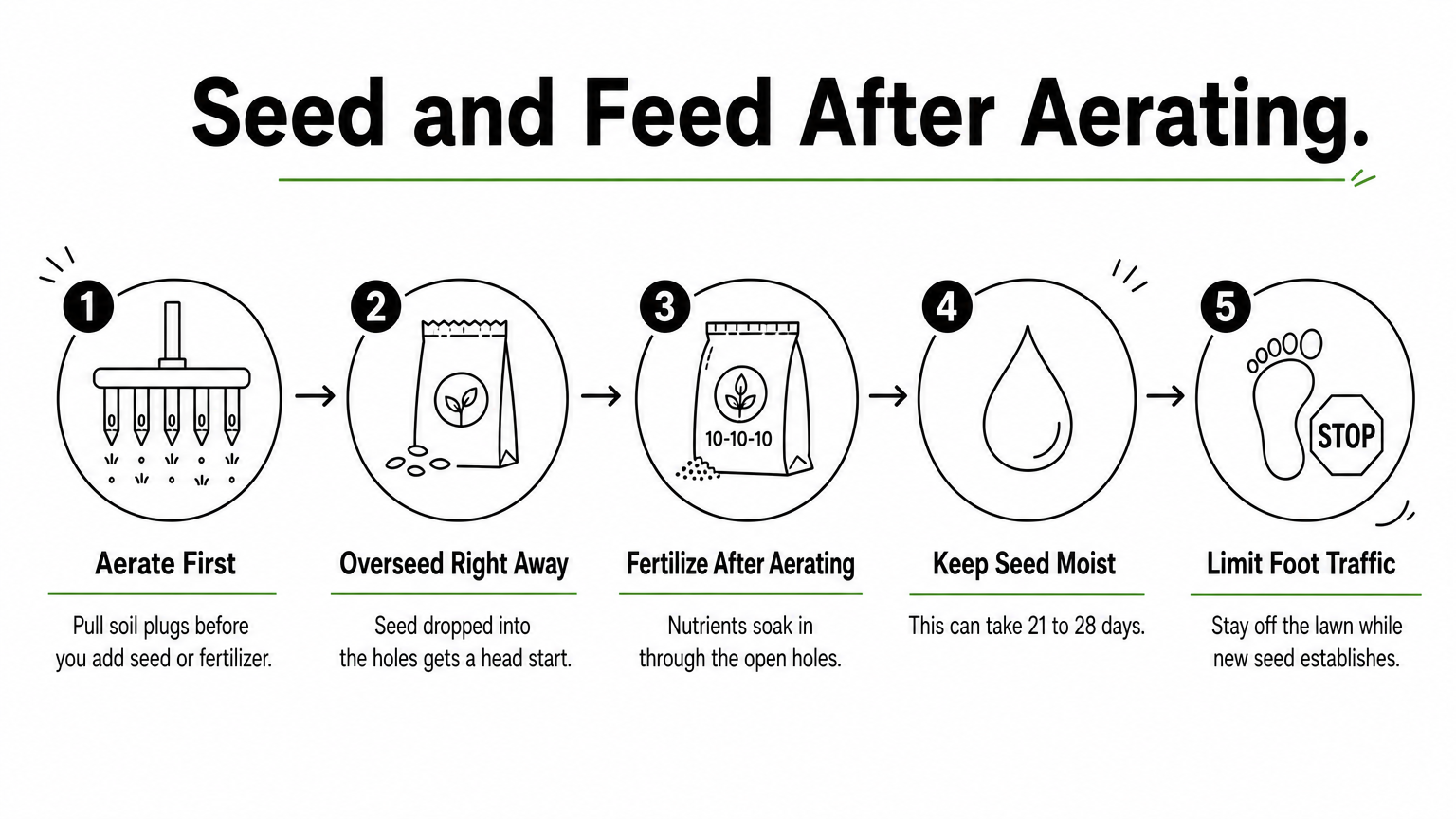
Seed on top of thatch struggles. Seed in an aeration hole gets a head start.
How it works
The holes create small, protected pockets that hold moisture, which is what germinating seed needs. Fertilizer also moves into the root zone instead of sitting on the surface. Thicker turf leaves less room for weeds. Aeration does not undo a pre-emergent herbicide , so you do not have to choose between the two.
Signs your lawn needs it
Thin patches, bare spots and turf that never fills in despite regular feeding point to this benefit. If you plan to overseed, aerate first. The right seed depends on your grass type, so ask before you buy.
Getting the most from it
Overseed and fertilize right after aerating. Keep new seed moist, which can take 21 to 28 days, and limit foot traffic while it establishes. Our aeration and overseeding service uses professional equipment and seed blends matched to your property's needs.
Is aeration right for your lawn?
Aeration pays off when your lawn shows compaction, heavy thatch, poor drainage or thin turf. The screwdriver and thatch tests take five minutes and tell you most of what you need to know. If the screwdriver slides in easily and thatch is under 1/2 inch, you can likely skip it this year. If not, aerate during active growth and follow with seed or fertilizer.
If you would rather leave the equipment, timing and seed choice to someone else, request a free estimate from TWQ. We confirm details by phone, walk your property, and send a written estimate with no obligation.