
Before and After Lawn Aeration: How to Do It in Sebring
To get real results from before and after lawn aeration , aerate while your grass is growing fast, mow and water the day before, pull hollow-tine cores 2 to 3 inches deep, and leave the plugs on the lawn. Then water and mow carefully for the next few weeks. For warm-season turf in Central Florida, that means late spring, not the fall timing most guides recommend. You will see plugs and holes on day one, and a thicker, greener lawn over the following weeks.
The problem is that most advice and most photos come from northern lawns. They tell you to aerate after Labor Day and show a pockmarked yard that looks worse than the "before" shot. Here in Sebring, Lake Placid, Avon Park, and Okeechobee, you are growing St. Augustine, Bahia, Bermuda, or zoysia on sandy soil. Aerating in the wrong month, raking up the plugs, or skipping water afterward is how homeowners end up with a messy lawn and no visible change.
This guide shows what each stage looks like, then walks you through four steps: checking that your lawn needs aeration, preparing it, aerating it, and caring for it afterward. TWQ has maintained lawns in this area for over 20 years, so the timing and soil notes below are written for Central Florida turf.
What lawn aeration looks like before and after
Right after aeration your lawn looks worse, with thousands of soil plugs on the surface, and within a few weeks it looks better than it did before. Knowing the sequence keeps you from panicking on day one or giving up on week two.
The stages you will see
Use this timeline as a rough guide. Exact speed depends on grass type, rainfall, and how compacted the soil was.
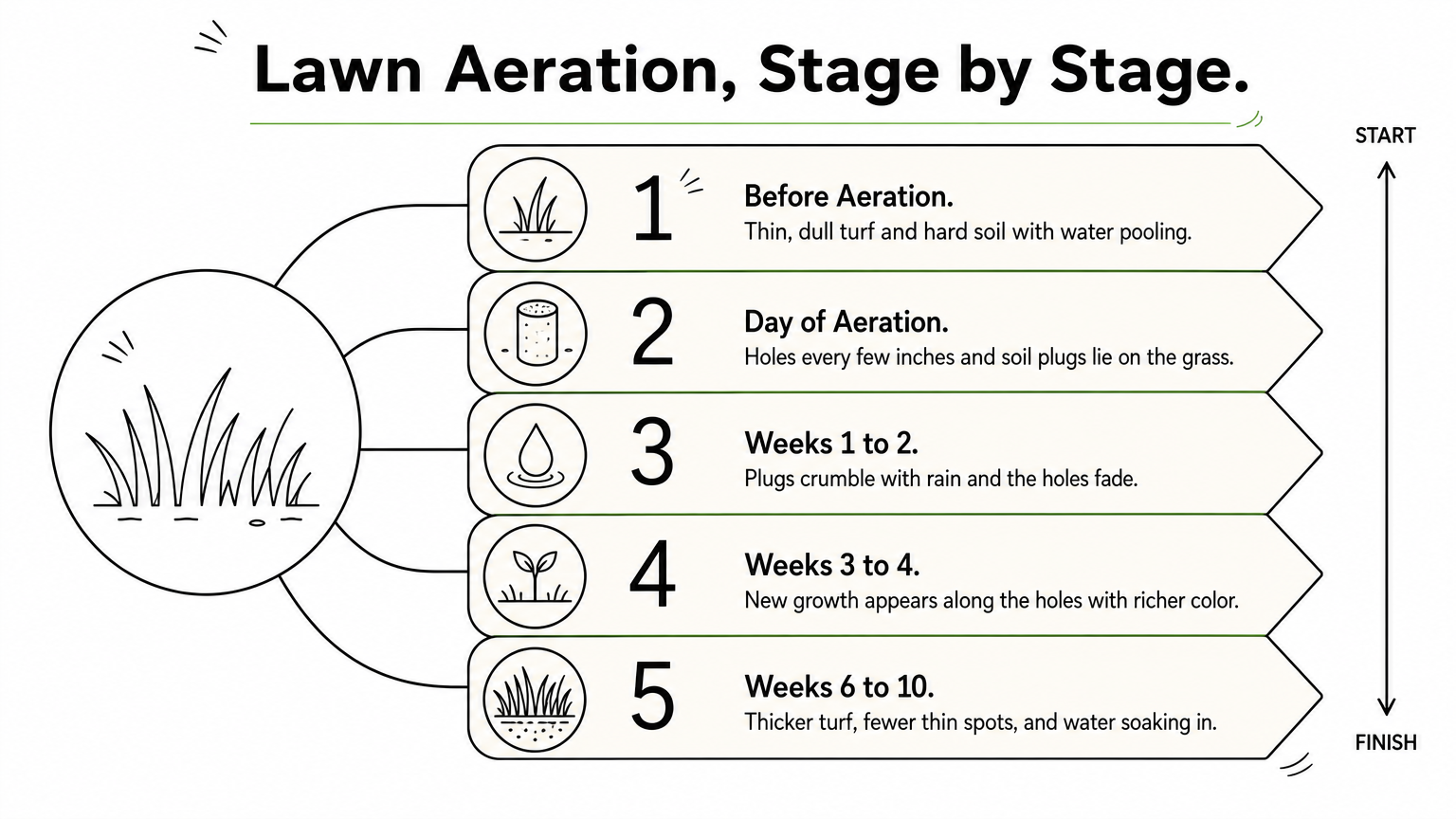
| Stage | What you see | What is happening |
|---|---|---|
| Before | Thin or dull turf, water pooling or running off, hard soil, spongy feel underfoot | Compacted soil and thatch hold roots in the top inch or two |
| Day of aeration | Holes every few inches, finger-sized soil plugs lying on the grass | Air, water, and nutrients now reach the root zone |
| Weeks 1 to 2 | Plugs crumble with rain and irrigation, and holes fade | Soil from the plugs settles back into the turf |
| Weeks 3 to 4 | New growth along the holes, richer color after mowing | Roots grow into the loosened soil |
| Weeks 6 to 10 | Thicker turf, fewer thin spots, water soaking in | Deeper roots make the lawn tougher |
The change is gradual. Aeration is a repair to the soil , so you judge it by the grass that grows in over the following weeks, not by the lawn on day one.
The lawn looks worst on day one and best two months later, so judge aeration by the grass that comes in, not by the holes.
Is aeration worth it?
It is worth it when you have a real problem to fix: compacted paths, water that runs off, or thatch thicker than about half an inch. Lawns that drain well and feel springy gain little , so skip them.
Sandy Central Florida soil compacts less than clay does, which makes aeration less routine here than in the north. It still pays off on high-traffic strips, around new construction where heavy equipment packed the ground, and on thatch-prone grasses like Bermuda and zoysia. Compaction is the deciding factor , so test for it before you book anything.
Step 1. Confirm your lawn needs it and pick the timing
Aerate only when you can see signs of compaction or thatch, and do it when warm-season grass is actively growing, roughly late April through early June in this part of Florida. Recovery depends on growth, so timing matters as much as the machine.
Run three quick checks
Do these on a day when the soil is moist, not bone dry:
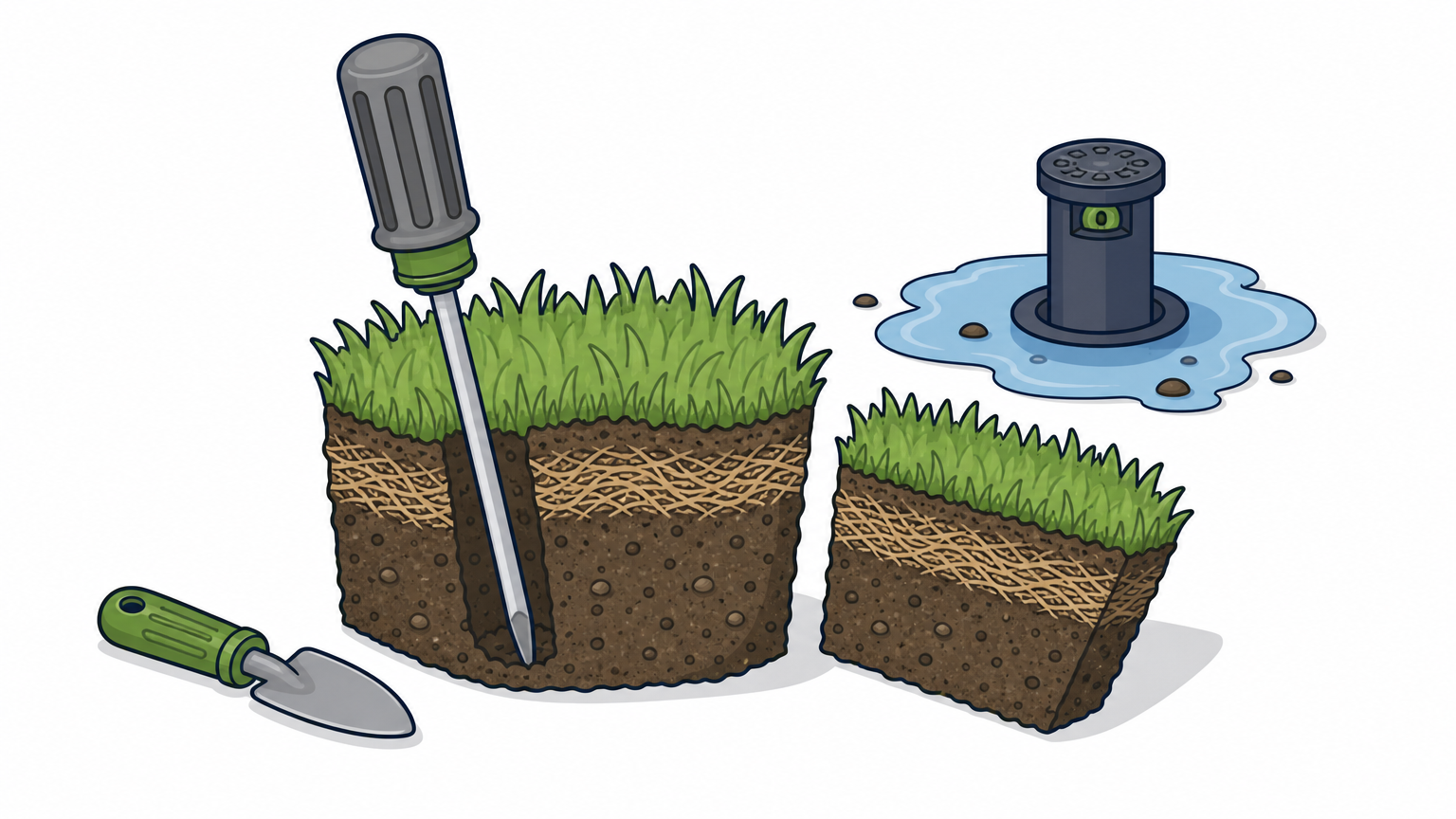
- Screwdriver test. Push a long screwdriver into the soil. If it will not go in much past an inch or two, the soil is compacted.
- Water test. Run the sprinkler for ten minutes. If water pools or runs off onto the sidewalk instead of soaking in, the surface is sealed.
- Thatch check. Cut a small wedge of turf and look at the spongy brown layer between the green blades and the soil. More than half an inch is a problem.
Also look at where the thin grass is. A worn path, a spot where the mower always turns, or the strip along a driveway points to traffic compaction. Thin turf in an even shade pattern points to light, not soil.
Choose the right month
The best window for warm-season grass is late spring into early summer , once the lawn is fully green and you are mowing weekly. Growth is fastest then, so the holes fill in quickly. Many Florida counties also restrict nitrogen and phosphorus fertilizer during the summer rainy season, so finishing before those restrictions begin gives you room to feed the lawn on schedule.
Is October too late? For Central Florida turf, yes, it is late. Growth slows as nights cool, and a lawn that cannot grow cannot heal the holes. If you miss spring, wait for the next green-up instead of aerating in winter, when the grass is dormant or slow.
Aerate when the grass is growing fast, because a lawn that cannot grow cannot recover.
Step 2. Prep the lawn and the yard
Mow at your normal height, water the lawn the day before, and clear and mark the yard so the aerator pulls clean cores and does not hit anything. Good prep takes about an hour and decides how deep the tines go.
Mow, water, and clear
Work through this checklist the day before:
- Mow as usual. Do not scalp the lawn. A normal cut lets plugs drop to the soil without stressing the grass.
- Water about half an inch. Moist soil lets tines pull full-length cores. Dry sand collapses and dry compacted ground makes the machine bounce.
- Clear the surface. Remove toys, hoses, rocks, and branches.
- Mark hazards. Flag sprinkler heads, valve boxes, shallow irrigation lines, cable or dog-fence wires, and any buried drain lines.
If you are unsure where your lines run, ask whoever installed your irrigation system before the machine goes out. A tine through a shallow line is an avoidable repair.
Decide whether you will seed
Seeding is where Florida differs most from the guides you will find elsewhere. Bahia and Bermuda can be grown from seed , but St. Augustine, the most common home lawn grass here, is normally established from sod or plugs. For thin St. Augustine patches, plan to plug them rather than scatter seed.
If you do seed, use a type that matches your existing turf and apply seed right after aeration so it drops into the holes. Skip weed-and-feed and pre-emergent herbicides on seeded areas, because they stop seed from sprouting. Winter ryegrass overseeding is a color treatment, not a repair, and it can compete with your permanent grass when spring arrives.
Match the seed to your existing grass, and do not seed St. Augustine at all. Plug the thin spots.
Step 3. Aerate with the right machine
Use a core aerator with hollow tines that pull plugs 2 to 3 inches deep, and make two passes at right angles. Hollow tines remove soil, which is what relieves compaction.
Core, not spike
A spike aerator or a pair of spiked shoes only pokes holes and can pack the soil tighter around each one. Hollow tines remove cores and leave room for roots, air, and water. Rent a core aerator, check that the tines are open at the tip, and run it over the whole lawn.
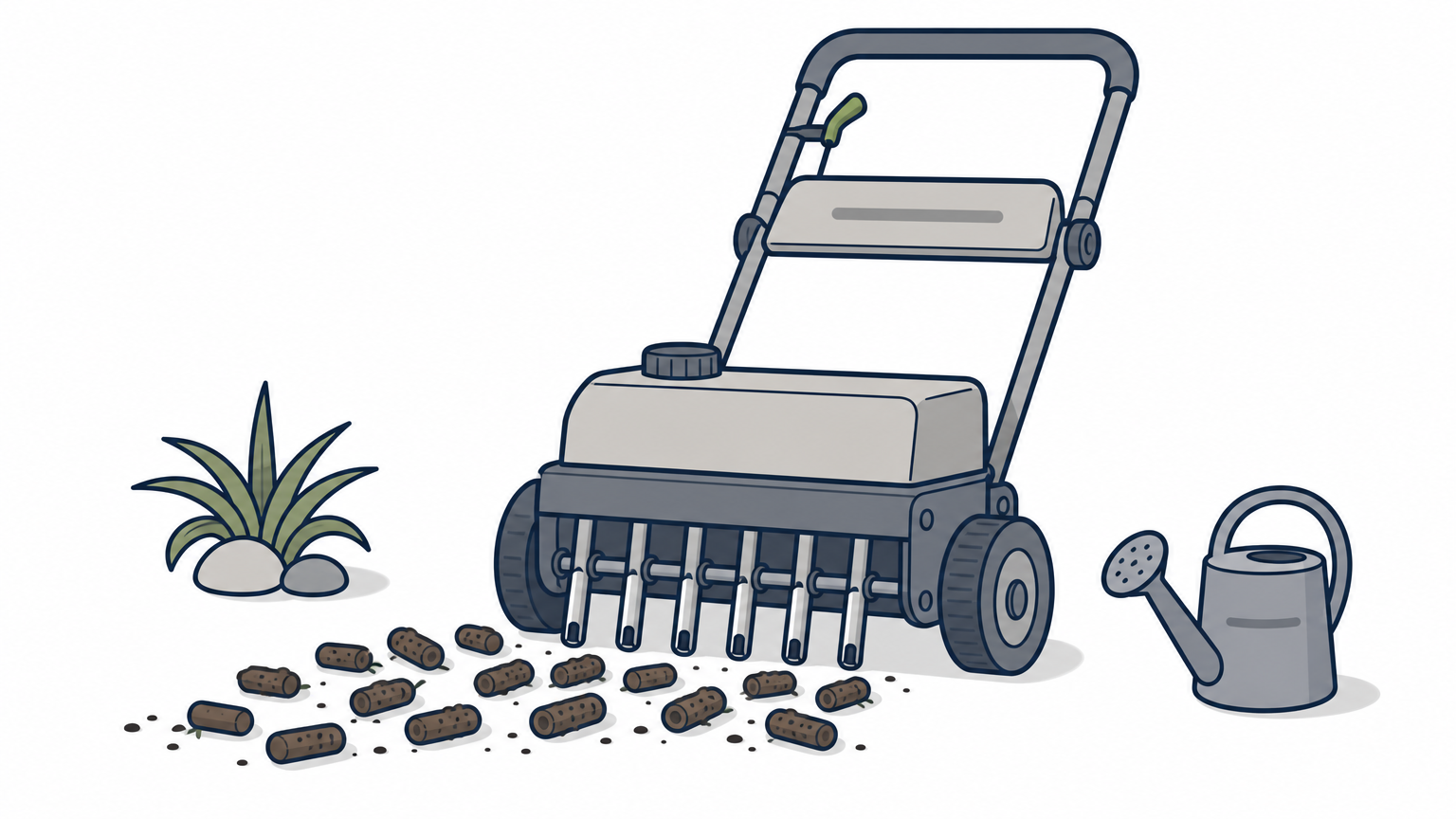
Make the first pass in one direction and the second at a right angle to it. Give traffic lanes and thin areas an extra pass. Aerate when the soil is moist but not muddy. Mud clogs the tines and smears the walls of each hole.
DIY or hire a pro
A rental aerator is heavy and slow on a large or sloped yard, and you have to finish the job before the machine goes back. For a small, flat lawn it is a reasonable weekend project. For a larger yard, badly compacted ground, or a lawn where you want the timing and follow-up handled once, hiring out is easier.
TWQ's aeration and overseeding service relieves soil compaction, improves root growth, and thickens turf on residential properties in Sebring and the surrounding area. We schedule an on-site walkthrough before giving a written estimate, so you know what your lawn needs before anyone starts a machine. The estimate is free, and we respond to requests within one business day.
A hollow-tine machine, two passes, and moist soil are what separate real aeration from poking holes.
Step 4. Care for the lawn afterward
After aerating, leave the plugs, water deeply and not often, mow with a sharp blade at your normal height, and hold off on extra products. What you do in the next three to four weeks decides whether you get the "after" photo.
Leave the plugs and manage traffic
Do not rake or pick up the plugs. They break down on their own within a couple of weeks of rain, irrigation, and mowing, returning soil and organic matter to the turf. Raking them off defeats the purpose.
Keep heavy traffic off the lawn for the first week or two, especially if the soil is wet. Light foot traffic is fine, but avoid parking a trailer or running a heavy mower over soft ground.
Water by measurement, not habit
The lawn needs consistent moisture while the holes heal, but sandy soil drains fast , so the answer is deeper watering, not more frequent watering. Try this worked example. Set a straight-sided can on the lawn and run your sprinkler zone. If the can holds half an inch after 40 minutes, run that zone for 40 minutes once, not 10 minutes every day. Repeat only when the grass shows early drought signs such as folded blades or a bluish tint.
If you seeded, keep the top inch of soil damp until the seedlings are up, then shift to deeper, less frequent watering. Follow the watering-day limits set by your water management district.
Mow and feed carefully
Mow when the surface is dry enough that the mower will not rut the soil. Use a sharp blade and keep the cut at your normal height. If you seeded, wait until seedlings are established before mowing.
Aeration does not automatically mean the lawn needs fertilizer. Feed on your normal program, and check your county's summer fertilizer rules before applying nitrogen or phosphorus, since many Florida counties restrict both during the rainy season.
What not to do after aerating
- Do not rake up the plugs because they look messy.
- Do not flood the lawn or water in short daily bursts.
- Do not scalp the grass.
- Do not apply herbicides or pre-emergent to areas you just seeded.
- Do not expect an overnight change. Give it four to eight weeks.
If the same patch is thin again next year, look beyond aeration to drainage, shade, irrigation coverage, and pests.
Leave the plugs, water deeply once, and give the lawn four to eight weeks before you judge the result.
Aerate on time, then give it time
The before and after of lawn aeration is a two-month story. Day one looks messy, week two looks normal, and by week six to ten you see thicker turf and water soaking in instead of running off. You get that result by confirming compaction first, aerating in late spring while the grass is growing, using a hollow-tine machine, and leaving the plugs alone.
If you would rather skip the rental and the guesswork, request a free estimate from TWQ and we will schedule an on-site walkthrough of your property.