
When Is the Best Time for Lawn Aeration? Spring or Fall
You can aerate a lawn at the wrong time and do more harm than good. Pull plugs from stressed turf in the wrong season and you open the door to weeds, drought damage, and a slow recovery. So the best time for lawn aeration is not a single date on the calendar. It depends on your grass type and where you live.
Here is the short answer. Cool-season grasses like fescue and bluegrass do best with fall aeration , with early spring as a backup. Warm-season grasses like St. Augustine, Bermuda, and Zoysia should be aerated in late spring through early summer , when they are actively growing and can fill in the holes fast. Fall is usually the wrong call for warm-season turf. Here in Central Florida, that means most lawns want aeration roughly from April through June.
At TWQ, we have spent over 20 years aerating and overseeding lawns around Sebring. This article explains how to match timing to your grass and climate, when spring beats fall, and what to do before and after aerating so the work pays off.
Why the timing of lawn aeration matters
Core aeration pulls small plugs of soil, usually about half an inch wide and two to three inches deep, out of your lawn. That relieves compacted soil so air, water, and fertilizer can reach the roots. So when is the best time for lawn aeration? When your grass is growing hardest.
Grass heals the holes only when it grows
Every plug is a small wound. Your lawn closes it by sending out new roots and runners, and that happens only during active growth . Aerate at peak growth and the turf usually fills in within two to four weeks . Aerate while it is dormant or heat-stressed and the holes just sit open.
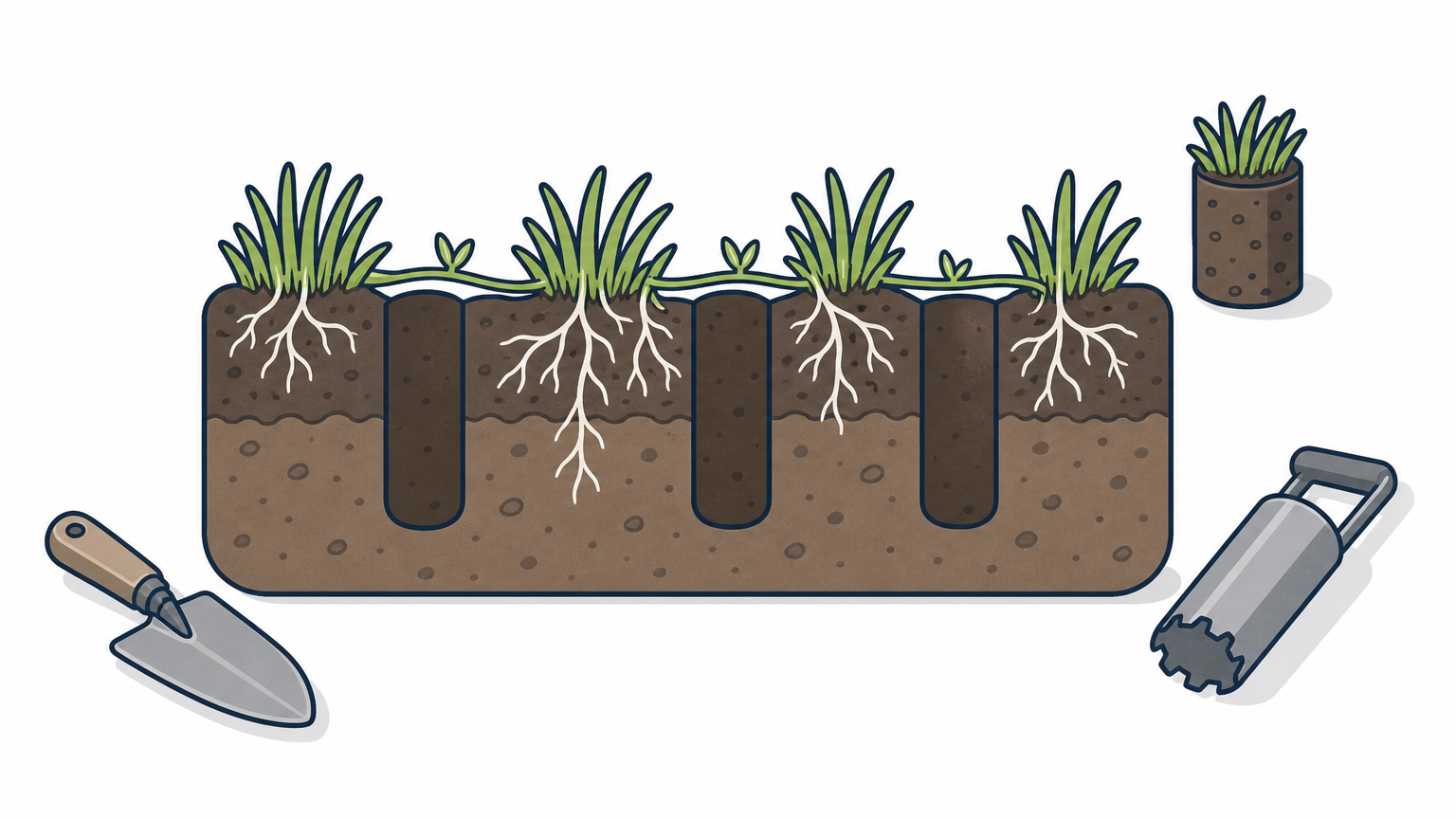
Aerate when your grass is growing fast enough to heal the holes, not when it is struggling to survive.
| Grass type | Peak growth | Best aeration window |
|---|---|---|
| Cool-season (fescue, bluegrass, ryegrass) | Fall and spring | Early fall, early spring as backup |
| Warm-season (St. Augustine, Bermuda, Zoysia, Bahia) | Late spring through summer | Late spring to early summer |
What bad timing costs you
Weeds are the first cost. Open soil is ideal ground for crabgrass and other seeds, and a lawn that cannot fill in quickly loses that race. You then pay for herbicide to fix a problem the aeration created.
Stress comes next. Cutting roots and exposing soil during a hot, dry stretch speeds up moisture loss, so drought damage shows up fast. Overseeding at the wrong time wastes money too, because seed needs the right soil temperature to germinate and survive. Good timing costs nothing extra, and it is the cheapest part of the job to get right.
How to pick the right aeration window for your lawn
Three quick checks turn a vague season into a specific two-to-three-week window . Run them in order before you book anything.
Run these three checks
Start with the facts you can measure. A $15 soil thermometer beats any calendar.
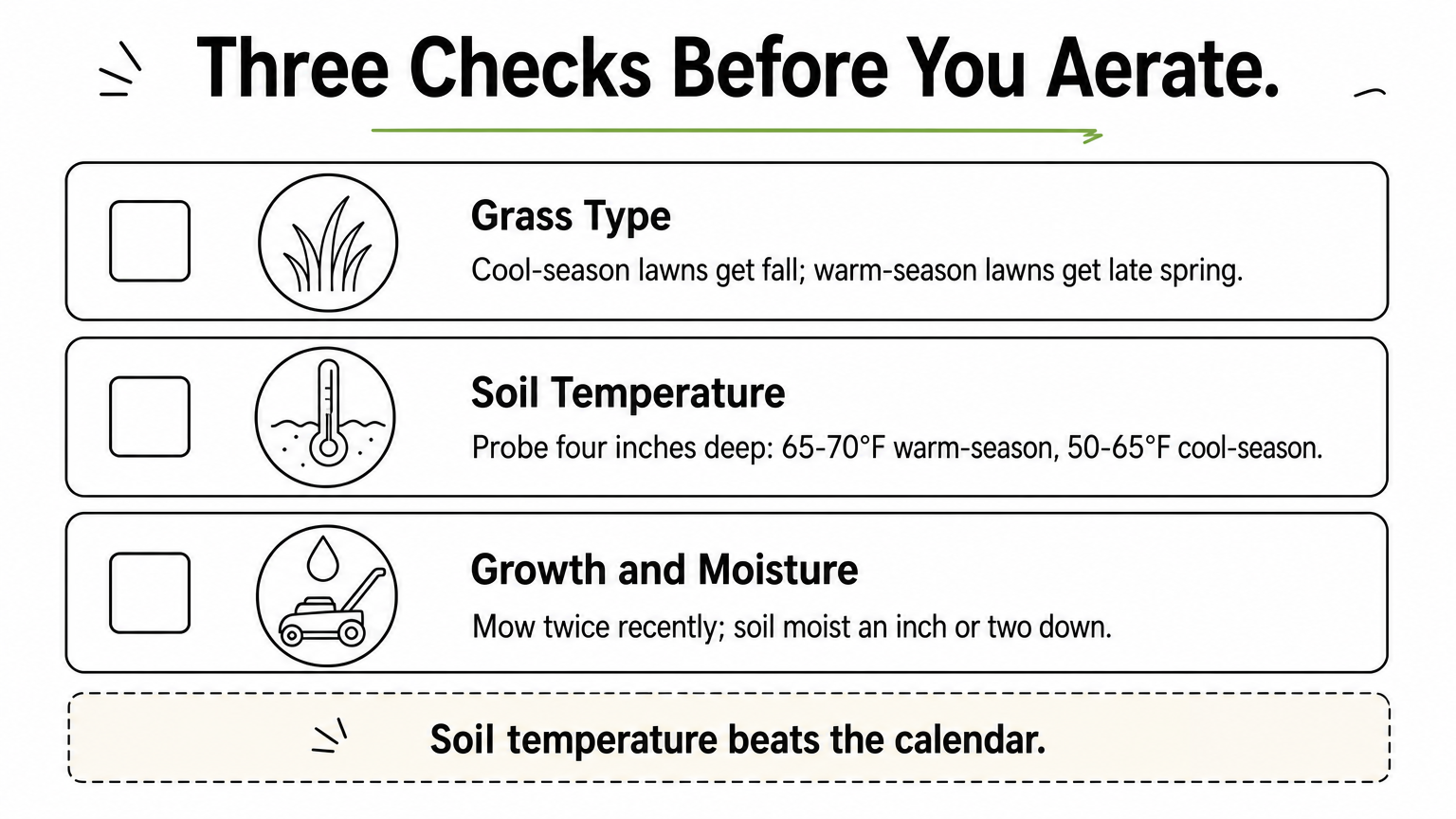
- Grass type: Cool-season lawns get fall. Warm-season lawns get late spring.
- Soil temperature: Push the thermometer four inches deep. Warm-season turf wants 65 to 70°F or higher. Cool-season turf wants roughly 50 to 65°F.
- Growth and moisture: You should have mowed at least twice recently, and the soil should be moist an inch or two down, not soggy or bone dry.
Soil temperature, not the date on the calendar, tells you when to aerate.
Decide between spring and fall
For cool-season lawns, fall wins . Weed pressure is fading, soil is still warm, and overseeding takes hold before winter. Spring works as a backup, but crabgrass germinates at the same time, so you will fight weed competition if you open the soil then.
Warm-season lawns flip that rule. Aerate in fall and the grass is slowing down, so the holes stay open into winter. Aim instead for late spring, once the lawn has fully greened up . That is the best time for aeration on a lawn like yours.
Best time to aerate in Florida and other warm climates
Florida's window runs April through June
Central Florida soil warms earlier than most of the country. For St. Augustine, Bermuda, Zoysia, and Bahia, April through June is the sweet spot, once the lawn has fully greened up and you have mowed it a few times. The start of the summer rainy season helps too, since steady moisture speeds recovery .
In warm climates, aerate after spring green-up and before the worst midsummer heat.
| Region | Typical window |
|---|---|
| South Florida | March to June |
| Central Florida | April to June |
| North Florida and the Deep South | Late April to June |
Skip fall and winter
Fall is tempting, because northern advice says to aerate then. Resist it. Growth slows after October, so open holes linger and winter weeds like annual bluegrass move into the bare soil.
Sandy soil also changes the math. Much of Central Florida has sand that compacts less than clay, so aerate only when you need to : heavy foot traffic, construction fill, or thatch thicker than half an inch. If you are reading this in October, mark April on next year's calendar.
What to do before and after aerating
Good prep decides whether your timing pays off. The best time for lawn aeration still gives poor results on dry, unmarked turf.
Prep the lawn first
Start by watering one to two days ahead so the soil is moist an inch or two down. Then work through this list:
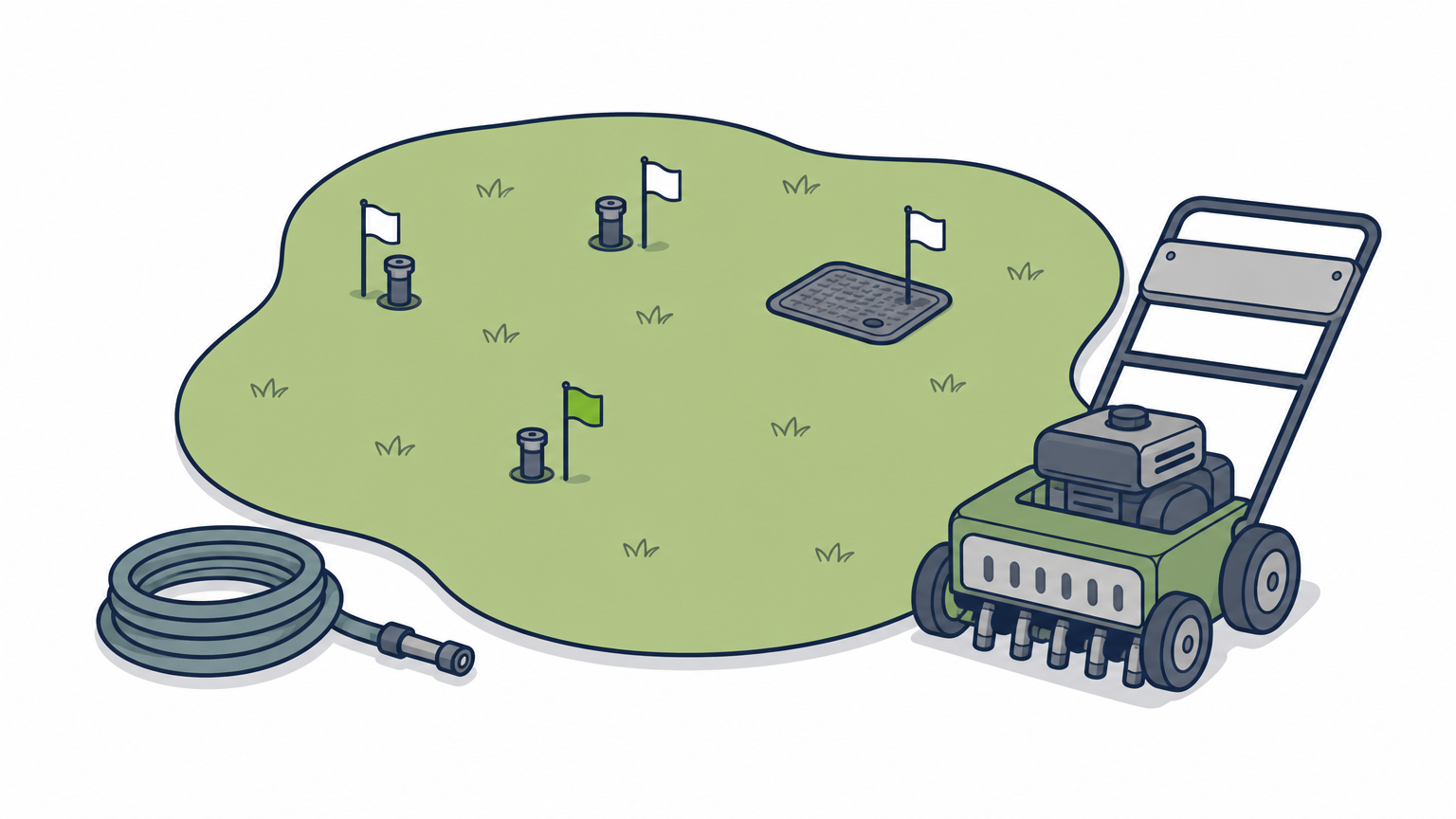
- Mow slightly shorter than usual , but never scalp the turf.
- Flag sprinkler heads, valve boxes, and shallow irrigation lines so the machine misses them.
- Mark cables, pet fences, and buried lighting wire.
- Skip pre-emergent herbicide if you plan to overseed. It blocks grass seed too.
Care for it afterward
Leave the plugs where they fall. They break down in two to three weeks and return nutrients to the soil. Within a day or two, fertilize and overseed while the holes are open and seed can drop straight to the soil.
Aeration opens the door, and the fertilizer, seed, and water you add right afterward are what walk through it.
Water lightly every day for two weeks if you overseeded, then go back to deep, infrequent watering. Keep heavy foot traffic off the lawn until new growth fills in, and hold off on mowing until the grass reaches its normal height.
When not to aerate and common timing mistakes
Times to hold off
Some conditions rule out aeration in any season. Wait on new lawns until they are established, usually a full year for sod and a full growing season for seed. Skip it during drought too, because dry, hard soil keeps the tines from pulling clean plugs. Also hold off when:
- The soil is soggy after heavy rain, since aerating wet ground smears and recompacts it.
- Frost or a freeze could arrive within a few weeks.
- You applied pre-emergent in the last several weeks. Aerating breaks the chemical barrier.
If the grass is dormant, stressed, or brand new, the best time for lawn aeration has not arrived yet.
Mistakes we see most often
Homeowners tend to repeat the same few errors. The costliest is copying a northern calendar , and the next is aerating by habit . Sandy Florida lawns often need it only every other year, or less.
| Mistake | What happens | Fix |
|---|---|---|
| Aerating warm-season turf in fall | Holes stay open, winter weeds move in | Aerate April to June |
| Aerating dormant or stressed grass | Little to no recovery | Wait for full green-up |
| Aerating every year without checking | Wasted money | Test first: if a screwdriver slides in easily when the soil is moist, skip it |
| Skipping the follow-up | Weeds fill the holes | Fertilize and overseed within two days |
Putting your aeration plan on the calendar
The best time for lawn aeration comes down to one rule: aerate when your grass is growing hard enough to heal the holes. Cool-season lawns get early fall. Warm-season lawns, including nearly every lawn around Sebring, get April through June , once the grass has fully greened up.
Before you book, check your soil temperature , water a day or two ahead, and flag your sprinklers. Afterward, fertilize and overseed within two days and keep traffic off the turf. Skip the job entirely if the grass is dormant, stressed, or new.
Timing is the one part you can get right for free , and the rest is execution. If you would rather hand the work to a crew that knows Central Florida turf , talk to TWQ about lawn aeration and overseeding and we will help you pick the right window for your property.