
Core Aeration Lawn: What It Is and Why It Matters
If your grass looks tired no matter how much you water and fertilize it, the problem might be underneath the surface, not on top of it. Years of foot traffic, mowing, and Florida's sandy or clay-heavy soils compact the ground until roots can't breathe. That's where core aeration lawn treatments come in, and it's one of the most overlooked steps in keeping turf healthy year after year.
Core aeration works by pulling small plugs of soil out of your lawn, opening channels for air, water, and nutrients to reach the root zone where they actually do some good. Done at the right time of year, core lawn aeration relieves compaction, reduces thatch buildup, and gives grass a real shot at thickening up instead of thinning out.
In this article, we'll break down exactly what happens during core aeration for lawn care, why it matters for soil health, and how it differs from other aeration methods. We'll also cover when to aerate based on your grass type and Central Florida's growing season, plus what results you should expect once the plugs break down and the grass responds.
Expect straightforward answers, not marketing fluff.
Why core aeration matters for your lawn's health
How compaction suffocates your lawn
Grass roots need oxygen just as much as they need water, and compacted soil blocks both. Every mower pass during routine lawn care and grass trimming, every kid's soccer game, every truck parked on the yard presses soil particles tighter together until there's barely any pore space left. In Central Florida, where sandy soils drain fast but clay pockets pack down hard, this compaction happens faster than most homeowners realize. Roots respond by staying shallow, since they can't push through dense ground to find nutrients deeper down. A proper core aeration of lawn areas breaks that cycle by physically removing plugs of soil, not just poking holes that reseal within days.
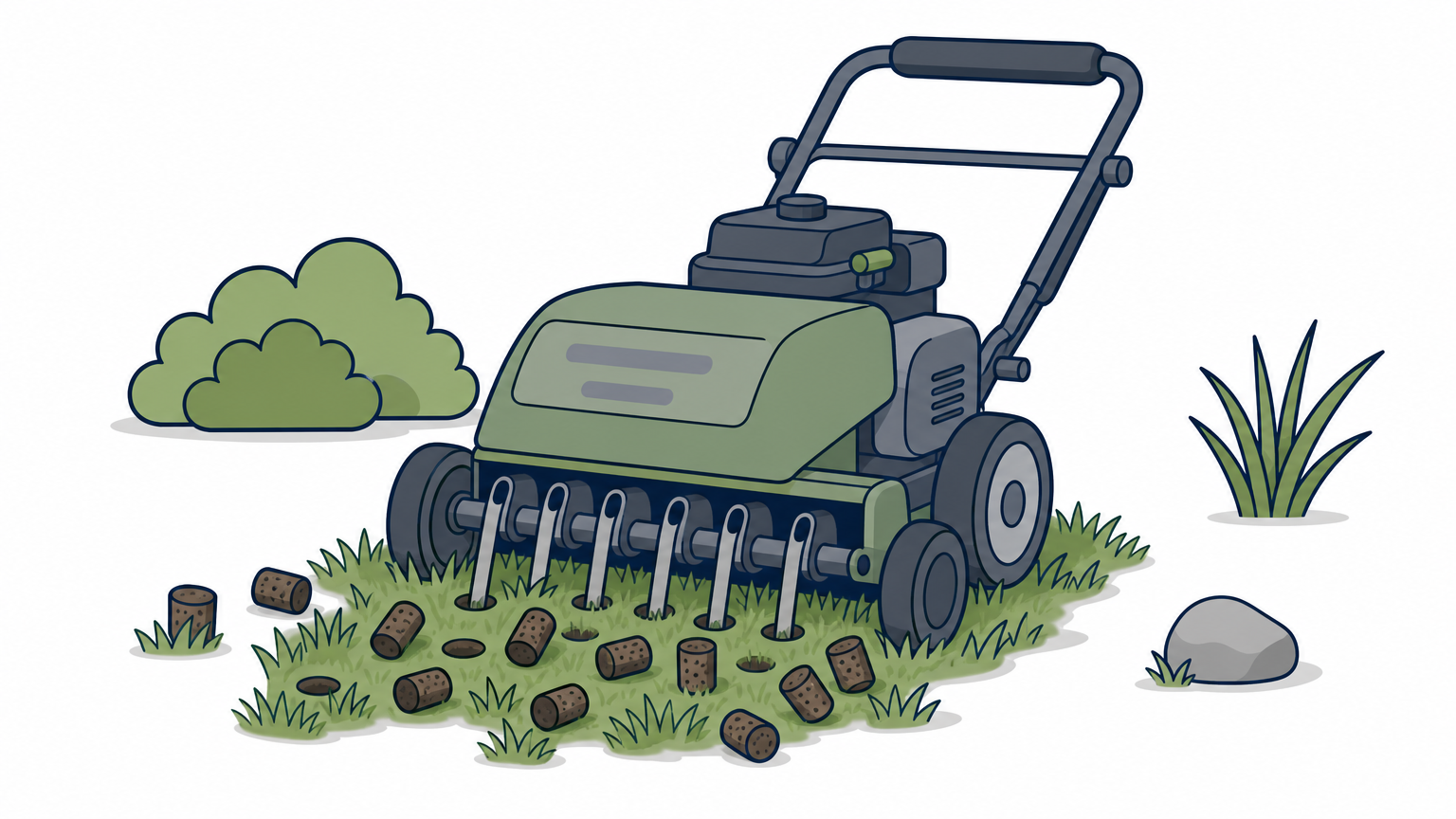
Compacted soil starves grass roots of oxygen long before the lawn ever looks sick on top.
Thatch buildup and shallow root systems
Thatch, that spongy layer of dead grass and organic debris sitting between the soil and the green blades you mow, traps water and fertilizer before they ever reach the roots. Left unchecked, this thatch layer thickens year after year, especially in warm-season grasses like St. Augustine and Bahia that dominate Central Florida lawns. Shallow root depth follows naturally, since roots take the path of least resistance and stay near the surface instead of digging down for stored moisture. That's why lawns with heavy thatch wilt fast during dry spells even after a good soaking.
What aeration actually fixes
Once you pull those soil plugs, you open direct channels for air, water, and nutrients to travel straight to the root zone. The results show up in measurable ways:
- Deeper root systems that tolerate drought and heat stress
- Better water infiltration, so less runs off during Florida's summer downpours
- Stronger fertilizer uptake, meaning you get more value from every application
- Reduced disease pressure, since water doesn't pool on a compacted surface
- Faster recovery from foot traffic and seasonal wear
Every one of these benefits ties back to the same principle: healthy soil structure supports healthy grass above it.
Signs your lawn needs core aeration
The screwdriver test and other quick checks
Grab a screwdriver and try pushing it into your lawn. If it takes real effort to get more than two inches deep, your soil is compacted and overdue for lawn core aeration . Puddles that linger long after rain, instead of soaking in within an hour, point to the same problem, and persistent standing water on residential property may call for a drainage solution. Water sitting on top of the ground can't reach roots that need it most during Florida's dry stretches.
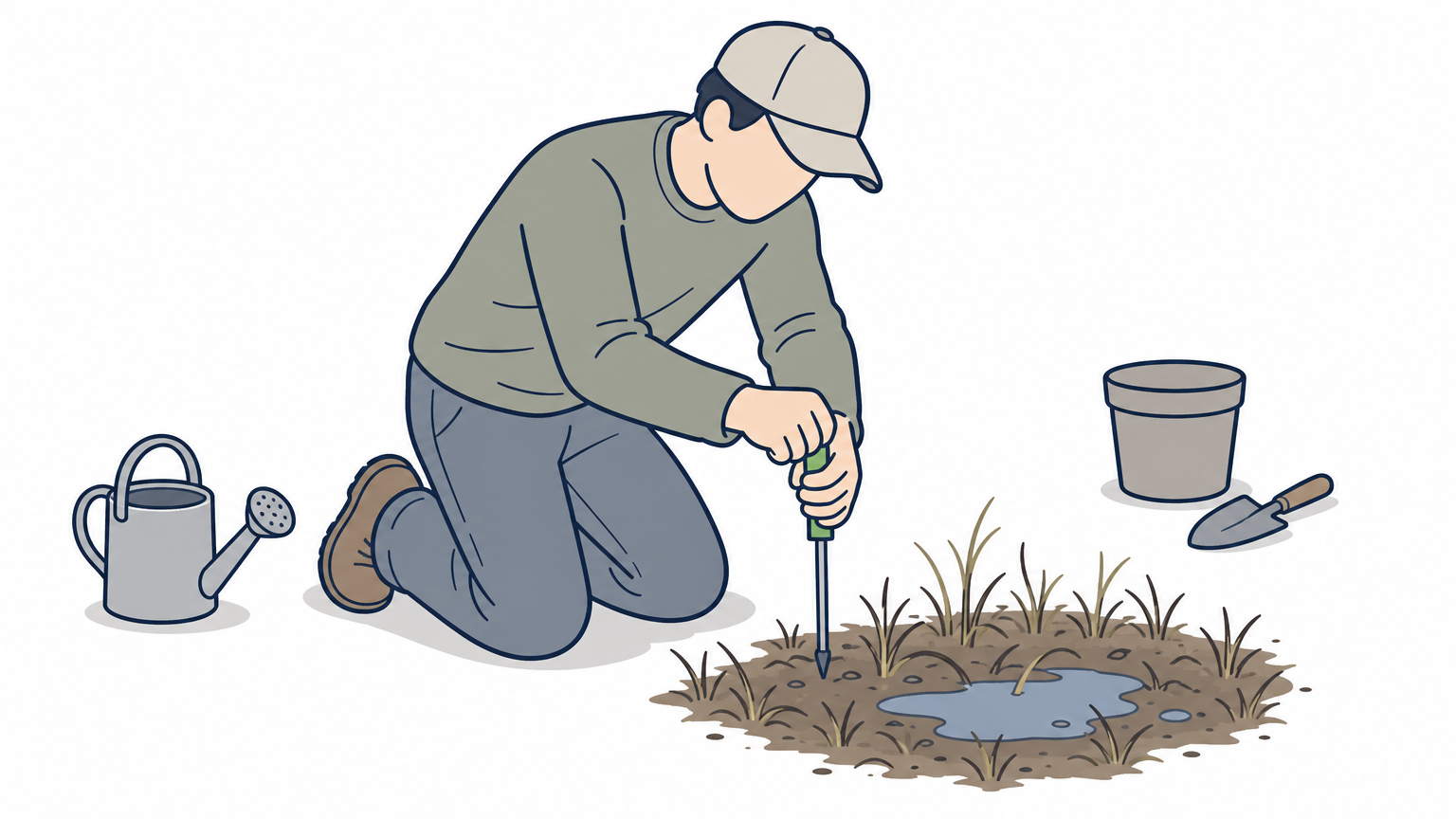
If a screwdriver won't sink easily into your soil, neither can water or roots.
Visual clues your grass is struggling underground
Thinning patches that spread despite regular watering usually mean roots have stopped growing outward. Bare spots near high-traffic areas, driveways, and gates show up first because that's where compaction hits hardest. A spongy, thick feel underfoot signals excess thatch buildup , which often travels together with compacted soil.
Watch for these common warning signs before scheduling service:
- Grass that wilts within a day of watering, even in shaded areas
- Visible thatch layer thicker than half an inch when you part the grass
- Slow or uneven growth compared to neighboring lawns with similar sun exposure
- Increased weed pressure, since compacted soil favors weeds over turf grass
- Water pooling on the surface instead of draining within 30 to 60 minutes
Any one of these signs on its own might not mean much, but two or more together usually confirm your lawn needs attention below the surface, not another round of fertilizer on top.
How to core aerate your lawn
Timing your aeration for warm-season grass
Grass type dictates the calendar here. St. Augustine, Bahia, and Zoysia lawns across Central Florida do best when you core aerate lawn areas in late spring through early summer, once soil temperatures sit above 65 degrees and the grass is actively growing. Aerating during dormancy or drought stress just adds strain without giving roots time to recover, so it helps to know how to aerate a lawn and when it's needed. Skip aeration right before a heavy rain forecast too, since saturated soil clogs the machine and produces mushy, useless plugs instead of clean cores.
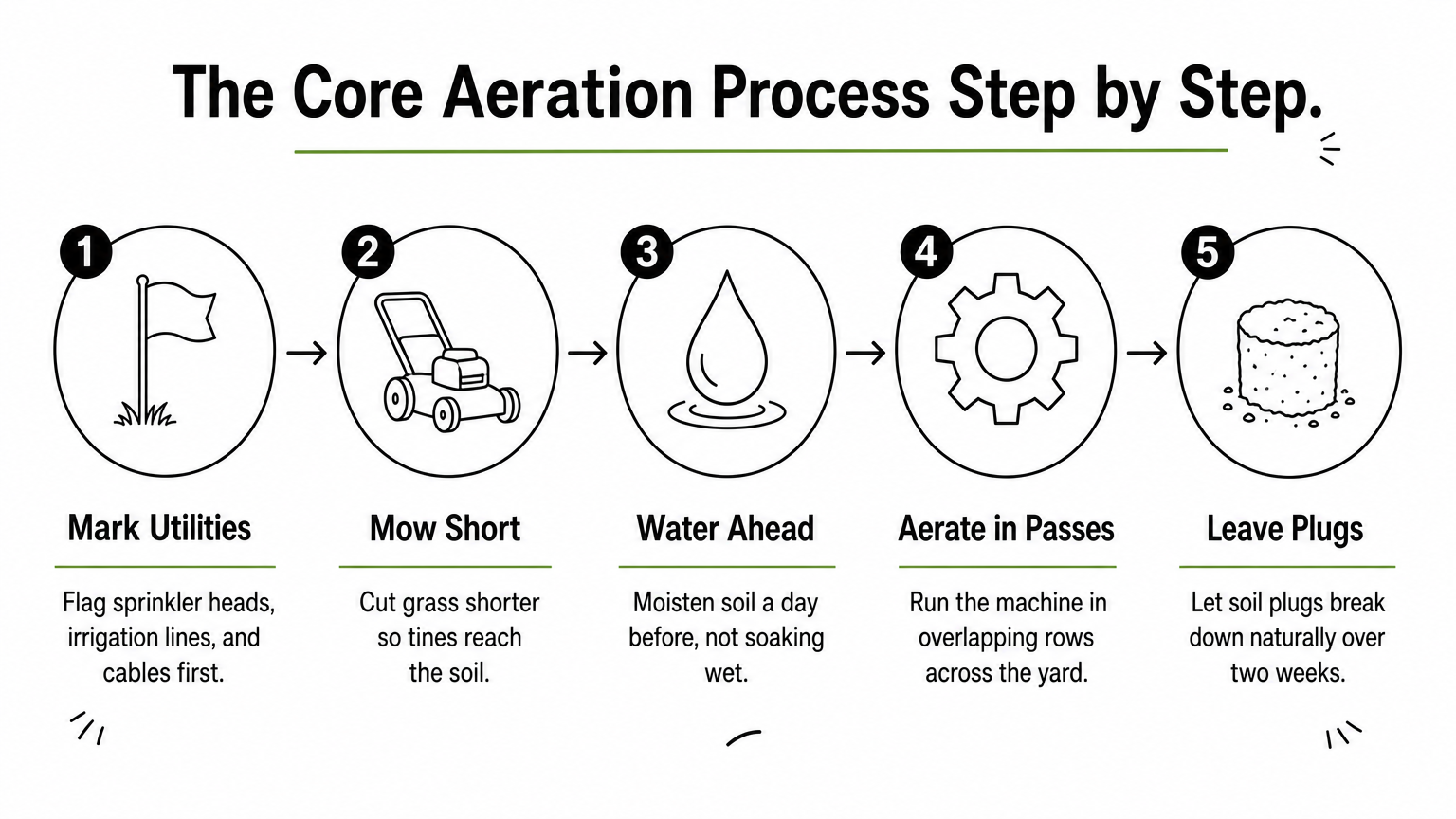
The core aeration process step by step
A core aerator, whether a walk-behind machine or tow-behind attachment, pulls small plugs of soil roughly two to three inches deep and leaves them scattered across the lawn. Here's the basic sequence a pro follows:
- Mark sprinkler heads, shallow irrigation lines, and cables before starting
- Mow the lawn shorter than usual so the aerator tines make full contact with soil
- Water the lawn a day ahead so soil is moist but not soaked
- Run the aerator in overlapping passes across the entire yard
- Leave plugs on the surface to break down naturally over one to two weeks
Clean, moist soil produces clean plugs; dry, hard ground just chews up the machine.
After the plugs come up
Overseeding and a light fertilization and weed control treatment right after core aeration of lawn areas gives new roots direct access to loosened soil. Skip mowing for a few days so the plugs have time to break down and feed the topsoil naturally.
DIY aeration vs hiring a lawn care professional
Renting a core aerator from a home improvement store costs somewhere between 60 and 100 dollars for a half-day, and that price tag tempts a lot of homeowners into tackling the job themselves. Handling the equipment on a quarter-acre yard sounds simple until you're wrestling a 200-pound machine over uneven ground, dodging sprinkler heads you forgot to mark, and realizing the tines aren't pulling clean plugs because the soil dried out overnight. Rental equipment is also built for general use, not calibrated for Central Florida's mix of sandy soil and clay pockets, so results vary a lot from yard to yard.
Professionals bring commercial-grade aerators, know how deep to set the tines for your specific grass type, and time the job around your lawn's actual growth cycle instead of whatever weekend happens to be free, the same way scheduled lawn treatment services in Sebring FL work. TWQ's aeration and overseeding services fold core lawn aeration into a broader maintenance plan, so fertilizer, overseeding, and follow-up care all line up instead of happening as disconnected, one-off tasks.
A rented machine gets holes in the ground; a trained crew gets healthier turf out of the process.
| Factor | DIY Aeration | Professional Service |
|---|---|---|
| Equipment cost | 60 to 100 dollars per rental | Included in service price |
| Time investment | 3 to 5 hours plus setup | 1 to 2 hours, scheduled |
| Soil expertise | Limited | Site-specific assessment |
| Follow-up care | On you | Bundled with fertilizing, overseeding |
Keeping your lawn healthy year after year
A one-time treatment won't undo years of compaction. Core aeration lawn care works best as an annual habit, timed to your grass type and paired with overseeding, fertilizing, and consistent mowing height. Skip a year and thatch creeps back, roots shallow out again, and you're back to wilted patches by midsummer.
Grass that gets aerated on schedule handles Florida's dry stretches and downpours better than turf left to fend for itself. Healthy root systems built over several seasons don't happen from a single service call, they come from a maintenance rhythm that treats soil health as ongoing work, not a one-off fix.
If your lawn is showing the warning signs we covered, don't wait for bare patches to spread further. Reach out to TWQ about aeration and overseeding in Sebring and schedule service timed right for your grass, your soil, and Central Florida's growing season.