
Aeration, Overseeding, and Fertilizing: Order and Timing
Get the order wrong and you waste seed, fertilizer, and a weekend. Seed that lands on compacted soil washes away or never roots. Fertilizer applied too early feeds weeds before your new grass can compete. If you are planning aeration overseeding and fertilizing on a Central Florida lawn, sequence and timing decide the result.
Here is the short answer. Aerate first, overseed right after, then apply a starter fertilizer the same day or within a day or two. Choose a starter formula with higher phosphorus, and skip weed control products that block germination. Wait about four to six weeks before your first regular fertilizer feeding and before mowing short again.
At TWQ, we have spent over 20 years doing this work on lawns in Sebring and across the surrounding area, so we know how our sandy soils and heat change the schedule. Below, you will find the exact steps, the best timing window, how long to wait between each stage, and what to do for watering and mowing afterward.
Why the order and timing matter
Each step sets up the next
Each step prepares the ground for the one that follows. Core aeration pulls small plugs from the soil, which breaks up compaction and opens channels for air, water, and roots. Seed dropped into those channels gets seed-to-soil contact , which is the single biggest factor in germination. Starter fertilizer then feeds seedlings that are already in place.
| Step | What it does | What goes wrong if you reverse it |
|---|---|---|
| Aerate | Opens compacted soil | Seed sits on a hard surface and washes off |
| Overseed | Puts seed in the holes | Seeding first, then aerating, buries seed unevenly |
| Starter fertilizer | Feeds new seedlings | Applied early, it feeds weeds and leaches away |
Aerate for access, seed for coverage, and fertilize for the seedlings that follow.
Why timing matters as much as order
Seed needs warmth and steady moisture to sprout. Your soil temperature matters more than the calendar, and the right range depends on your grass type. We cover that in the next step. In our sandy soils , nutrients move through fast, so fertilizer applied too early or too heavily is gone before roots can use it.
Local rules add another limit. Many Florida counties and cities set summer fertilizer restrictions during the rainy season, and some limit phosphorus too. Check your county ordinance before you buy product, because the legal window can change your schedule.
Keep the gaps short. Aerate and seed on the same day, and fertilize within a day or two. Long delays let holes dry out and weeds move in.
Step 1. Pick the right window for your grass
Match the window to your grass type
Most Central Florida lawns are warm-season turf, so your best window opens in late spring , not fall, which is worth keeping in mind when you plan what lawn aeration is and when to do it. Bermuda, bahia, and centipede seed best when the soil stays above 70°F. Use the table to find your grass.
| Grass | Goal | Soil temperature | Typical window |
|---|---|---|---|
| Bermuda, bahia, centipede | Fill thin spots | 70°F and rising | Late April to June |
| Perennial ryegrass | Winter color on dormant bermuda | Below 70°F and falling | Late October to November |
| St. Augustine | Repair bare areas | Not seeded | Patch with sod after aerating |
Check soil temperature, not the date
Soil temperature beats the calendar every time. Push a soil thermometer four inches deep at mid-morning for three days in a row. If the average sits in your grass's range, you are ready.
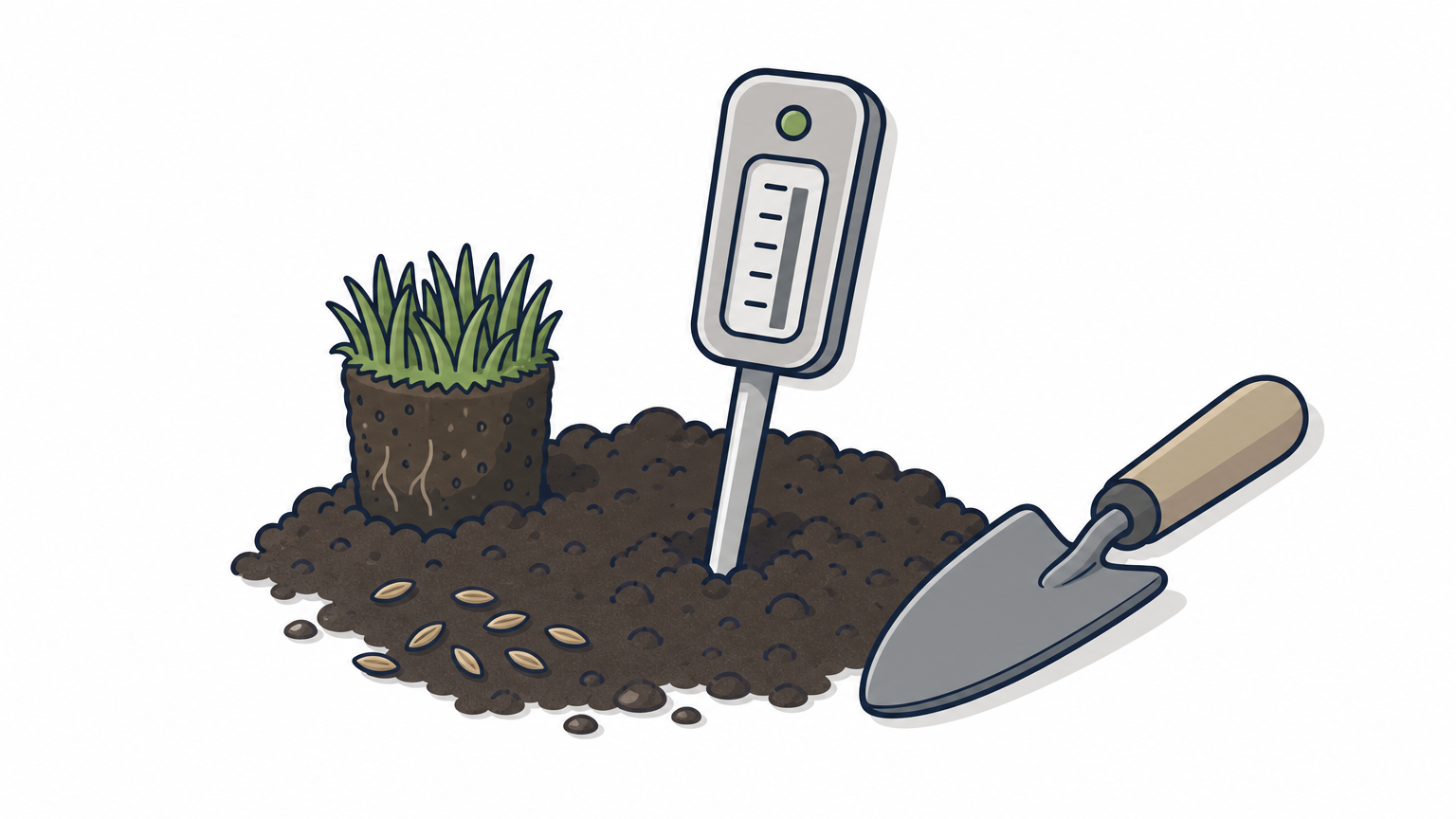
Seed when the soil is warm enough to sprout it, not when the calendar says it's time.
St. Augustine is the exception, since it is not seeded at all and bare areas are best repaired with new sod laid in Sebring after aerating, and winter overseeding is a different job. Ryegrass sprouts fast once nights cool, which usually means late October to November here. It is a temporary cover that fades as spring heat arrives, so do not expect it to thicken your permanent turf.
Step 2. Prep the lawn and core aerate
Prep the lawn first
Clear the surface so seed can reach soil. Mow one notch lower than normal and bag the clippings, then rake out sticks and loose debris. Water the lawn a day ahead so the soil is moist but not soggy , which helps the tines pull clean plugs.
- Flag sprinkler heads, valve boxes, and low-voltage lighting cables.
- Pick up toys, hoses, and pet waste.
- Check the forecast for a dry 24 hours.
Core aerate in two passes
Rent a core aerator with hollow tines, and follow the full aeration walkthrough if this is your first time running one. Spikes only push soil aside and add compaction. Set the machine to pull plugs two to three inches deep , about three-quarters of an inch wide. Make two passes at right angles, and add extra passes along driveway edges and mower turnaround spots.
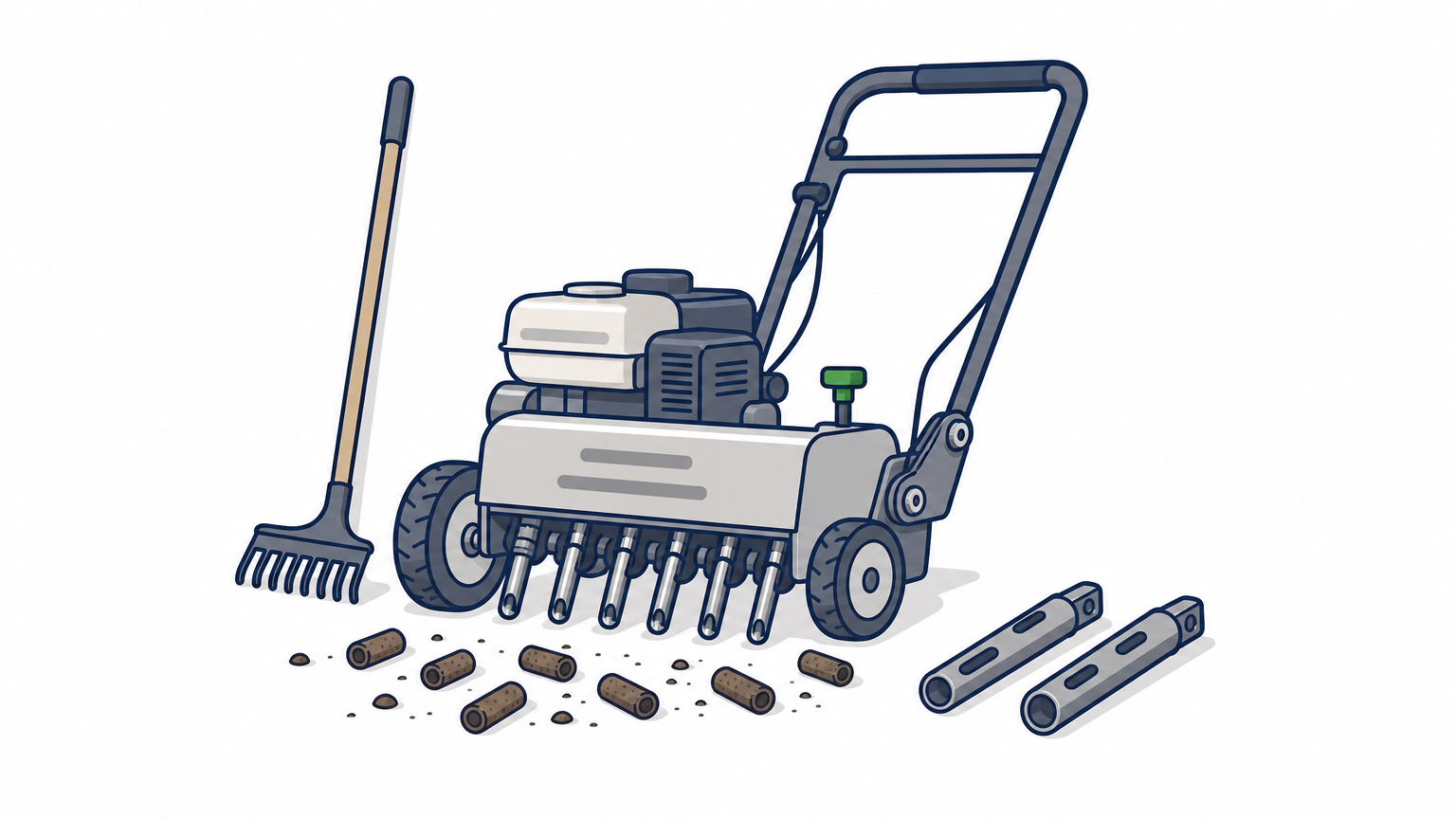
Hollow tines remove soil, while spikes just compact it more.
Leave the plugs where they fall. They break down in one to two weeks and return nutrients to the turf. Even sandy soils compact under foot traffic and mowers, so this step is the foundation of aeration overseeding and fertilizing, and it helps to know when a lawn actually needs aerating. Seed the same day, while the holes are open and fresh.
Step 3. Overseed right away
Spread seed the same day
Seed goes down within hours of aerating , while the holes are open. Load a broadcast spreader with seed that matches your grass from Step 1. Follow the rate on the bag , because extra seed only crowds seedlings until they starve each other. Split the seed in half and make two passes at right angles for even coverage.
Work the seed into the holes
Next, rake the lawn lightly with the back of a leaf rake. Your goal is to settle seed into the aeration holes and cover it with no more than a quarter inch of soil . This is the heart of aeration overseeding and fertilizing, since every seed that touches soil has a real chance to root.
Seed that touches soil sprouts, and seed that sits on top of thatch mostly doesn't.
Lastly, protect what you planted:
- Skip weed-and-feed and pre-emergent herbicides , which block new seed from sprouting.
- Keep foot traffic and mowers off the area until seedlings stand about three inches tall.
- Sweep stray seed off driveways and sidewalks before the irrigation runs.
Step 4. Apply starter fertilizer and water
Choose and spread the starter
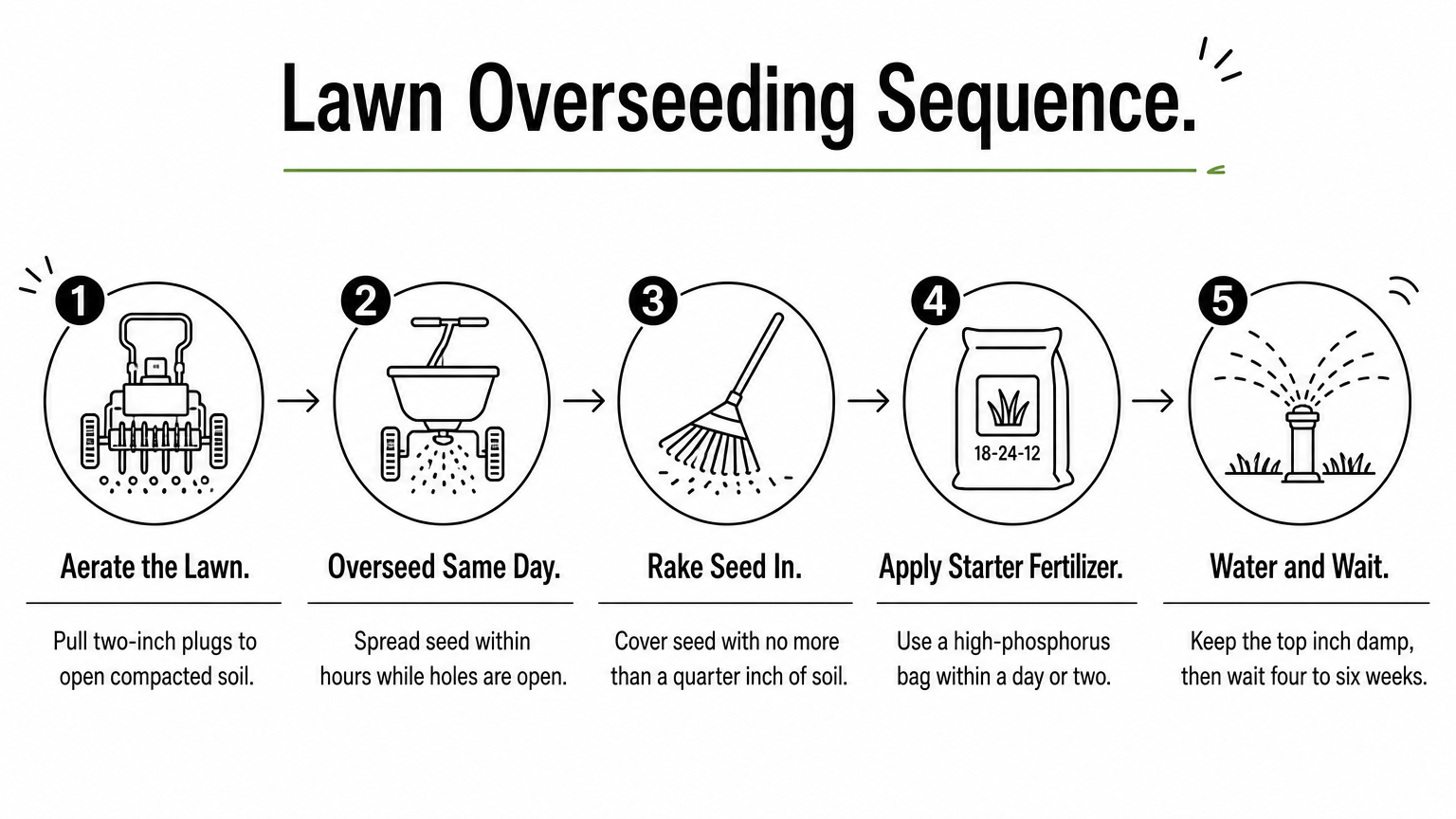
Starter fertilizer goes down the same day as seed, or within a day or two. Pick a bag with a high middle number , such as 10-20-10, because phosphorus drives root growth. Load the spreader, follow the bag rate , and sweep stray granules off hard surfaces. Some Florida ordinances limit phosphorus, so check yours first.
Water to keep seed moist
Watering decides whether this works. Run the irrigation in short cycles so the top inch of soil stays damp while seed sprouts. Never let it dry out, and never let puddles form, since soggy ground rots seed.
Keep the top inch damp until the seedlings stand on their own.
| Period | Frequency | Run time |
|---|---|---|
| Weeks 1 to 3 | 2 to 3 times daily | 5 to 10 minutes |
| Weeks 3 to 4 | Once daily | 15 minutes |
| Week 5 on | Every 2 to 3 days | Deep soak |
Mow and feed again later
Finally, hold off on mowing until seedlings reach about three inches , then cut no more than a third of the blade. Wait four to six weeks before your first regular feeding, then get back on a steady lawn feeding and weed treatment schedule. Done in this order, aeration overseeding and fertilizing gives new grass the best chance to fill in.
Getting the sequence right
Good results come down to order and timing. Aerate first, overseed within hours, then apply starter fertilizer the same day or a day or two later. Pick your window by soil temperature , keep the top inch of soil damp, and hold off on regular feeding for four to six weeks. Follow that order and aeration overseeding and fertilizing can turn a thin, tired lawn into thick turf.
If you would rather skip the rental equipment and the watering schedule, let us handle it. TWQ has spent more than 20 years caring for lawns in Sebring and across Central Florida, and our crews are licensed and insured . For aeration and overseeding done by our crews, fertilizing, and ongoing maintenance, talk to TWQ about a plan built for your property.