
5 Things to Check Before Hiring Lawn Aeration Services
Hiring lawn aeration services looks simple. A crew shows up, pulls plugs out of your turf, and leaves. But the quality gap between providers is wide, and a bad job can leave you with shallow holes, torn-up irrigation heads, and a bill for work that barely helped your grass.
Here is the short answer. Before you book, check five things : the equipment and method used, the timing for your grass type, the pricing structure, the crew's licensing and insurance, and what happens after the plugs hit the ground. If a provider can't answer all five clearly, keep looking.
At TWQ, we have spent over 20 years caring for lawns in Sebring and across Central Florida, so we know what warm-season turf like St. Augustine and Bermuda needs and when. Below, you'll find each check explained with the specific questions to ask, so you can compare quotes with confidence and hire the right provider the first time .
1. Whether they use core aeration equipment
What to look for
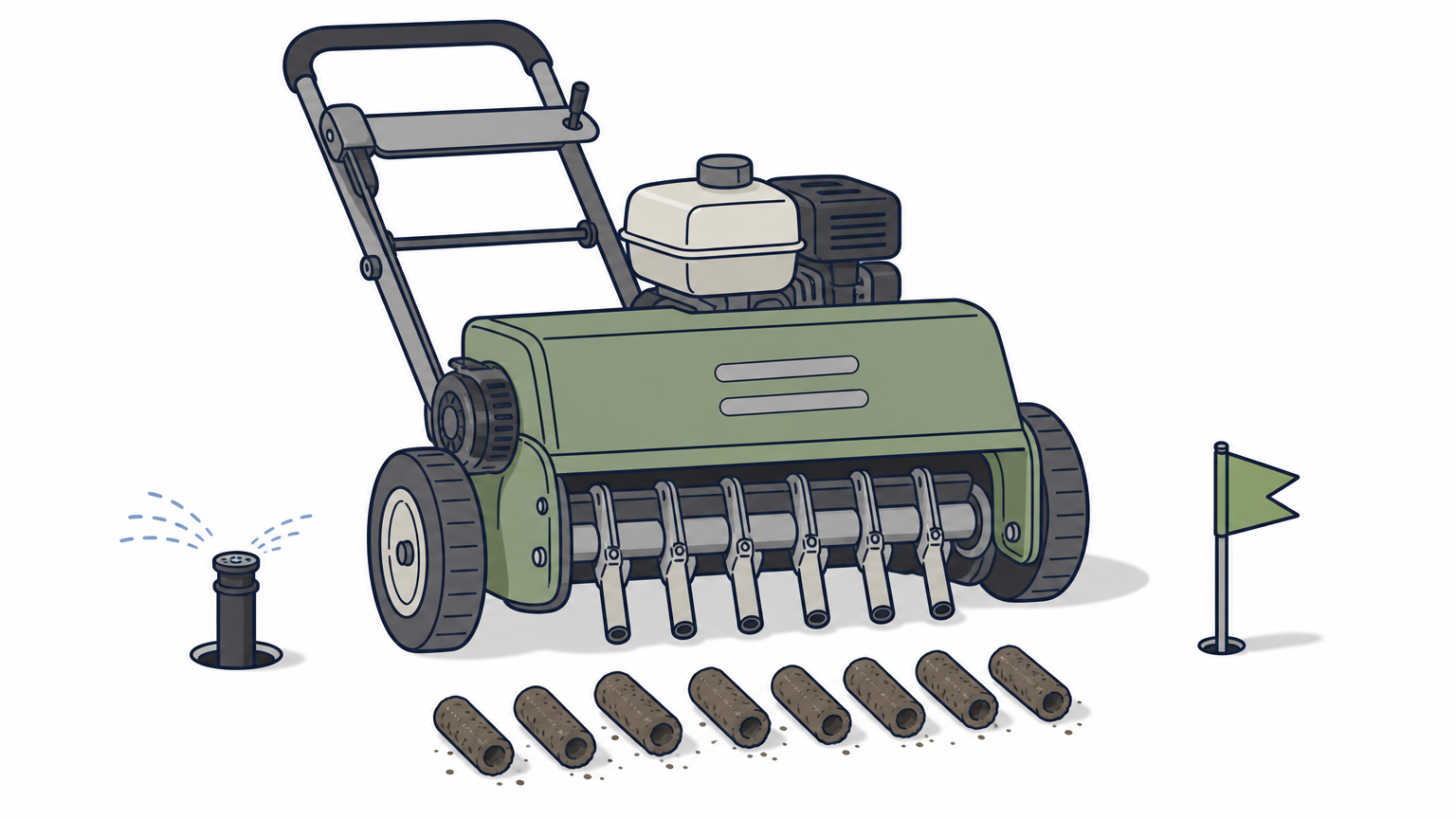
Start with the method. You want core aeration , done with a powered machine that has hollow tines. It pulls plugs of soil about 2 to 3 inches deep and leaves them on the surface to break down. Some companies sell spike aeration under the same name, so confirm the method before you agree to a price.
| Feature | Core aeration | Spike aeration |
|---|---|---|
| What it does | Removes soil plugs | Pokes narrow holes |
| Effect on compaction | Relieves it | Can pack soil around each hole |
| Equipment | Powered core aerator | Spiked roller or shoes |
| Best use | Compacted or thatchy turf | Light touch-ups only |
Why it matters
Core aeration is what actually relieves soil compaction . Pulling plugs opens space for air, water, and fertilizer to reach the roots. Even sandy Florida soil compacts under mowers, foot traffic, and fill left behind by construction.
Spikes poke holes, but only core aeration removes soil and fixes compaction.
Spike tools are cheaper to run, which is why some lawn aeration services quote low and use them. You pay less and get a lawn that looks aerated without the benefit. Equipment also affects safety. A crew that works carelessly can clip sprinkler heads, so a good provider marks irrigation lines and heads before the first pass.
Questions to ask the provider
A short call tells you a lot. Ask these, and pay attention to how quickly and specifically they answer:
- Do you use a hollow-tine core aerator, or spikes?
- How deep do the tines go, and how far apart are the holes?
- How many passes will you make over my lawn?
- How do you locate and protect my irrigation heads?
Vague answers like "we aerate it all the same" are a red flag. A pro should name the machine type and explain the pass pattern without hesitation.
2. How they match timing to your grass type
What to look for
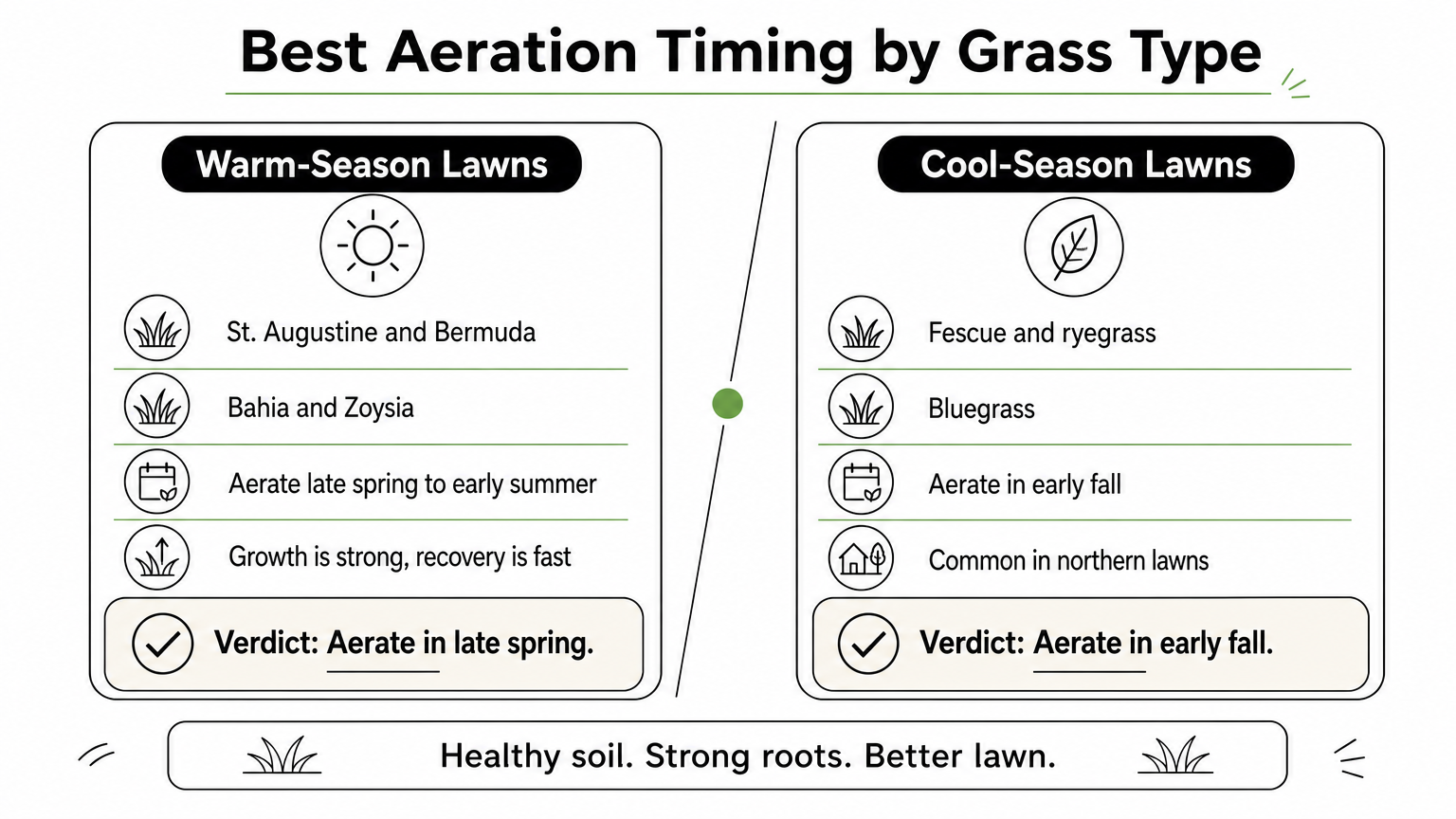
A good provider asks what grass you have before offering a date. For Florida's warm-season lawns, aeration works best from late spring into early summer , when growth is strong and turf recovers quickly .
| Grass type | Best window |
|---|---|
| St. Augustine, Bermuda, Bahia, Zoysia | Late spring to early summer |
| Fescue, ryegrass, bluegrass (northern lawns) | Early fall |
Why it matters
Timing decides whether the work helps or hurts. Aerating dormant or stressed grass leaves open holes that weeds colonize first . Some lawn aeration services run one fall schedule everywhere, which suits northern turf and fails yours.
Aerate when your grass is growing fast, not when the provider has an open slot.
Questions to ask the provider
Ask these before you book, and listen for reasons tied to your grass , not their calendar :
- What grass do you see in my lawn?
- Which month would you schedule my aeration, and why?
- Will you follow up with fertilizer or overseeding?
3. Whether they assess your lawn before pricing
What to look for
A reliable provider looks at your property before quoting, in person or at least with photos and a lot measurement. They should check turf density, thatch depth, and compaction , and note obstacles like irrigation heads, septic fields, and slopes. You can test compaction yourself. If a screwdriver won't push easily into moist soil, the ground is likely compacted .
Why it matters
Lawns vary a lot. A new-construction yard with packed fill needs more passes than a healthy lawn on sandy soil , and a flat phone quote ignores that. Many lawn aeration services price by square footage alone, which works as a starting point but misses the real workload.
Without an assessment, you either pay for passes you don't need or get one pass where the lawn needed two.
A quote given without seeing your lawn is a guess, not a price.
Questions to ask the provider
Ask these before you accept any number, and note whether the answers are specific to your yard:
- Will you walk the property or review photos before quoting?
- How do you measure my lawn's square footage?
- Do you check thatch depth and compaction?
- Does the price change if the lawn needs extra passes?
4. How pricing is structured and what it includes
What to look for
Get the quote in writing, with the pricing basis spelled out. Most lawn aeration services charge per visit, per 1,000 square feet, or a flat rate by lot size. Then confirm what the number covers :
- Number of passes over the lawn
- Irrigation head marking
- Plug cleanup, or leaving plugs to break down
- Overseeding or fertilizer, priced separately
Why it matters
Two quotes can look far apart and still cover different work. A low price often leaves out a second pass or hides add-ons that show up as extra line items later. Compare what each estimate includes, not just the total.
The cheapest quote is rarely the lowest price once you count what's missing.
Questions to ask the provider
Ask these before you sign, and request the answers on the estimate so nothing depends on memory or a verbal promise :
- Is the price per visit, per square foot, or flat?
- Does it include a second pass if my soil is compacted?
- Are there fees for fuel, travel, or irrigation repairs?
- Is fertilizer or overseeding included, and at what cost?
5. License, insurance and local experience
What to look for

Ask for proof, not promises. A legitimate company holds a local business tax receipt and can send a certificate of insurance showing general liability and workers' compensation coverage. Aeration alone doesn't need a special state license, but any fertilizer or weed control that follows does require state certification.
Why it matters
Without coverage, a broken sprinkler line or an injured worker can become your problem. Insurance protects your property and keeps you out of a dispute over repair costs.
A provider who can't show proof of insurance leaves the risk with you.
Local experience matters just as much. A crew that knows Central Florida's sandy soil, summer rains, and county fertilizer restrictions will time the job and the follow-up correctly. Out-of-area lawn aeration services often don't.
Questions to ask the provider
Request documents before the crew arrives, and ask about their track record nearby:
- Can you email your certificate of insurance?
- Who applies fertilizer or weed control, and are they state certified?
- How many lawns in my area did you aerate last season?
- Can you share local references?
Choosing the right aeration provider
The best lawn aeration services share the same traits. They use hollow-tine core aerators , schedule the job around your grass type, look at your lawn before pricing , and spell out what the quote covers. They also show proof of insurance and know local conditions.
Use the questions in each section as a script when you call. Providers who give clear, specific answers usually do careful work. Providers who dodge the basics are showing you how the job will go.
Ready to compare options in Central Florida? Request a lawn care quote from TWQ and we will walk your property , explain our method, and put the full price in writing before any work begins.