
Cost for Paver Installation: What You'll Pay per Square Foot
You want a paver patio or walkway, but before you commit, you need real numbers. Not vague ranges buried in a sales pitch, actual dollars per square foot so you can size up your project against your budget. The cost for paver installation varies more than most homeowners expect, and guessing wrong can throw off your whole project plan.
Here's the short answer: most Florida homeowners pay $12 to $25 per square foot installed, depending on the paver material, pattern complexity, and site conditions. A standard 300 square foot patio typically lands between $3,600 and $7,500 once you factor in base preparation, materials, and labor, which lines up with what a paver patio costs per square foot across the region. Concrete pavers sit at the lower end of that range, while travertine or natural stone push costs higher.
In this guide, we break down exactly what drives those numbers, from base excavation and material grade to drainage needs and edge restraints. We'll cover per-square-foot pricing by paver type, what separates a $12 job from a $25 job, and where homeowners in Sebring and Central Florida typically see their costs land based on our two decades installing hardscapes in this region.
Why paver installation costs vary so much
Six contractors can look at the same backyard and hand you six different quotes, sometimes with a $3,000 spread. That's because paver installation cost isn't one number, it's a stack of variables that each move the price independently. Soil type, paver material, pattern complexity, drainage, and even your driveway access for equipment all factor in before a single paver gets laid.
Site prep and soil conditions
Ground conditions in Central Florida vary block to block. Sandy soil common around Sebring and Lake Wales drains well and is cheaper to excavate, but if your yard has clay pockets or a high water table, you'll need deeper base material and better compaction. That extra base excavation can add $2 to $4 per square foot before you even see a paver. Poor drainage planning is also the number one reason paver patios fail early, with pavers shifting or pooling water within a year or two.
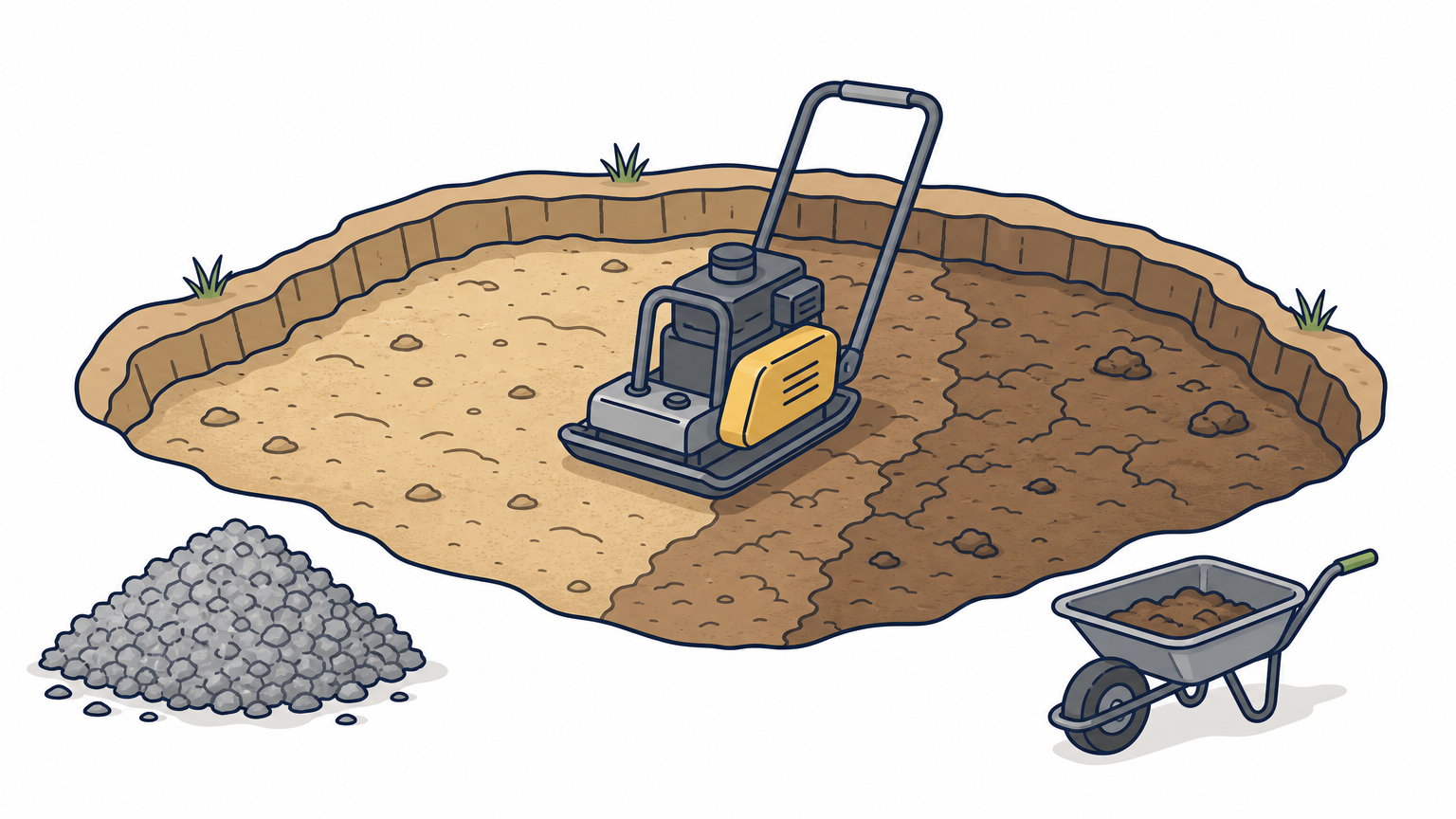
Skimping on base prep is the fastest way to turn a $15 per square foot patio into a $30 per square foot repair job.
Material grade and pattern complexity
Once the base is set, paver material drives most of what's left in your quote. Basic concrete pavers laid in a simple running bond pattern are the most budget-friendly option. Herringbone or basketweave patterns require more cutting and labor, which shows up in your final price. Natural stone and travertine cost more per unit and require more careful handling, pushing the job toward the top of the range.
| Factor | Low-cost scenario | High-cost scenario |
|---|---|---|
| Soil type | Sandy, well-draining | Clay, poor drainage |
| Pattern | Running bond | Herringbone, basketweave |
| Material | Standard concrete pavers | Travertine, natural stone |
| Access | Open backyard, easy equipment access | Fenced yard, hand-carry materials |
| Edge restraints | Plastic edging | Concrete curbing |
Access and edge restraints
Access to your worksite matters more than most homeowners realize. If a skid steer can drive straight to your patio site, labor moves faster. Fenced-in backyards or properties with tight side gates often mean crews hand-carry base material and pavers, adding hours to the job. Edge restraints, the border that keeps pavers locked in place, range from basic plastic edging to poured concrete curbing, another line item that shifts your total.
How to estimate your paver installation cost
Grab a tape measure before you call anyone for a quote. Multiply the length and width of your patio or walkway area in feet to get your square footage , then round up by 10% to account for cuts and waste. That number is the baseline every contractor uses to calculate your cost of paver installation per square foot , so getting it right saves you from lowball estimates that balloon later.
Build your own rough estimate
Once you have square footage, run it against a simple formula: base material and prep, paver cost, labor, and add-ons like drainage or lighting. Here's a quick breakdown for a 300 square foot patio:
- Base prep and excavation : $900 to $1,200
- Paver materials : $1,800 to $4,500 depending on grade
- Labor and installation : $900 to $1,800
- Edge restraints and finishing : $200 to $500
Add those together and you land close to the $3,600 to $7,500 range we mentioned earlier. This math holds up whether you're pricing a small walkway or a full commercial courtyard, you just scale the square footage.
A rough estimate built from real square footage beats a guessed number every time, even before a contractor walks your property.
Why written quotes still matter
DIY math gets you close, but soil conditions and access issues on your specific property can shift numbers fast. That's why we walk every site in person before quoting a paver installation price , checking drainage, grade, and existing landscaping before we write anything down. If you want a number specific to your property rather than a national average, see how we handle paver installation in Sebring FL and we'll measure it ourselves.
Paver installation cost by size and material
Project size changes your average cost for paver installation more than people expect, because fixed costs like equipment delivery and site setup get spread across fewer square feet on small jobs. A 100 square foot walkway costs more per square foot than a 500 square foot patio, even though the total bill is smaller. Material choice moves the needle just as hard, since concrete paver installation costs sit well below travertine or natural stone once you account for both the unit price and the labor needed to cut and set them.
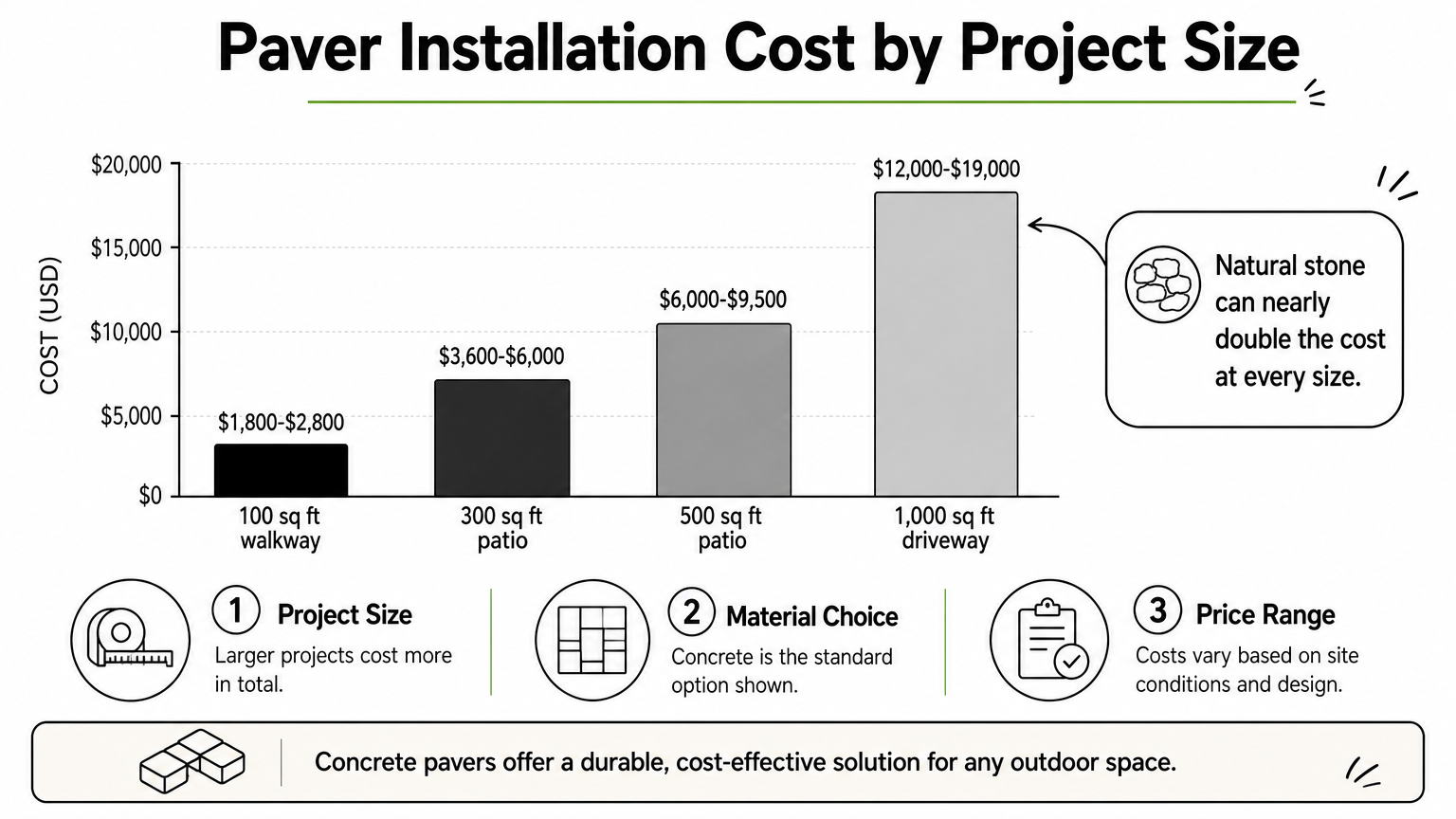
Typical price ranges by project size
Here's what we typically see across Central Florida properties, based on two decades of installs in Sebring, Lake Placid, and Avon Park:
| Project size | Concrete pavers | Natural stone / travertine |
|---|---|---|
| 100 sq ft walkway | $1,800 - $2,800 | $2,800 - $4,200 |
| 300 sq ft patio | $3,600 - $6,000 | $6,000 - $9,500 |
| 500 sq ft patio | $6,000 - $9,500 | $9,500 - $15,000 |
| 1,000 sq ft driveway | $12,000 - $19,000 | $19,000 - $30,000 |
Material choice alone can double your total bill, so pin down your paver type before you compare quotes.
What pushes you toward one end of the range
Standard gray concrete pavers in a running bond pattern land you near the low end of every row in that table. Upgrading to a tumbled or textured finish, adding a border in a contrasting color, or choosing travertine for its cooler surface temperature all pull your paver installation cost per square foot upward. Paver installation for businesses often lands higher too, since larger courtyards and walkways require more precise grading to handle foot traffic and drainage across a bigger footprint.
DIY versus professional paver installation costs
Renting a plate compactor and laying patio pavers yourself step by step sounds like an easy way to cut your paver installation costs in half, and on paper the materials-only math looks tempting. You can buy concrete pavers, base gravel, and sand for roughly $4 to $7 per square foot, well under the $12 to $25 installed rate a contractor charges. What that comparison leaves out is everything happening below the surface: proper base depth, compaction in layers, and slope for drainage. Skip any of those steps and you're looking at a patio that heaves, sinks, or pools water within a season.
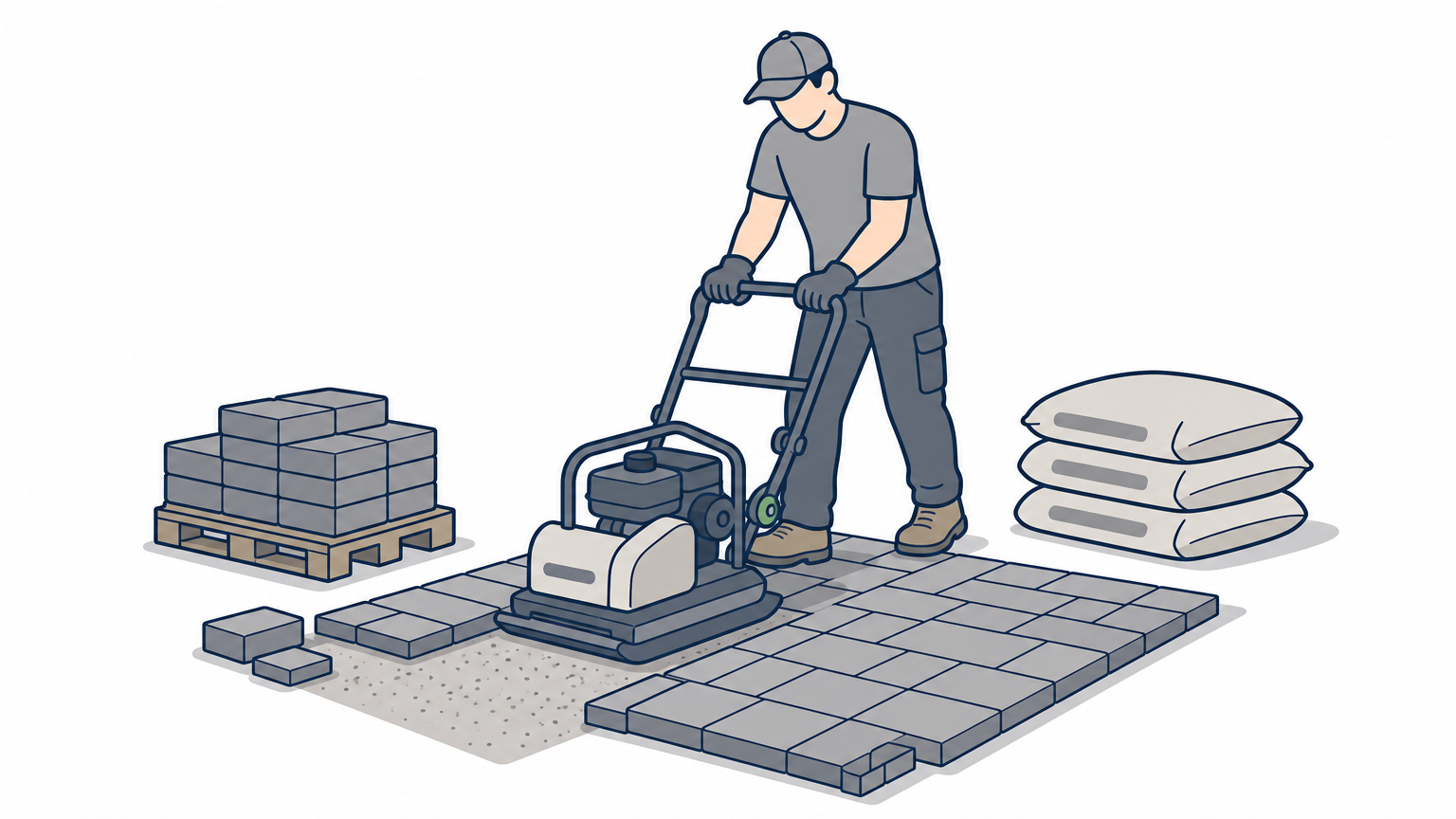
The cheapest paver patio is the one you only pay for once.
Equipment rental changes the math fast. A plate compactor runs $80 to $150 a day, and most DIY patios take three to five days once you count excavation, base work, and paver setting. Add in a hauling fee for excess soil, sand for the bedding layer, and the very real risk of ordering the wrong quantity of base material, and your cost of paver installation savings shrink to maybe 20-30% versus a professional crew, not the 50% many homeowners expect.
Professionals also carry insurance and warranty their work, which matters if a section settles after a hard Florida rainy season. Weigh these factors before deciding:
- Time : DIY typically takes 3-5 full weekends for a 300 sq ft patio
- Tools : Plate compactor, paver saw, and grading tools add $300-$500 in rental costs
- Risk : Poor compaction voids most warranties and shortens paver lifespan
- Physical demand : Base material alone can weigh over 2 tons for a mid-size patio
Small paver walkway projects under 100 square feet are the most realistic DIY candidates. Anything larger, and the labor savings rarely justify the risk.
Ways to lower your paver installation cost
Cutting your paver installation cost doesn't mean cutting corners on the base work that keeps your patio from failing. It means being smart about where the savings actually live: material choice, project timing, and scope. Homeowners who trim $2 to $5 per square foot usually do it in one of these three places, not by skipping compaction or drainage.
Choose material and pattern wisely
Standard concrete pavers in a running bond pattern cost noticeably less than herringbone layouts or natural stone, and the difference isn't small. Switching from travertine to a quality concrete paver on a 300 square foot patio can save $2,000 to $3,500 without sacrificing durability. Simpler patterns also mean less cutting, which shortens labor hours and lowers your paver installation price further.
Time your project and scope it right
Off-season scheduling matters in Central Florida. Contractors often have more flexibility, and better pricing, in late fall and winter when demand for outdoor projects slows down. Combining a patio with a walkway or paver driveway installation in one visit also spreads mobilization and equipment costs across a bigger job, lowering your per-square-foot rate.
The biggest savings come from planning ahead, not from cutting the base prep that protects your investment.
Practical ways to trim the bill
- Pick concrete over natural stone for most of the surface, saving stone accents for a border or focal point
- Bundle projects like a patio and adjoining walkway into one contract
- Schedule in the off-season when crews have more open dates
- Simplify the pattern to running bond or basketweave instead of intricate custom designs
- Get multiple quotes so you can compare where each contractor's pricing actually differs
Planning your paver project budget
You now have the numbers most homeowners never get before they start calling contractors. The cost for paver installation in Central Florida runs $12 to $25 per square foot installed, with your soil, material, and pattern choices deciding where you land. Measure your space, decide on concrete versus natural stone, and use the ranges in this guide to set a realistic budget before you request quotes.
Budgeting well means accounting for base prep, not just paver materials, since that's where cheap jobs fail early. Compare at least two written quotes, ask how each contractor handles drainage and compaction, and don't let a low number tempt you away from proper site work.
If you're ready to see what your specific property will cost, request a free written estimate from TWQ and we'll walk your yard instead of quoting you a national average.