
Lawn Aeration: What It Is and When to Do It
If your grass looks tired no matter how much you water and fertilize it, compacted soil is probably the culprit. Lawn aeration is the fix most Central Florida homeowners skip because they've never had it explained in plain terms. It's not complicated, but timing and technique matter more than most people realize.
So what is lawn aeration, exactly? It's the process of pulling small plugs of soil out of your lawn so air, water, and nutrients can reach the root zone instead of sitting on top of hard, compacted ground. Sandy Florida soils compact fast under foot traffic, mowing, and heat, which chokes roots and leaves you with thin, patchy turf even when you're doing everything else right. Aeration breaks that cycle and gives your root system room to actually grow.
In this guide, we'll walk through what lawn aeration does for your grass, the signs your yard needs it, and the best time of year to schedule it in Sebring and the surrounding area. We'll also cover how often to aerate and what to expect afterward, so you know exactly what lawn aeration costs if you hire it out or how to do it right if you're tackling it yourself.
What is lawn aeration and does your lawn need it
Lawn aeration means physically removing small cores of soil, usually two to three inches deep, so compacted ground can breathe again. Homeowners often ask what does lawn aeration do beyond making a mess on the lawn for a few days. The honest answer is that it restores the pathways your grass needs to survive. Without those channels, water runs off instead of soaking in, fertilizer sits on the surface instead of reaching roots, and oxygen never gets down to where microbes and root hairs are trying to work.
Not every lawn needs aeration every season, but most Central Florida properties need it at least once a year because of how quickly our sandy soils compact. Here's how to tell if your yard is overdue:
- Water pools on the surface instead of soaking in within a few minutes
- Grass feels spongy or hard underfoot, with little give
- Thin or bare patches persist despite regular watering and fertilizing
- Heavy foot traffic areas , like paths to the mailbox or play areas, look worn down
- Thatch buildup feels thicker than half an inch when you dig a small section up
If two or more of these signs your lawn needs aeration sound familiar, aeration of your lawn should move up your priority list.
Compacted soil is the silent reason your lawn care routine isn't working, not the products you're using.
When you understand what lawn aeration actually is, that it's a mechanical fix for a physical problem, it becomes obvious why skipping it undermines everything else you do. You can dump fertilizer on compacted ground all season and still end up with thin turf, because the roots simply can't access what you're feeding them.
Step 1. Choose the right aerator for your lawn
Before you start aeration of a lawn , pick equipment that actually pulls soil cores instead of just poking holes. Spike aerators press tines into the ground, but in Florida's sandy soil they compact the walls of the hole further, which defeats the purpose. Core aerators(also called plug aerators) remove real cores of soil and leave them on the surface to break down, and they're what you want for compacted lawns.
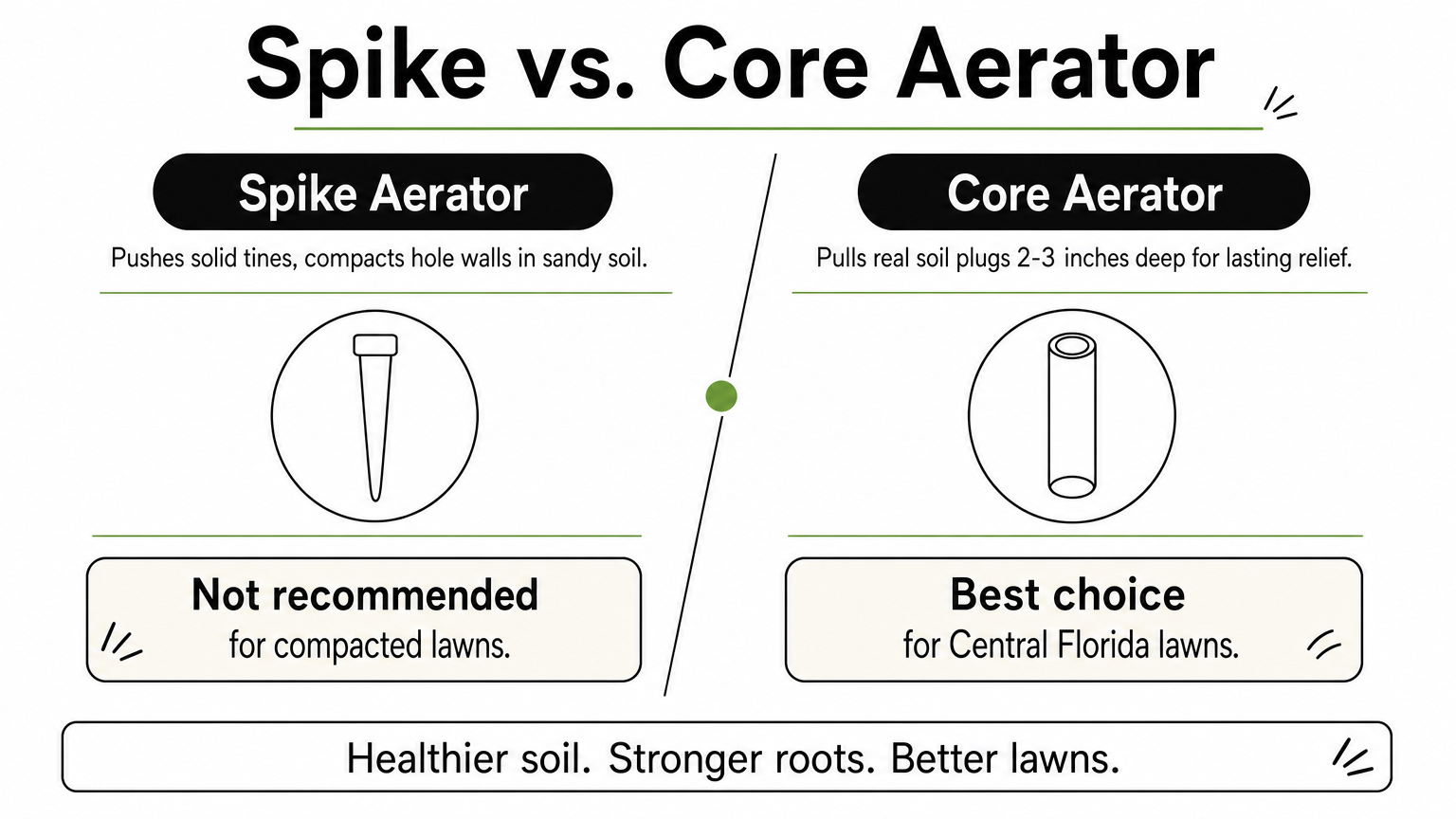
If your aerator isn't pulling soil plugs out of the ground, it isn't actually aerating.
Here's a quick comparison to help you choose:
| Aerator Type | How It Works | Best For |
|---|---|---|
| Spike aerator | Pushes solid tines into soil | Light, occasional compaction |
| Core/plug aerator | Removes soil cores 2-3 inches deep | Sandy, compacted Central Florida lawns |
| Rental walk-behind | Gas-powered, covers large yards fast | Half-acre lots and up |
| Handheld core tool | Manual, small sections only | Small yards or spot treatments |
For most residential yards under half an acre, a rental walk-behind core aerator gets the job done in an afternoon. If the process feels like more than you want to tackle, TWQ's lawn care and mowing services in Sebring FL include core aeration with equipment sized for your property.
Step 2. Prepare your lawn before aerating
Getting your lawn ready matters as much as the aeration itself. Skip prep and you'll drag a heavy aerator over dry, rock-hard ground that barely lets the tines sink in, which means shallow cores and wasted effort.
Water the day before
Moist soil is what makes lawn aeration effective. Run your irrigation system the day before you aerate, giving the lawn about half an inch to an inch of water. Dry, baked Florida clay or sand won't let the tines penetrate deep enough to pull a full core, and you'll end up with a lawn that looks aerated but isn't.
A dry lawn turns aeration into an expensive way to scuff up your grass.
Mark sprinkler heads and utility lines
Walk the property first and flag every sprinkler head , shallow irrigation line, septic line, and buried cable. Aerator tines go two to three inches deep, deep enough to crack a sprinkler head or nick a line you forgot was there, and replacing a damaged sprinkler head is an afternoon you didn't plan on.
Mow shorter than usual
Cut the grass a notch lower than your normal mowing height before aerating. Shorter turf lets the tines make contact with soil instead of catching in thick blades, and it makes the pulled cores easier to see and manage once you start.
Step 3. Aerate the lawn
Now you're ready to actually run the machine, and our step-by-step lawn aeration instructions cover the details if you want them in one place. Getting the timing and the pattern right determines whether this whole project pays off.
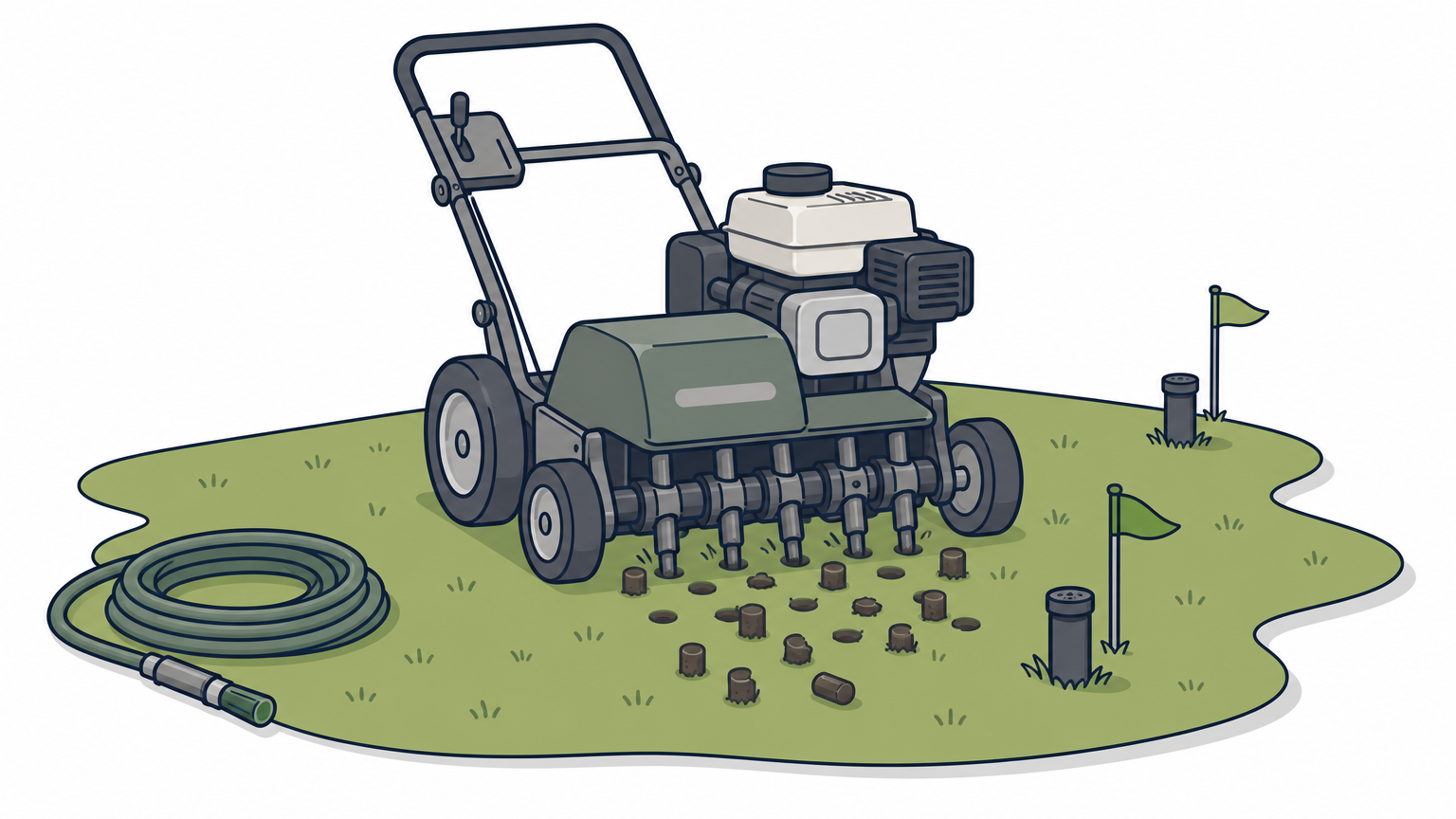
Know when to aerate
Timing answers the most common question we hear: lawn aeration when is it actually worth doing? For Central Florida's warm-season grasses like St. Augustine and Bahia, aim for late spring through early summer, once the grass is actively growing and can heal fast. Aerating dormant or stressed grass just adds injury without the recovery benefit.
Aerate while your grass is growing hard, not while it's struggling to survive.
Run overlapping passes
Push the aerator in straight, overlapping lines across the yard, then run a second pass perpendicular to the first. This crosshatch pattern gets you roughly 20 to 40 holes per square foot, which is the density that actually loosens compacted soil instead of just sampling it. Skip corners and edges at your own risk. They compact just as hard as the middle of the lawn.
Leave the cores where they land
Resist the urge to rake up the soil plugs right away. Left alone, they break down within a week or two and return nutrients to the surface, finishing the job aeration started.
Step 4. Care for your lawn after aeration
What you do in the two weeks after aerating decides whether you get thicker turf or just a temporary mess on the lawn. Your grass is in recovery mode, and it needs the right combination of water, nutrients, and rest to bounce back stronger.
Water more frequently for two weeks
Give your lawn light, frequent watering rather than one heavy soak. Newly opened holes dry out faster than intact soil, so aim for short irrigation cycles every other day to keep the root zone moist while new growth pushes through.
Overseed or fertilize while holes are open
Overseeding thin patches right after aeration works because seed drops straight into the holes instead of sitting on hard ground. The same logic applies to lawn fertilization treatments: apply within a few days of aerating so nutrients travel down to the root zone instead of running off the surface.
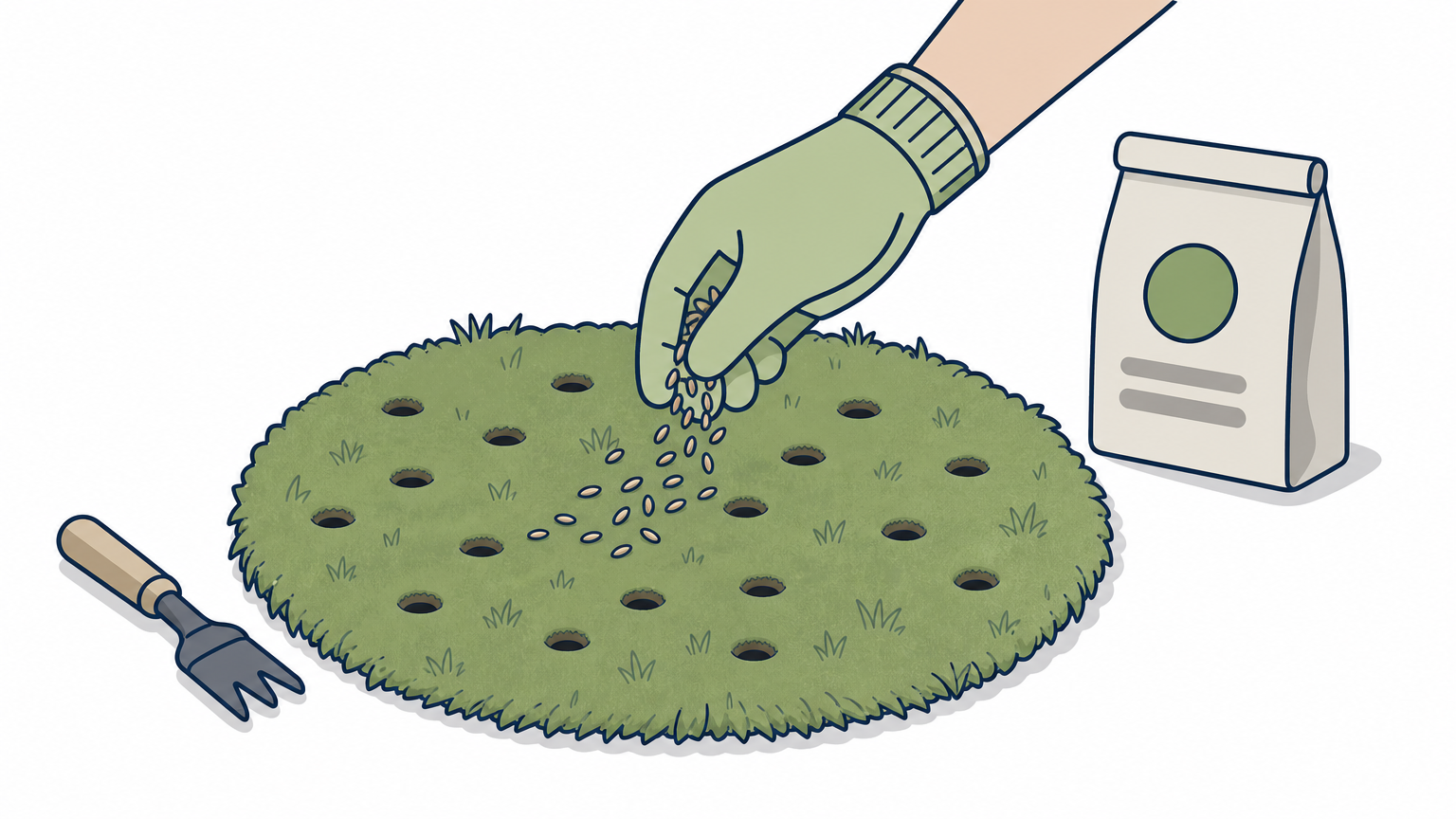
The two weeks after aeration matter more than the aeration itself.
Holding off on herbicides matters too. Skip weed control for at least two weeks so you don't stress roots that are still healing, and avoid heavy foot traffic while the lawn recovers.
Helping your lawn thrive year-round
Aeration isn't a one-time fix you check off and forget. Sandy Central Florida soil compacts again within a year, so plan to repeat this process annually, ideally in that late spring to early summer window when your grass is growing hard enough to recover fast. Get the timing, prep, and aftercare right, and you'll notice thicker turf, deeper roots, and a lawn that actually holds up to summer heat and afternoon storms instead of thinning out by August.
Knowing what lawn aeration does is one thing. Finding the time to water beforehand, rent equipment, mark every sprinkler head, and stick to the aftercare schedule is another, especially if you're already juggling a full mowing and fertilizing routine. If that sounds like more than you want on your plate this season, TWQ's aeration and overseeding service for Sebring lawns handles the coring, the seed, and the follow-up work that keeps your lawn healthy long after the holes close up.