
Lawn and Sprinkler Repair in Central Florida: 5 Options
The best choice for lawn and sprinkler repair is a provider that can fix the irrigation hardware and the turf it damaged, because one problem usually causes the other. In Central Florida, a full-service landscape company suits most homeowners and property managers. An irrigation specialist suits wells, pumps, and tangled wiring. A mowing crew suits small fixes, a handyman suits a one-off head swap, and DIY suits a single broken head.
You probably noticed a dead zone, a head spraying a geyser, or brown patches that keep growing. Your water bill may have jumped too. Searching for help gives you a stack of company names, scattered reviews, and almost no prices. This article compares five realistic ways to get the work done around Sebring, Lake Placid, Avon Park, and nearby towns. It then shows what repairs cost and how to judge reviews and quotes.
We are TWQ, a Sebring landscaping company with more than 20 years of experience, so we list ourselves first. We also say plainly when another option fits your problem better, because the right fit saves you more than any discount.
1. TWQ, a full-service landscape company
A full-service landscape company is the best fit when your sprinkler problem and your lawn problem show up together. TWQ handles irrigation design, installation, and maintenance alongside lawn care, aeration and overseeding, and fertilizer and weed control. That means one crew can handle lawn and sprinkler repair in a single plan.
How it works
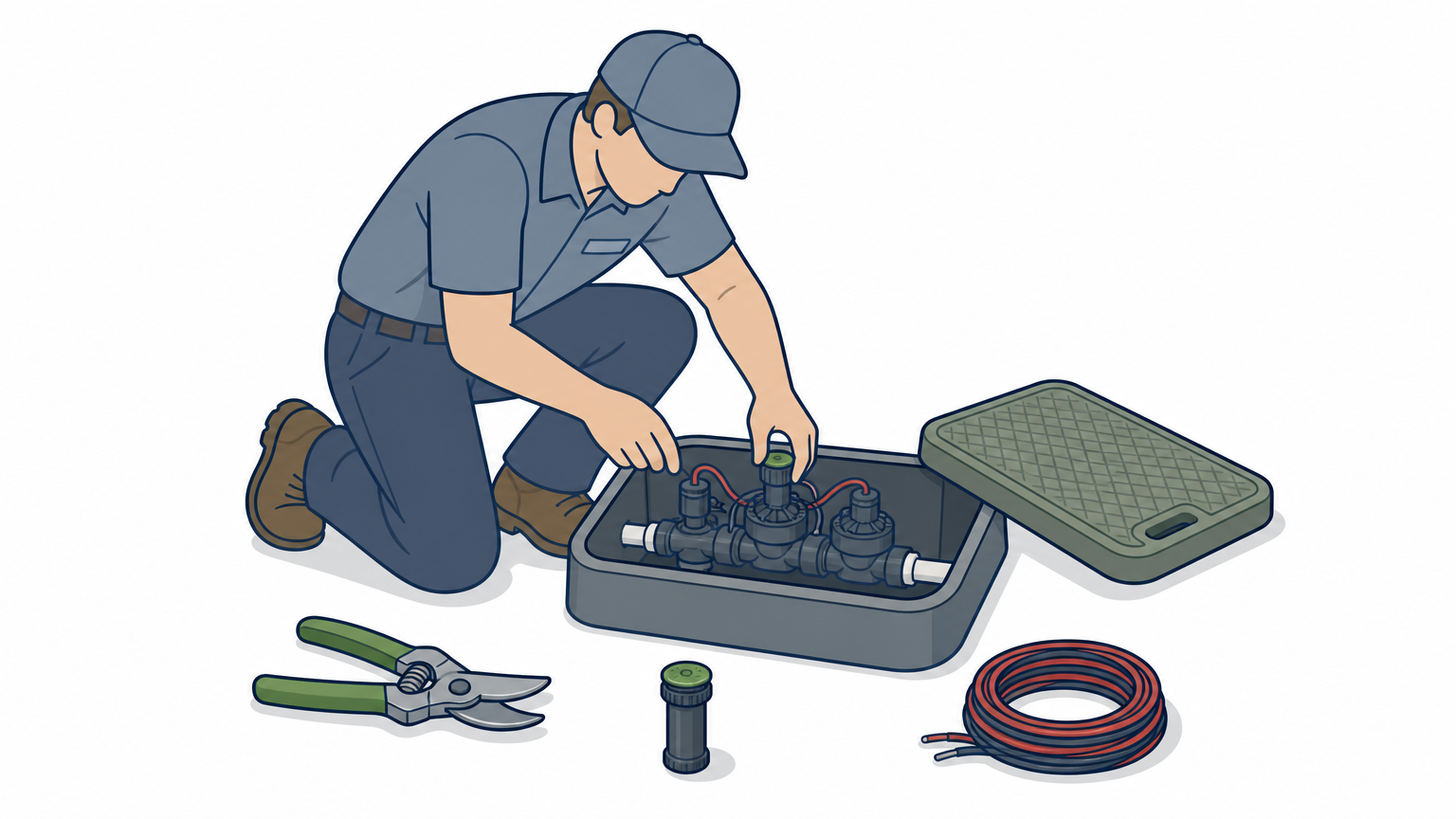
A technician does an irrigation wet check, walking the property while the system runs. They check each zone, the heads, the valves, the controller, and the rain sensor. Problems show up in real time, so you get a clear list of what is failing and what is merely worn.
The same team then looks at the turf. A leaking valve box can drown a patch of St. Augustine, and fixing only the pipe leaves dead sod behind. Doing both in one plan avoids a second trip and a second company.
A sprinkler problem is rarely only a sprinkler problem, and the lawn shows it first.
Who it suits
This option fits several kinds of property owners:
- Homeowners in Sebring, Lake Placid, Avon Park, and nearby who want one number to call
- HOAs and commercial managers who want scheduled upkeep with repairs folded in
- Owners of older systems who may want upgrades, such as new zones or lighting, while the trenches are open
What it costs
TWQ quotes after seeing the system, because an honest price depends on the diagnosis, not a guess over the phone. Bundling the repair with turf work saves you repeat trip charges.
If all you need is one new head, say so when you call. A small job may be cheaper through another option on this list, and you should know that going in.
2. An irrigation specialist
An irrigation specialist is the right call when the cause of the failure is not obvious or the system is complex. These contractors do sprinkler work all day, so they diagnose faster. For serious lawn and sprinkler repair problems, that speed often matters more than a lower hourly rate.
How it works
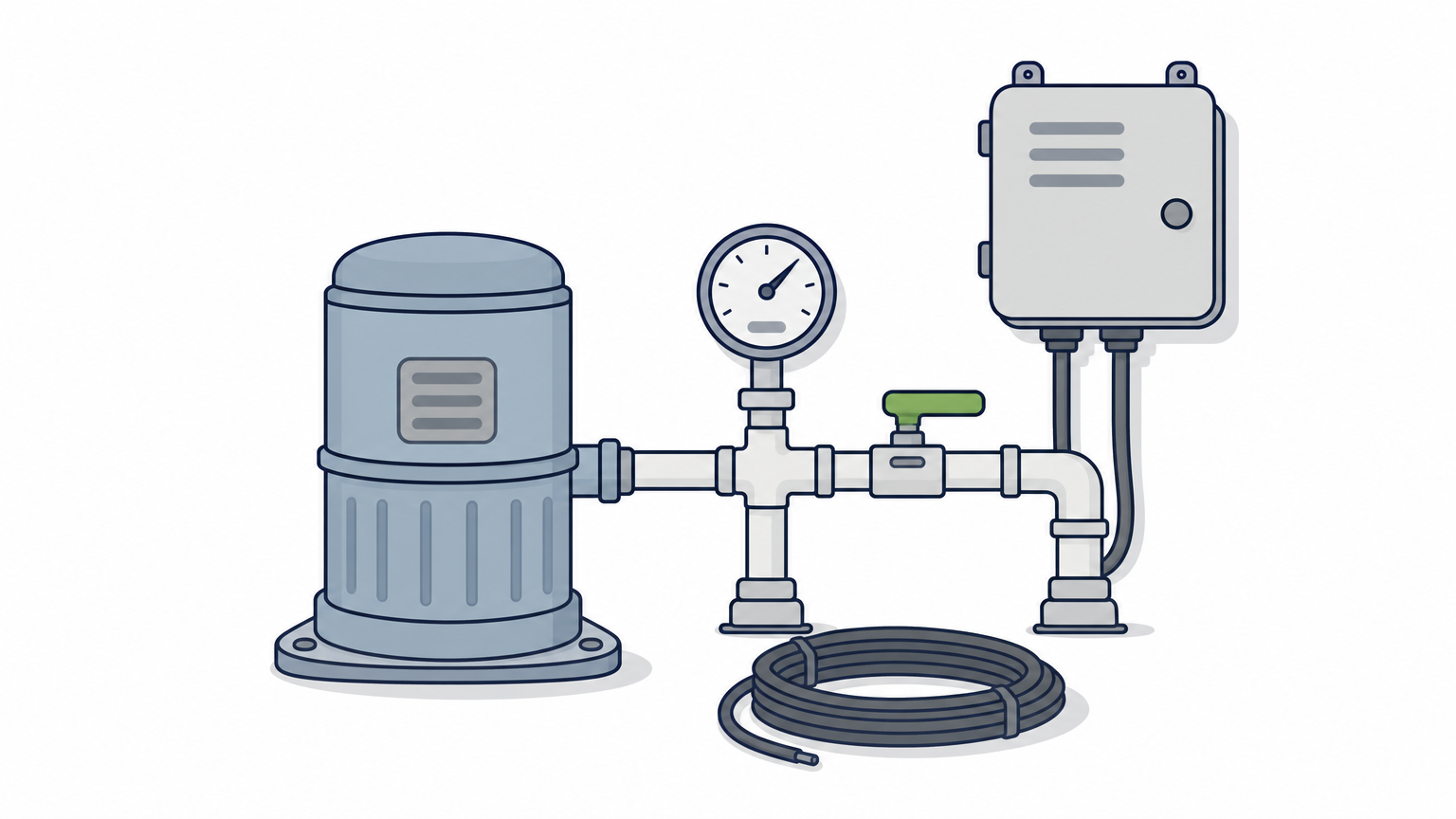
Specialists test pressure, trace wiring faults, check solenoids, and inspect backflow devices. Many rural properties in Central Florida water from a well and pump instead of city water. Pump trouble looks like weak pressure or sputtering heads, and it takes someone who works on pumps to sort out.
They usually fix the system and stop there. Dead turf is left for you or a second company.
Hire a specialist when the symptom keeps coming back after the easy fix.
Who it suits
A specialist fits any of these situations:
- Systems fed by a well or pump
- Large multi-zone or commercial systems
- Zones that fail intermittently
- Repairs that did not hold the first time
What it costs
Expect a service call or diagnostic fee, then parts and labor. Hourly rates tend to run higher than a generalist's, but a correct diagnosis on the first visit often costs less than three guesses. Ask whether the call fee is credited toward the repair, and plan separately for any turf patching.
3. Your lawn maintenance crew
The crew that already mows your yard is the cheapest fix for minor damage. It works best for broken heads, clogged nozzles, and misaimed sprays. Lawn and sprinkler repair of this kind rarely needs a separate appointment.
How it works
Mowers clip heads constantly, so crews notice damage first. Many carry common replacement heads and nozzles on the truck. They swap the part on the next scheduled visit, and you never book a repair call.
The limit is diagnosis. A crew can replace a head, but it may not be set up to trace a cut wire or measure pressure.
A mowing crew is a great first responder and a poor diagnostician.
Who it suits
This option suits properties on weekly or biweekly mowing where the damage is visible and simple. It is the natural choice for commercial grounds and HOA common areas with regular service.
Escalate to a specialist when you see any of these signs:
- The same head fails twice
- A whole zone will not start
- Pressure drops across several zones
- A wet spot returns after repair
What it costs
Crews usually bill parts plus a small labor charge on a visit already scheduled, so you skip a separate trip fee. Ask for the charge itemized on your invoice. Watch for a crew that keeps replacing heads on a system with a pressure problem, since that pays for the same repair again and again.
4. A handyman or general contractor
A handyman is a reasonable pick for small, accessible repairs on a simple residential system. For minor lawn and sprinkler repair , the appeal is availability and a flat hourly rate.
How it works
A handyman can swap heads, glue a cracked PVC fitting, replace a basic timer, and adjust spray patterns. The job usually runs an hour or two with parts from a hardware store. Most handymen do not carry irrigation diagnostic tools, so they fix what they can see.
Be careful with anything touching the water supply. Backflow preventer work generally calls for a certified specialist, and a wrong fix can create a real contamination risk.
Handymen fix what is visible, so they are best when the problem is visible.
Who it suits
This route fits small yards with one or two obvious problems. It also works for owners who already use a trusted handyman for other repairs. It is a poor fit for zones that will not turn on, unexplained wet spots, or anything involving a pump.
What it costs
Pricing is typically hourly with a minimum charge. That is fine for a job under an hour. It gets expensive when the handyman has to guess, because you pay for the trial and error. Confirm the person carries liability insurance before they dig near your lines.
5. Doing the repair yourself
DIY works for one or two broken heads and nothing more. It costs the least, but only when the problem really is a simple one. Basic lawn and sprinkler repair like this is within reach of most homeowners.
How it works
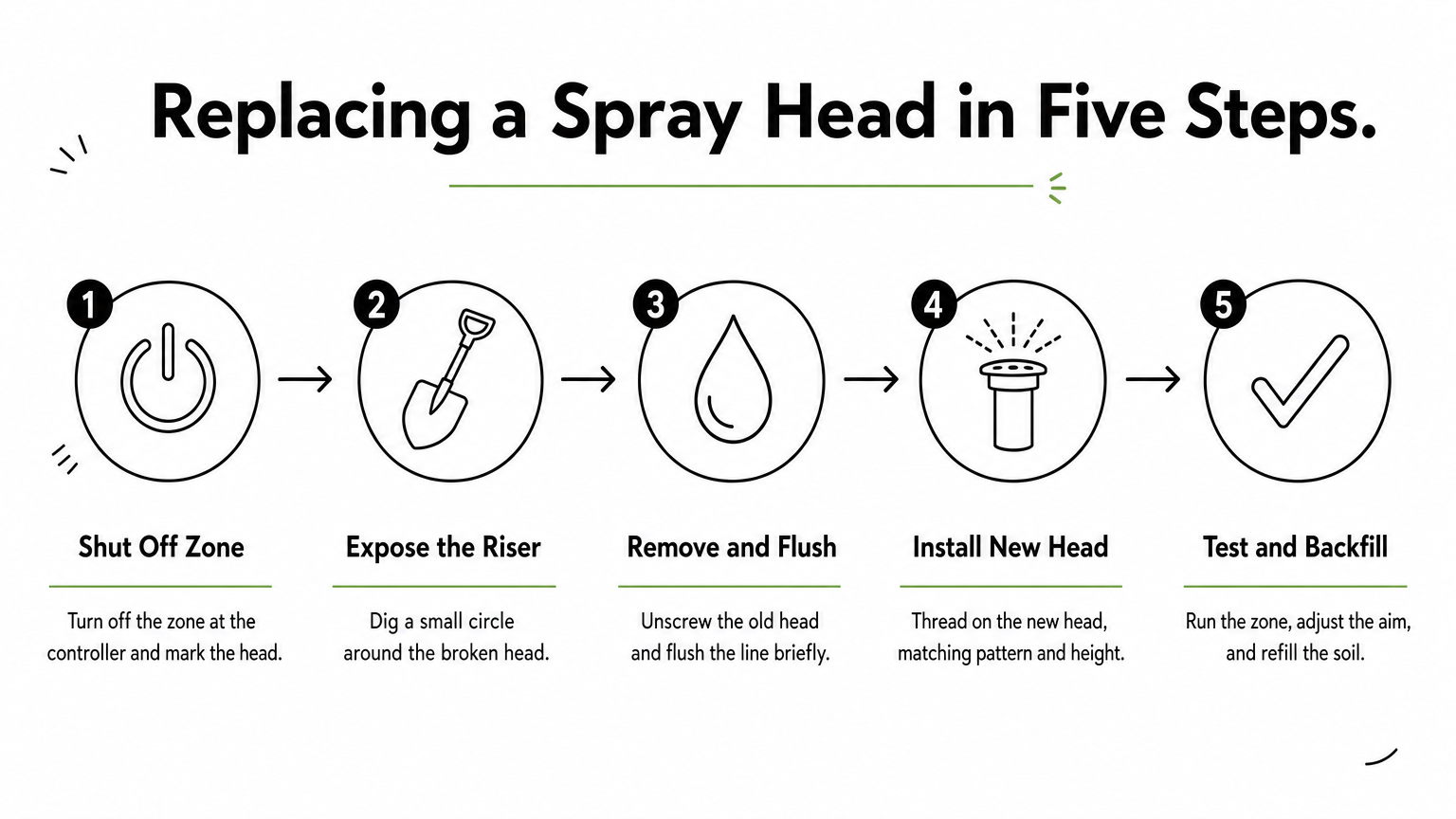
Replacing a spray head takes about 20 minutes. Follow these steps:
- Shut off the zone at the controller and mark the broken head.
- Dig a small circle around it and expose the riser.
- Unscrew the old head and flush the line briefly to clear dirt.
- Thread on the new head, matching the spray pattern and height.
- Run the zone, adjust the aim, and backfill the soil.
You need a shovel, a replacement head, and maybe plumber's tape. Sandy Central Florida soil makes the digging easy, though it also lets dirt wash into open lines fast. Flushing before you attach the new head matters.
A cheap part and an hour of effort beat a service call when the problem is a single head.
Who it suits
It suits anyone comfortable with a shovel who has an obvious, isolated failure. It is not for mystery wet spots, dead zones, or system-wide pressure loss.
What it costs
A spray head costs a few dollars at a hardware store, and you may already own the tools. The real cost is your time and the risk of misdiagnosis. If you replace a head and the wet spot returns, stop digging and call a pro.
What lawn and sprinkler repair costs and why quotes differ
Costs vary mainly with how hard the fault is to find and how much digging and turf restoration follow. A head swap is cheap, while a buried line, a pump, or a failed well is not. Ask every provider for an itemized quote so you can compare real scope.
What drives the price
| Repair | What drives the cost | Relative cost |
|---|---|---|
| Broken head or nozzle | Part is cheap, so the trip fee dominates | Low |
| Stuck or clogged head | Cleaning or replacement, minimal digging | Low |
| Solenoid or valve | Digging to the valve box, part and labor | Medium |
| Cut wire or controller fault | Time spent locating the fault | Medium |
| Broken lateral line | Trenching, pipe depth, and restoring turf | Medium to high |
| Pump or well problem | Equipment cost and specialist labor | High |
| Patching dead turf | Area of sod, soil prep, and watering in | Low to medium |
Florida adds one item worth pricing. State law requires a rain sensor on automatic sprinkler systems, and a disconnected sensor can waste water in the rainy season. Ask any provider to test yours.
The cost of a repair is mostly the cost of finding the fault, not the part.
How to compare two quotes
Compare scope, not the bottom line. Ask each provider to list:
- Diagnostic or call fee, and whether it is credited
- Parts, with brand where relevant
- Labor, hourly or flat
- Turf repair, included or separate
- Warranty length on parts and labor
A low quote that excludes the sod patch may cost more than a higher one that includes it.
How to read reviews and vet a local provider
Good reviews describe a specific repair, a clear diagnosis, and a technician who came back when something was off. Vague praise tells you little. Check reviews against the same checklist you would use for any lawn and sprinkler repair company you plan to let dig up your yard.
What good reviews look like
Look at Google Business Profile reviews first, then the BBB. Read the three- and four-star ratings, since they show how a company handles imperfect jobs. The strongest signals are these:
- Reviews that name a problem, such as a dead zone or a leak
- Owner responses that stay calm and offer a fix
- Reviews from your own town or county
- A steady pattern over time, not a burst of five-star posts in one week
Be wary of a profile where every review reads the same.
A review that names the problem and the fix is worth ten that only say great service.
What to verify before you book
Reviews tell you about past customers. These checks protect you:
- Liability insurance, with proof on request
- Any license your county requires for irrigation work
- A written estimate before work starts
- A warranty on parts and labor
- Local references you can actually call
A provider that answers these questions quickly and in writing is usually the one that finishes the job cleanly.
Pick the fix that matches the problem
Match the provider to the problem. A single broken head is a DIY or mowing crew job. A mystery dead zone or a failing pump belongs with a specialist. When the sprinkler failure has already damaged the lawn, or you want one team accountable for both, a full-service landscape company saves time and repeat trips.
Before you call anyone, write down which zones fail, how long it has gone on, and whether the property changed recently. That one note speeds every diagnosis and sharpens every quote.
If you are in Sebring or the surrounding Central Florida towns, contact TWQ to have your sprinkler system and lawn looked at together.