
Cheapest Lawn Care Services near Me: 7 Options Compared
The cheapest lawn care services near me are usually independent mowers, crews already working on your street, and marketplace pros who bid on your yard. Most basic mows land between $25 and $50, depending on lot size and region. A good cheap pick stays cheap after add-ons, missed visits, and surprise fees. Solo mowers and neighborhood crews suit you if price per cut is all that matters. Marketplaces suit you if you want to compare bids fast. A full-service local company suits you if you want one predictable bill for the whole property.
Most people searching this are tired of calling around and getting quotes that mean nothing. A $30 mow that becomes $75 once edging, cleanup, and fuel are added is not cheap. This article walks through seven options, what each one really costs, who each one fits, and how to check a low quote before you agree to it.
We handle lawn care for homes and businesses at TWQ, a landscaping company in Sebring, Florida with more than 20 years of experience. That gives us a practical view of where cheap quotes hold up and where they fall apart.
What cheap lawn care costs per mow and per month
Cheap lawn care usually means $25 to $50 per mow on an average residential lot, or roughly $50 to $80 per month on a twice-monthly plan. Those ranges come from published local price guides. They move with lot size, grass type, and how often the crew visits. Use them to judge a quote, not to predict yours.
Typical per-mow and monthly prices
The table puts figures from several published price pages side by side. It shows where the cheapest lawn care services near me tend to land before you request a single quote.
| Arrangement | Typical price | What drives it |
|---|---|---|
| One-time mow, average lot | $25 to $50 per cut | Lot size, overgrowth, access |
| Weekly recurring mow | Plans advertised from about $29 per visit; city averages near $39 | Recurring discounts, lot size |
| Twice-monthly plan | About $40 per visit, or $50 to $80 per month | Fewer visits, bundled billing |
| Large lots | $80 to $100 per acre | Acreage, terrain |
| Low-end add-ons | Mulching about $45, leaf removal about $128, weed removal and prevention about $135 | Property size, material, debris volume |
Add-on figures are low-end national averages, and every market differs. Central Florida has a long growing season, so you pay for more cuts per year than in northern states. The yearly total matters more than the per-visit number.
The price per mow is only half the cost. The number of mows per year is the other half.
What a basic cheap package includes
A basic package covers mowing, trimming, and edging , plus blowing clippings off driveways and walkways. That is what you should expect when you hire a cheap lawn care service. Everything beyond that line is billed separately:
- Fertilizing and weed treatments
- Aeration, dethatching, and overseeding
- Pest control
- Mulching, leaf removal, and bed cleanup
Ask for a written list of what the price covers . If the provider will not put it in a text or email, treat the quote as incomplete.
What pushes your price up
Lot size is the biggest driver. Next come overgrowth, slopes, fences, and gates that slow a crew down. A weekly cut on a tidy lawn is quick work. A first cut on grass left for three weeks costs more because it may need two passes and bagging.
Frequency changes the math. A $40 mow every week for 30 weeks costs $1,200. The same $40 every other week over that stretch is 15 visits and $600. Grass in Florida's summer rainy season can outgrow a two-week gap, so cut as seldom as your grass allows and no less.
1. TWQ
How it works
TWQ is a licensed and insured landscaping company in Sebring with more than 20 years of experience. Its lawn care and mowing service covers mowing, edging, and trimming for homes and commercial properties. Visits run on a recurring schedule built around your property, not a fixed template.
The same crew can add fertilizer and weed control, aeration and overseeding , irrigation work, pressure washing, and seasonal cleanups. You deal with one provider instead of juggling four.
What it costs
TWQ prices each property individually, so there is no flat per-mow rate to quote here. It is also not the lowest cut-for-cut price on this list. The savings come from the bundle:
- One provider and one schedule for mowing, treatments, and irrigation upkeep
- A consistent crew that learns your lawn, which cuts down on re-dos
- Regular maintenance that prevents costly fixes like dead turf or broken sprinkler zones
Among cheap lawn care services near you, this is the pick that can win on total yearly cost when your property needs more than a mow.
A slightly higher price per cut can still be the cheapest lawn care when it replaces three separate vendors.
Who it suits
TWQ fits homeowners in Sebring, Lake Placid, Avon Park, Okeechobee, Clewiston, Arcadia, Wauchula, and Lake Wales who want the work done without managing it. It also fits commercial property managers, business owners, and HOAs that need scheduled upkeep and one point of contact.
If you only want a basic trim and nothing else, options 2 and 4 will usually cost less per visit. Choose TWQ when reliability, insurance, and a full range of services matter as much as the bill.
2. Independent solo mowers
How it works
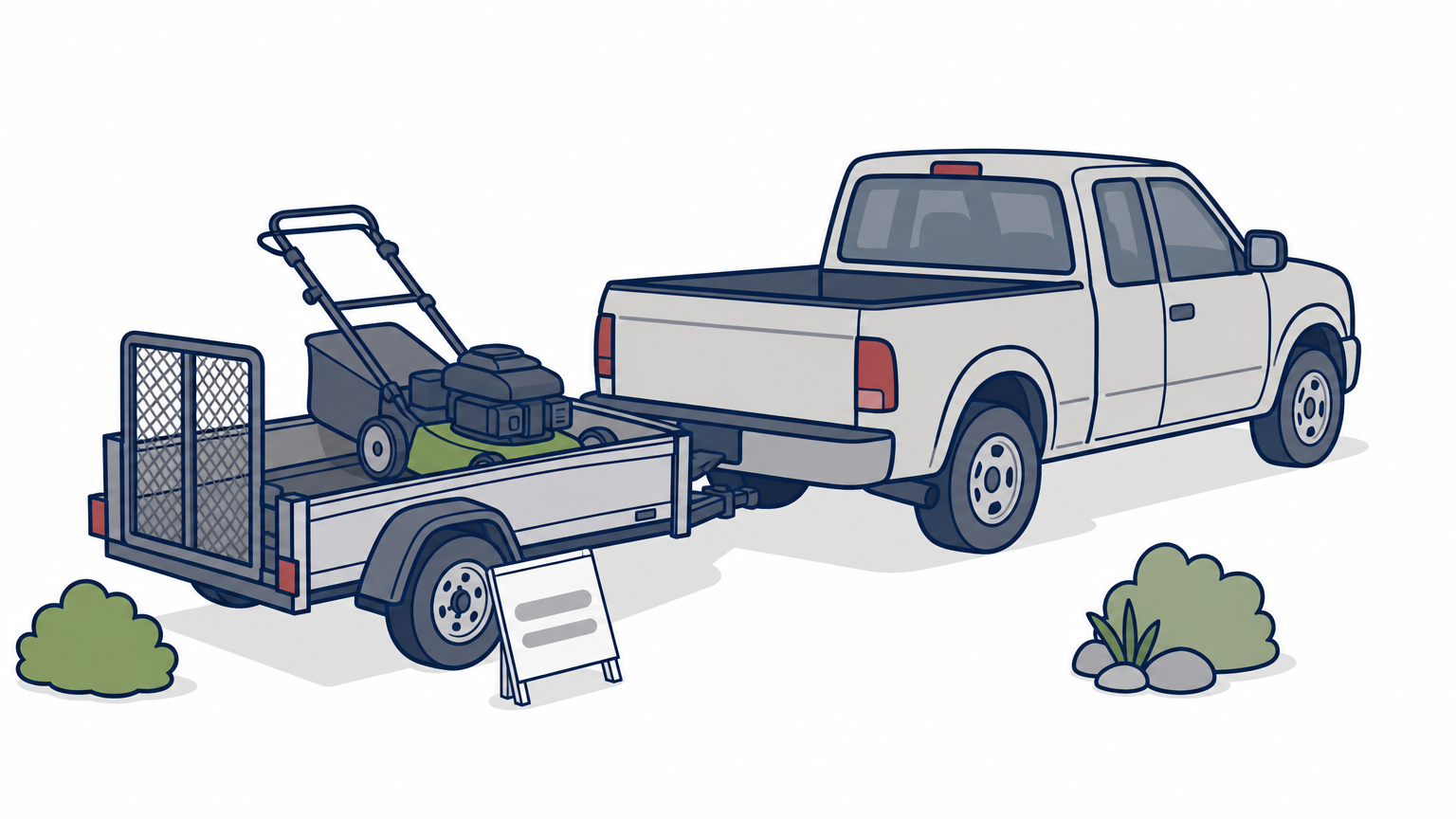
A solo mower is one person with a truck, a trailer, and a few commercial machines. You find them through word of mouth, yard signs, or local community groups. You agree on a price by text and they mow on a set day.
There is no office, no dispatcher, and no sales staff. Low overhead is the reason this option is usually the cheapest lawn care service near me on a per-cut basis.
What it costs
Expect the low end of the $25 to $50 range for an average lot, often paid by cash or a payment app. The lower sticker price comes with gaps you should check before the first visit:
- Does the mower carry liability insurance, and can they show proof?
- Who covers a broken window or a damaged sprinkler head?
- What is the backup plan when they are sick or their mower breaks?
- Is clippings cleanup and edging included in the price?
A solo mower is only cheap if the first thing that goes wrong does not land on your wallet.
Who it suits
Solo mowers fit small, flat, simple lots and owners who can live with an occasional schedule slip. They are a poor fit for HOA properties with strict standards, rental owners who need dependable service, and anyone who wants fertilizer, weed control, and irrigation handled by the same person.
3. Online marketplaces and quote apps
How it works
You enter your address and the platform estimates your lot size, sometimes from satellite imagery. Local pros then bid or send a fixed quote. You compare price, reviews, and availability on one screen without calling anyone.
Some platforms charge only after the visit is complete and approved. That payment structure protects you from paying for a skipped or sloppy cut, and it is the best reason to use one.
What it costs
Published examples show city averages around $39 per cut and weekly mowing plans advertised from $29. Platform fees are usually built into the quoted price, so the number you see is the number you pay. Recurring plans cost less than one-time visits , and some platforms advertise discounts of up to 30% for weekly customers.
Compare at least three quotes on the same day. Prices on these platforms swing by $10 to $20 between pros for the identical lawn.
A marketplace turns cheap lawn care into a ten-minute comparison, but only if you read the pro's reviews, not just the platform's.
Who it suits
Marketplaces suit people who dislike phone calls, landlords managing remote properties , and anyone who wants proof of work and payment after approval. The caveat is coverage. Pros on these platforms are independent, quality varies from one to the next, and small rural towns often have only a few bidders.
4. Crews already working on your street
How it works
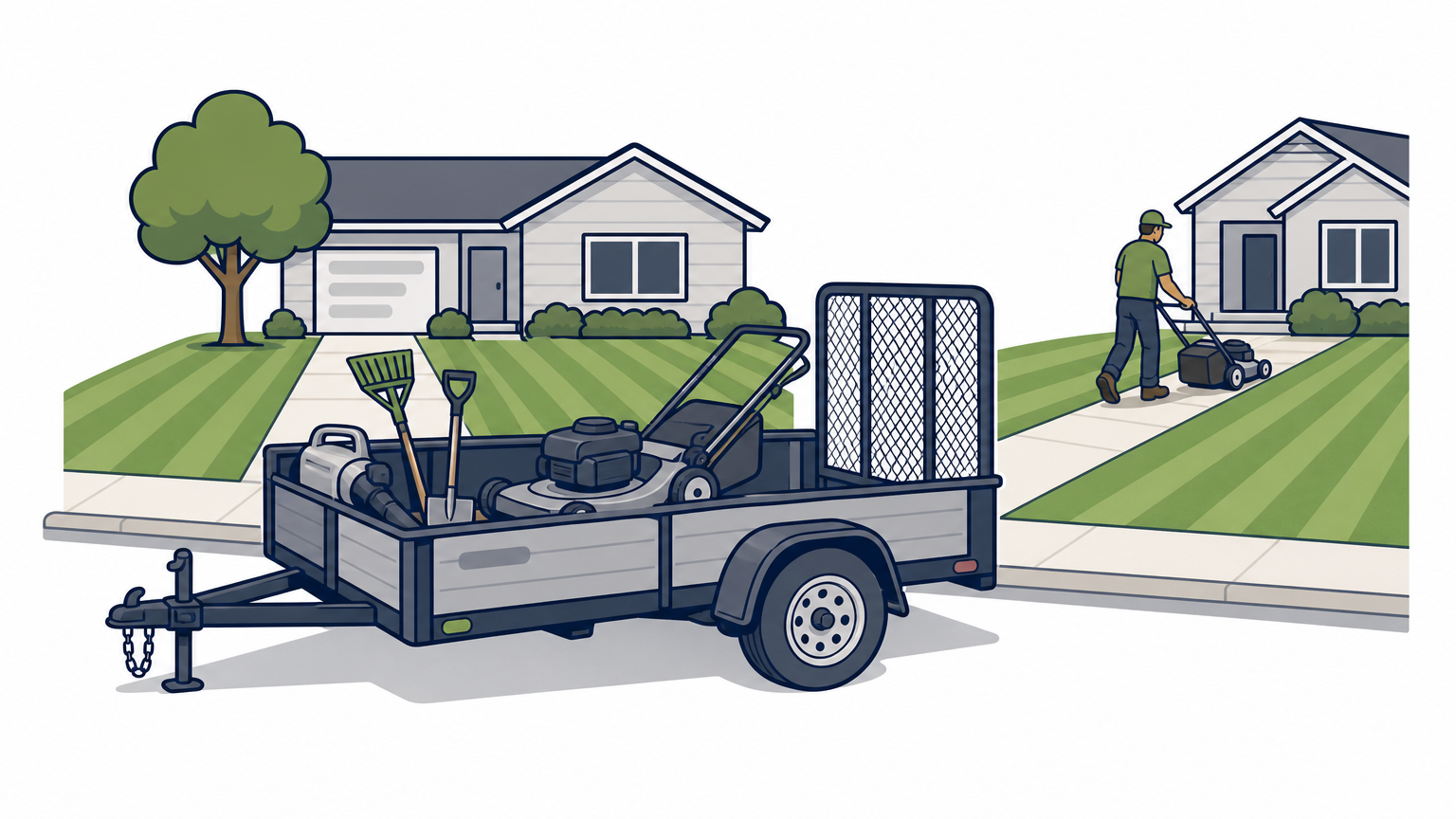
Look for trucks and trailers parked in your neighborhood on mowing days. Ask a neighbor who they use, or ask the crew directly. Route density is the whole trick. A crew that already mows the house next door spends no extra time driving to you, so it can price your lawn lower.
Ask a simple question: "Do you currently mow in this neighborhood, and what would you charge to add my lawn to that day?" You also get to see their work on a real lawn before you commit.
What it costs
Many crews will quote a route price below their standalone rate, especially when your lot is similar to your neighbor's. There is no published figure for this, so treat it as a negotiation. Request the price for weekly service and for twice-monthly service, then compare.
Two things keep this option cheap. Stay on the crew's existing day and accept their time window. Changing the day or demanding a specific arrival time erases the route discount.
The cheapest mow is the one that takes a crew zero extra minutes to reach.
Who it suits
This option fits suburban neighborhoods and HOA communities where lots are similar and crews stack several houses per street. Rural properties with long gaps between neighbors get little benefit, because the drive time that makes the route cheap does not exist.
5. Neighborhood teens and students
How it works
Teenagers and college students advertise through neighbors, community social groups, school job boards, and flyers. They may bring a mower or use yours. A short conversation and a text with the price and schedule is usually the whole contract.
With no business overhead, pricing tends to sit below company rates . The best arrangements are simple, repeat visits on a lawn they already know.
What it costs
Agree on a flat price per visit up front, not an hourly rate, so a slow cut does not raise the bill. Decide what the price includes before the first mow:
- Mowing the full lawn
- Trimming along fences and beds
- Blowing off the driveway and walkways
- Bagging or hauling clippings (usually not included)
Limits are real. Availability drops during exams and school sessions, and these workers rarely carry insurance. Match the job to the worker. Steep slopes and riding mowers are for adults, and closed-toe shoes and eye protection are the minimum for anyone pushing a mower.
A teenager with a push mower is the cheapest option for a small flat lawn, and the wrong option for anything else.
Who it suits
This works for small, flat lots with equipment you supply, and for owners who can check the work in person. It does not suit large properties, commercial sites, or anyone who needs a guaranteed weekly schedule through the whole growing season.
6. Community and volunteer programs
How it works
Some communities offer free or low-cost mowing for people who qualify, such as seniors, people with disabilities, and veterans. Help may come from churches, civic groups, neighborhood associations, or volunteer organizations. This is the honest answer to who cuts grass for free: volunteers, and only where a program exists.
Availability varies by town, and there is no national program you can count on. Start by calling 211 , the national helpline for local social services, or your area agency on aging, and ask what exists nearby.
What it costs
The price is typically free or a small donation. The tradeoff is time. Programs may have waitlists, limited seasons, and volunteers who handle only mowing. You may not get edging, trimming, or cleanup.
If you need cheap lawn care for seniors and no program is available, ask paid providers directly about senior or fixed-income pricing . Some offer it, and asking costs nothing. A twice-monthly plan with a basic package is the other easy way to bring the bill down.
Free lawn help exists in many towns, but only the people who ask find it.
Who it suits
This option fits seniors on fixed incomes, people recovering from illness or surgery, and anyone who cannot mow and cannot afford a company. It is not a dependable plan for a business property or a rental. If you cannot find a program, options 2, 4, and 7 are the next cheapest routes.
7. Twice-monthly and off-season plans
How it works
This option is a pricing strategy you can use with any provider. You cut the number of visits, sign up for a recurring plan, or ask for an off-season rate when demand drops, typically in fall and winter. Companies often reward a commitment with a lower per-visit price than one-time work.
You can also ask about first-time customer deals. Providers want recurring customers, so a request for a lower rate in exchange for a few months of steady work is a normal one.
What it costs
A published example from one market lists $40 per visit on a twice-monthly schedule, $80 per month, against $45 for a one-time cut. Another local price guide puts bimonthly maintenance at $50 to $80 per month . The savings per visit look small, but over a season they add up, especially if you drop from weekly to twice-monthly service.
In Florida, be careful in summer. The rainy season pushes grass growth fast, and a two-week gap can leave the lawn too tall for a clean cut. Run weekly service from roughly late spring through early fall and drop to every other week in cooler months .
Reducing visits saves more than haggling over the per-cut price.
Who it suits
Plans suit slower-growing lawns, winter schedules, and owners who accept a slightly taller lawn between visits. Read the cancellation terms before signing anything long. A cheap rate is not cheap if you cannot leave when service slips.
How to vet a cheap lawn service before you hire
Vet any cheap lawn care service by confirming insurance, getting the scope in writing, and reading recent reviews with photos. A low quote from an unvetted provider usually costs more in the end. Ten minutes of checking protects you from most of the problems below.
Questions to ask before you agree
These six questions sort reliable cheap providers from risky ones:
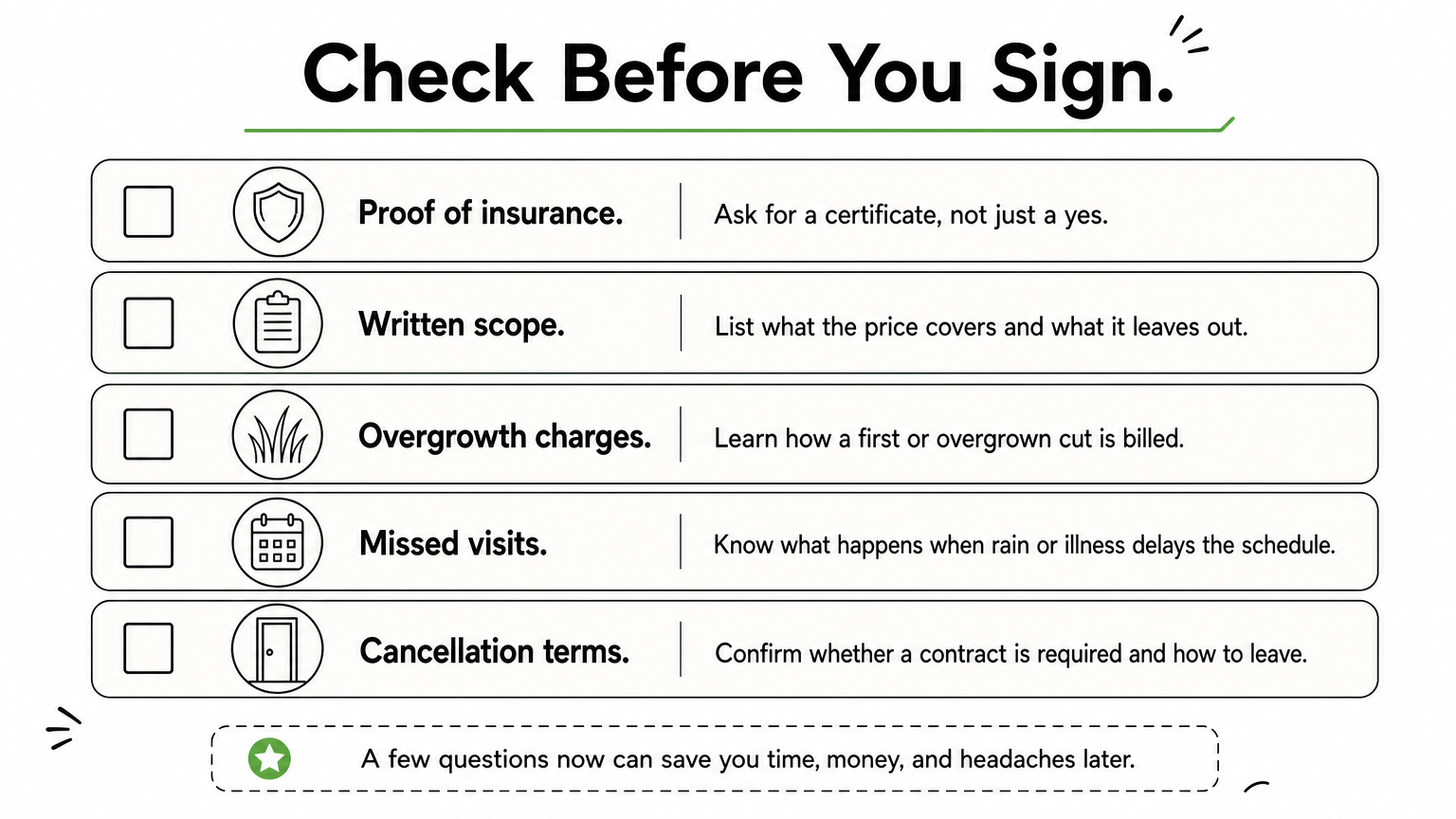
- Are you insured, and can you send proof?
- What exactly does the price include, and what does it exclude?
- How do you charge for overgrown grass or a first cut?
- What happens if you miss a visit or rain delays the schedule?
- Do you require a contract, and how do I cancel?
- Do you mow other lawns in my neighborhood?
A good provider answers all six quickly. Vague answers on questions 1 and 2 are the clearest warning.
Hidden fees and red flags
Hidden fees appear when a cheap mow is later paired with extras. Fertilizing, weed control, aeration, seeding, and pest control are usually billed per application or on a separate program , so ask for those prices before you need them. Programs from treatment companies vary by lot size and are priced apart from mowing.
Watch for prices that sound too good to be true, no written scope, pressure to prepay for a long contract, and reviews that never mention photos or specifics . Check the work if you can. A neighbor's lawn is the best reference there is.
Ways to lower the bill further
Compare three quotes for the same scope on the same day. Ask for a recurring discount. Ask about off-season and first-time customer deals . Keep your lawn clear of toys, hoses, and debris so crews work faster. Share a day with a neighbor so the crew can price both lawns as one stop.
Pick the price you can keep paying
The cheapest lawn care is the one that stays reliable and affordable all year. Solo mowers, street crews, and teens win on price per cut. Marketplaces win on speed of comparison. Community programs win when money is tight. A reduced-frequency plan helps with every option. A full-service company wins when your property needs more than a mow and you want one bill instead of several.
Get three quotes with the scope in writing, check insurance, and choose the arrangement that fits your lawn and your schedule, not just the lowest number. If you are in Central Florida and want one crew to handle mowing, treatments, and upkeep, ask TWQ about a lawn care plan for your property.