
Liquid Aeration for Lawn: What It Is and Whether It Works
Liquid aeration for lawn care is a sprayed treatment that uses wetting agents, often paired with humic acid, seaweed extract, or microbes, to help water move into the soil. It does not pull plugs or open physical holes. It works well on water-repellent or lightly tight soil, but it is not a substitute for core aeration on truly compacted ground.
This guide explains why the treatment matters, how to choose a product and apply it, and how it compares with core aeration. It also covers what to expect on clay, compacted, and sandy soil, so you can decide whether it is worth your money.
TWQ has cared for lawns in Sebring and across Central Florida for over 20 years, and aeration and overseeding are part of that work. That means we know when a spray helps and when a machine is the honest answer.
Why liquid aeration matters and when it works
Liquid aeration matters because many "bad soil" problems are really water movement problems , and a wetting agent can fix those without tearing up your turf. It earns a place in your lawn plan for dry patches, water-repellent sand, and spots a machine cannot reach. It is not a cure for hard, compacted ground.
What the spray actually does
A typical liquid lawn aeration product is built around surfactants , the soap-like ingredients that lower the surface tension of water. Water then spreads and soaks in instead of beading on the surface or running off. Many products add humic substances, seaweed extract, or microbes to support soil life.
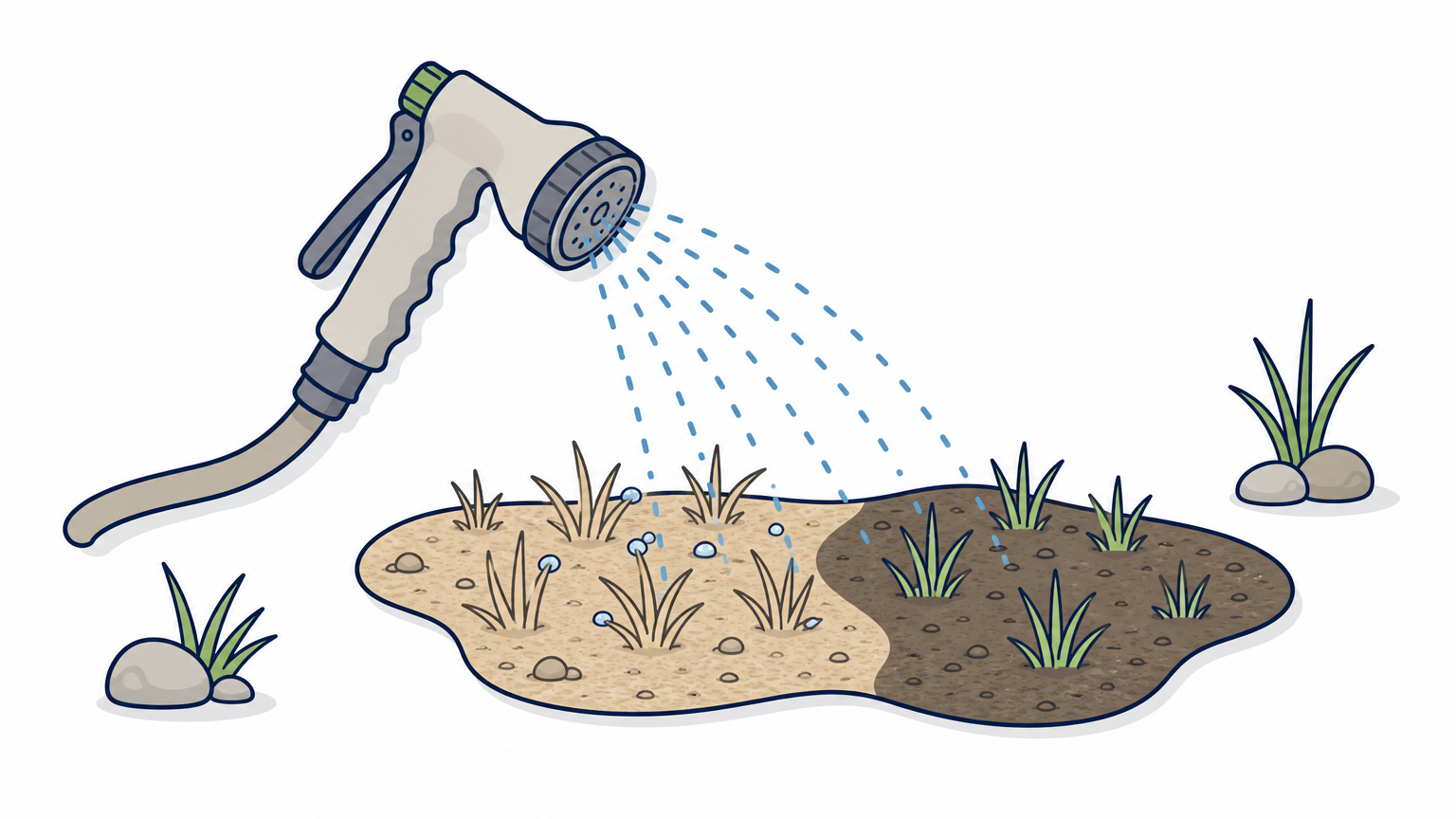
None of those ingredients removes soil or creates channels . Core aeration pulls plugs and leaves real holes. Liquid aeration only changes how water behaves in the soil you already have.
Liquid aeration improves how water moves through soil. It does not open the soil the way a core aerator does.
Does liquid aeration work?
It works for the jobs it is built for. Hydrophobic dry spots, mildly tight turf, and corners around trees, sprinkler heads, and buried lines all respond. For real compaction, the evidence is thin. Colorado State University Extension says no chemical product substitutes for the traditional core cultivation used on turf for years.
Is it worth the money?
It is worth it when your problem is water that will not soak in. It is not worth it when your soil is rock hard and you are hoping a bottle will fix it. One bottle is cheap , but labels often call for repeat applications. Several rounds can add up to more than a single core aeration visit .
How to choose and apply a liquid aeration product
Choose a product by what the label says, not by what the marketing promises, then apply it exactly as directed. The label tells you the active ingredients, the dilution rate, and whether your grass is listed.
How to choose a product
Check these points before you buy:
- Named active ingredients. Look for a clear wetting agent or surfactant, not vague "proprietary blends."
- Your grass type. The label should list St. Augustine, bermudagrass, zoysia, bahiagrass, or whatever you grow.
- Dilution rate and schedule. Clear numbers mean a manufacturer that stands behind the product.
- Safety directions. Pet, child, and runoff warnings should be spelled out.
- Realistic claims. Walk away from any bottle that promises to dissolve thick thatch or replace core aeration.
How to apply it
Application is simple, and the details matter more than the equipment.
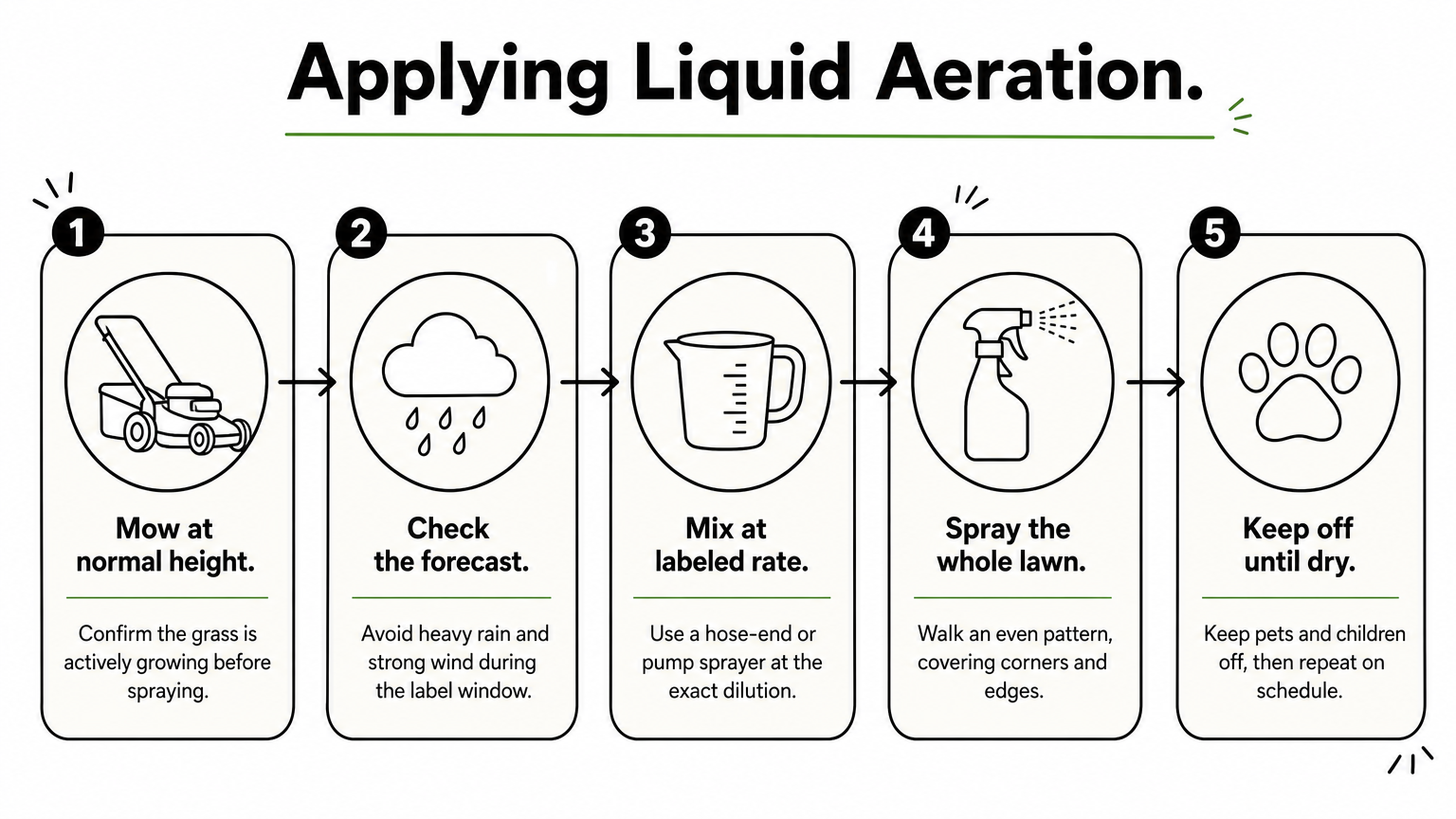
- Mow the lawn at your normal height and confirm the grass is actively growing.
- Check the forecast. You want no heavy rain for the window the label gives, and no strong wind.
- Mix the product at the labeled rate in a hose-end or pump sprayer.
- Spray evenly in a walking pattern, covering the whole turf area, including corners.
- Water in only if the label says to, and follow local watering restrictions.
- Keep pets and children off until the lawn is dry, then repeat on the label's schedule.
How long until you see results
Wetting effects show quickly. Water that used to bead and run off often starts soaking in within days to a couple of weeks. Any change in tight soil takes repeated applications over a season, and some soils will not change at all.
Judge the product by whether water soaks in, not by how the grass looks the next morning.
Liquid aeration vs core aeration compared
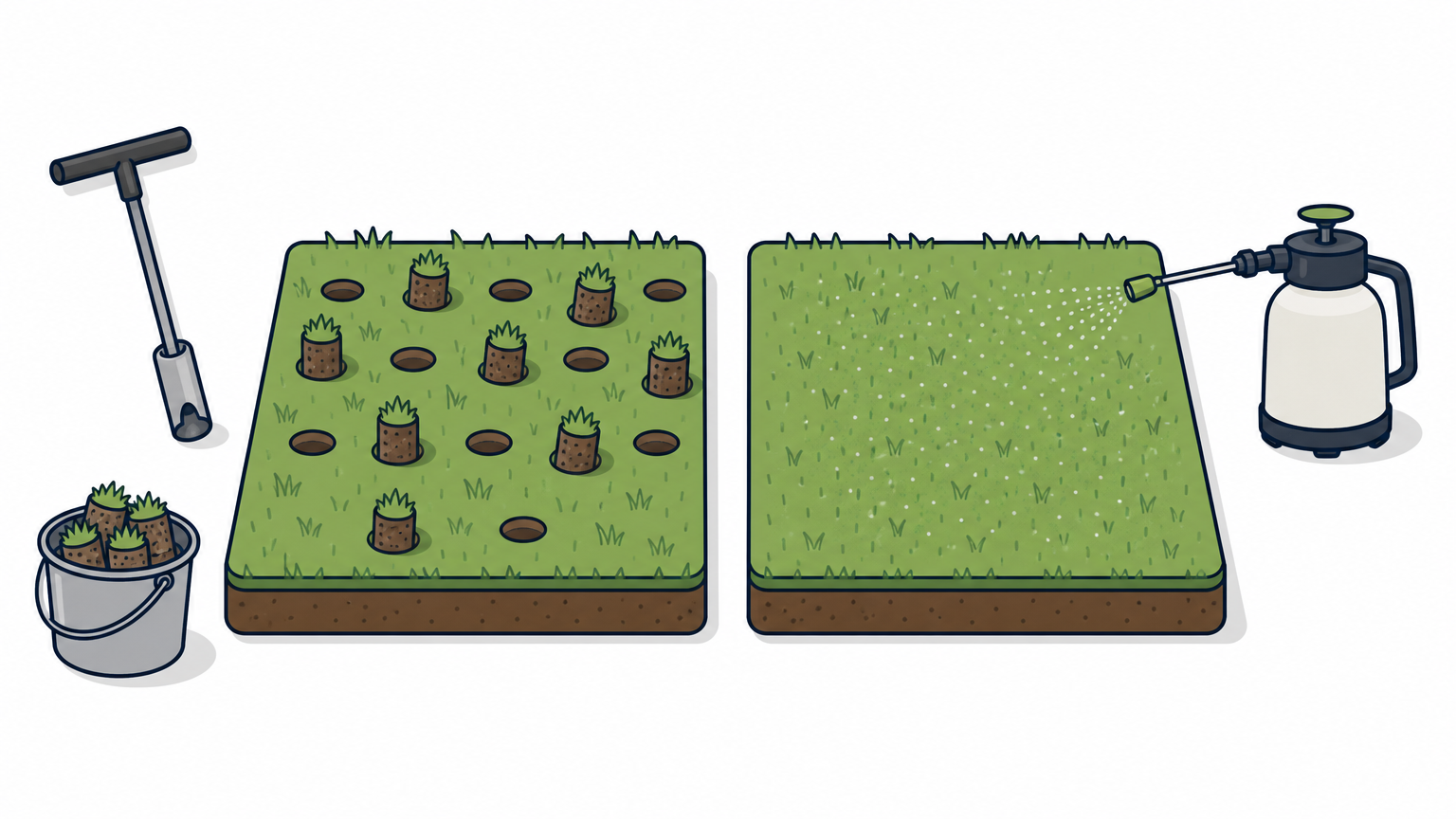
Core aeration physically removes plugs of soil, while liquid aeration changes how water enters soil. That difference decides which one suits your lawn. Neither is better in general, and the table shows where each one wins.
Side-by-side comparison
| Factor | Liquid aeration | Core aeration |
|---|---|---|
| Method | Sprayed wetting agents and amendments | Machine pulls soil plugs |
| Best for | Dry spots, water-repellent soil, light tightness | Compacted soil, heavy traffic, drainage problems |
| Soil disruption | None, no holes or plugs | Holes and plugs on the surface for a while |
| Overseeding | Does not improve seed-to-soil contact | Creates openings seed can use |
| Reaches tight spots | Yes, covers the whole surface | Limited around obstacles and lines |
| Cost pattern | Low per bottle, can add up over repeat rounds | Higher per visit, but often needed less often |
| Weak point | Little effect on deep compaction | Can stress turf if done at the wrong time |
When to use both
The smartest plan is often both. Use core aeration when a test shows real compaction and before overseeding. Use liquid aeration for lawn spots that stay dry or shed water, and for areas where equipment is risky.
If you are searching for liquid aeration for lawn near me, ask the provider to diagnose first . A good pro will tell you which method fits your soil, not just sell the one they offer.
Liquid aeration for compacted, clay, and sandy soil
For heavy clay or compacted soil, start with core aeration and use liquid aeration as a follow-up, not a replacement. For the sandy soils common around Sebring, liquid aeration is better suited, because the usual problem is water that will not stay put or soak in evenly.
Diagnose before you spray
Push a screwdriver into moist soil. If it goes in easily, compaction is not your issue. Then match what you see to the likely cause:
| What you see | Likely cause | Start with |
|---|---|---|
| Water beads or runs off dry patches | Water-repellent soil | Liquid aeration |
| Water pools and the screwdriver barely enters | Compaction | Core aeration |
| Spongy layer above the soil | Thatch | Dethatching |
| Thin turf along a traffic path | Compaction plus wear | Core aeration and overseeding |
Best approach for clay and compacted soil
The best liquid aeration for clay soil is a product with a real wetting agent, used after core aeration to help water follow the new holes. Used alone, it will rarely break up hard clay or a construction-compacted pad. Compaction on Florida lots usually comes from heavy equipment during building , so expect to need cores there.
Using it on Central Florida sand
Sandy soil drains fast and can turn water-repellent in dry spells. A wetting agent helps most here. Apply when warm-season grass is actively growing , from late spring through summer, and skip applications just before a downpour.
Match the tool to the soil: cores for compaction, wetting agents for water that will not soak in.
Pick the method that fits your soil
Liquid aeration is a wetting-agent treatment. It helps water soak into dry, sandy, or lightly tight soil, and it covers places a machine cannot reach. It does not replace core aeration where soil is truly compacted. Diagnose first, read the label, and judge results by how water behaves.
If you are unsure which your lawn needs, let a local team check it in person. Talk to TWQ about aeration and overseeding for your lawn in Sebring and across Central Florida, and we will tell you plainly whether a spray, a machine, or both make sense.