
5 Signs You Need Irrigation Repair near Me Now
A soggy patch by the driveway or a brown ring around your palm tree usually means one thing: your sprinkler system is failing somewhere you can't see. Before you start searching "irrigation repair near me" at 11 p.m., it helps to know what you're actually looking at, because not every issue needs an emergency call, but some do.
This article covers the five clearest warning signs that your system needs professional attention now, not next month. You'll learn how to tell the difference between a minor valve issue and a broken main line , why certain patches of dead grass point straight to a clogged head, and when a spike in your water bill signals a leak underground instead of just summer heat. Each sign comes with what's causing it and how urgent it really is.
Here in Sebring and across Central Florida, sandy soil and long dry stretches punish a struggling irrigation system fast. TWQ has spent over 20 years diagnosing these problems for homeowners and property managers, so if you're already noticing trouble, this guide will help you decide whether it's time to find irrigation sprinkler repair near me and call someone in.
1. Your water bill spikes without explanation
A jump of $50 or more on your monthly water bill, with no new pool, no extra laundry, and no houseguests, almost always traces back to your irrigation system. Underground leaks don't announce themselves. Water seeps into sandy Florida soil and disappears before you ever see a puddle, so the bill is often the first real clue something's wrong.
What it looks like
You'll notice the increase on your utility statement before you notice anything in the yard. Sometimes there's a faint hissing sound near a valve box, or the ground feels unusually soft in one specific spot even when it hasn't rained. Your water bill spikes while your watering schedule hasn't changed at all.
Common causes
Most unexplained increases come down to a short list of culprits:
- Cracked or split PVC pipe underground, often from tree roots or age
- A valve stuck open , letting water run long after the cycle should end
- Loose or corroded fittings at connection points
- A backflow preventer leak that runs continuously
A rising water bill with no lifestyle change is almost never a coincidence. It's a leak you haven't found yet.
How to fix it
Start by checking your water meter with everything in the house turned off. If the dial keeps moving, you've got a leak somewhere on your property. Walk your zones one at a time and watch for pooling, unusually green grass in a straight line, or a valve box with standing water inside. Homeowners can sometimes replace a valve or reseal a fitting themselves, but a broken main line buried under a driveway or a slab needs professional excavation and repair equipment. TWQ's irrigation repair in Sebring FL includes leak detection, so you're not guessing where to dig or how deep the damage really goes.
2. Soggy patches or pooling water in the yard
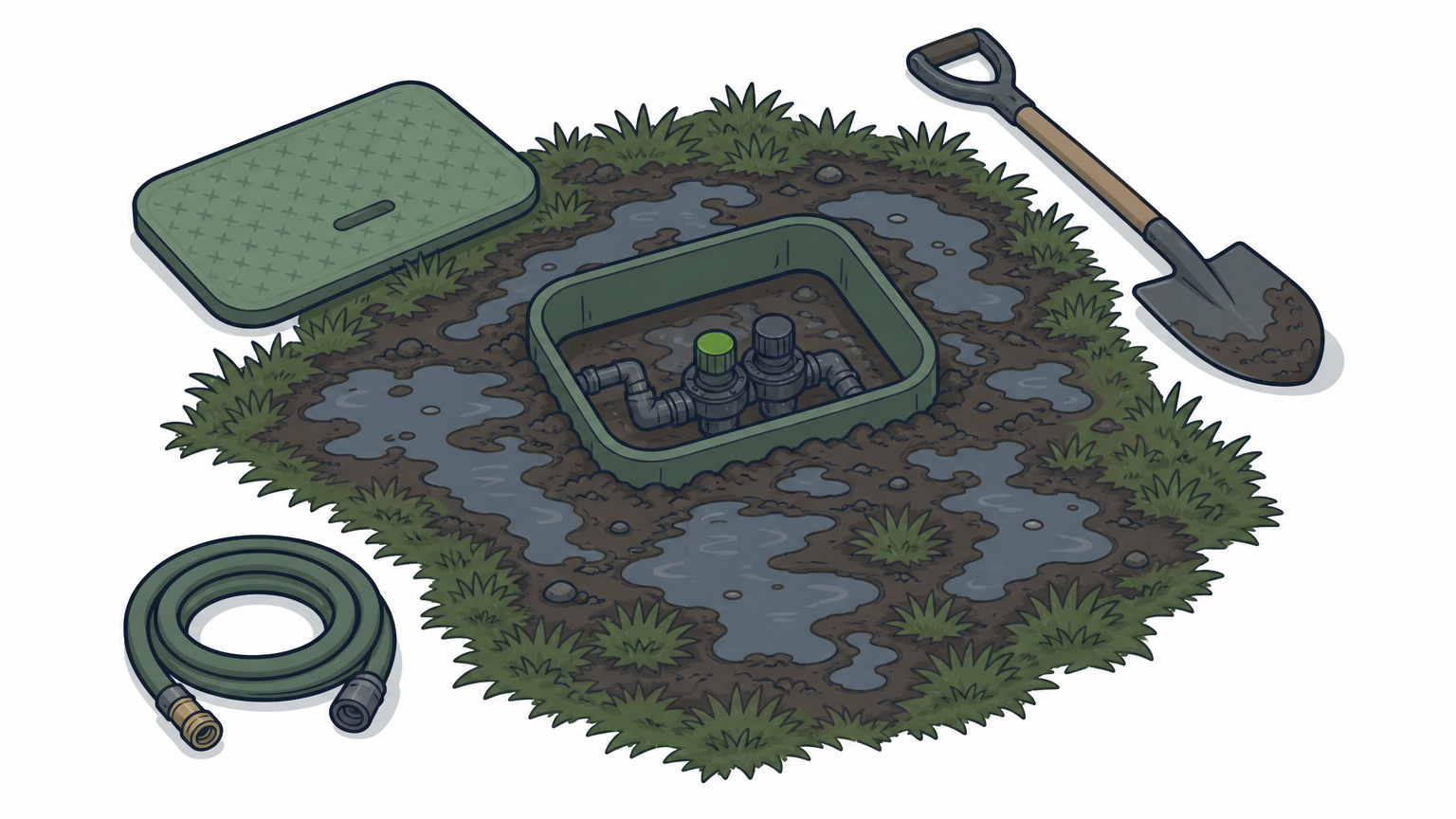
A wet spot that never fully dries out, even during a dry Sebring week, points to water escaping where it shouldn't. This is one of the most visible signs of a failing irrigation system , and it's easy to spot once you know where to look.
What it looks like
You'll see standing water or mud near a sprinkler head, along a pipe run, or close to the valve box, sometimes hours after the last watering cycle finished. The grass around the soggy patches often turns spongy underfoot and may smell faintly of mildew.
Common causes
Pooling usually comes from one of these:
- A cracked lateral line feeding a specific zone
- A damaged sprinkler head seal leaking at the base
- Overlapping zones watering the same spot twice
- Poor drainage combined with a misaligned head
Standing water in your yard is never just a puddle. It's your irrigation system telling you exactly where to dig.
How to fix it
Mark the wet area, then run that zone manually to watch where the water surfaces. Small head repairs are a quick DIY job, but a buried line break calls for a professional crew with the right tools to fix it without tearing up your whole yard.
3. Brown, dry spots despite regular watering
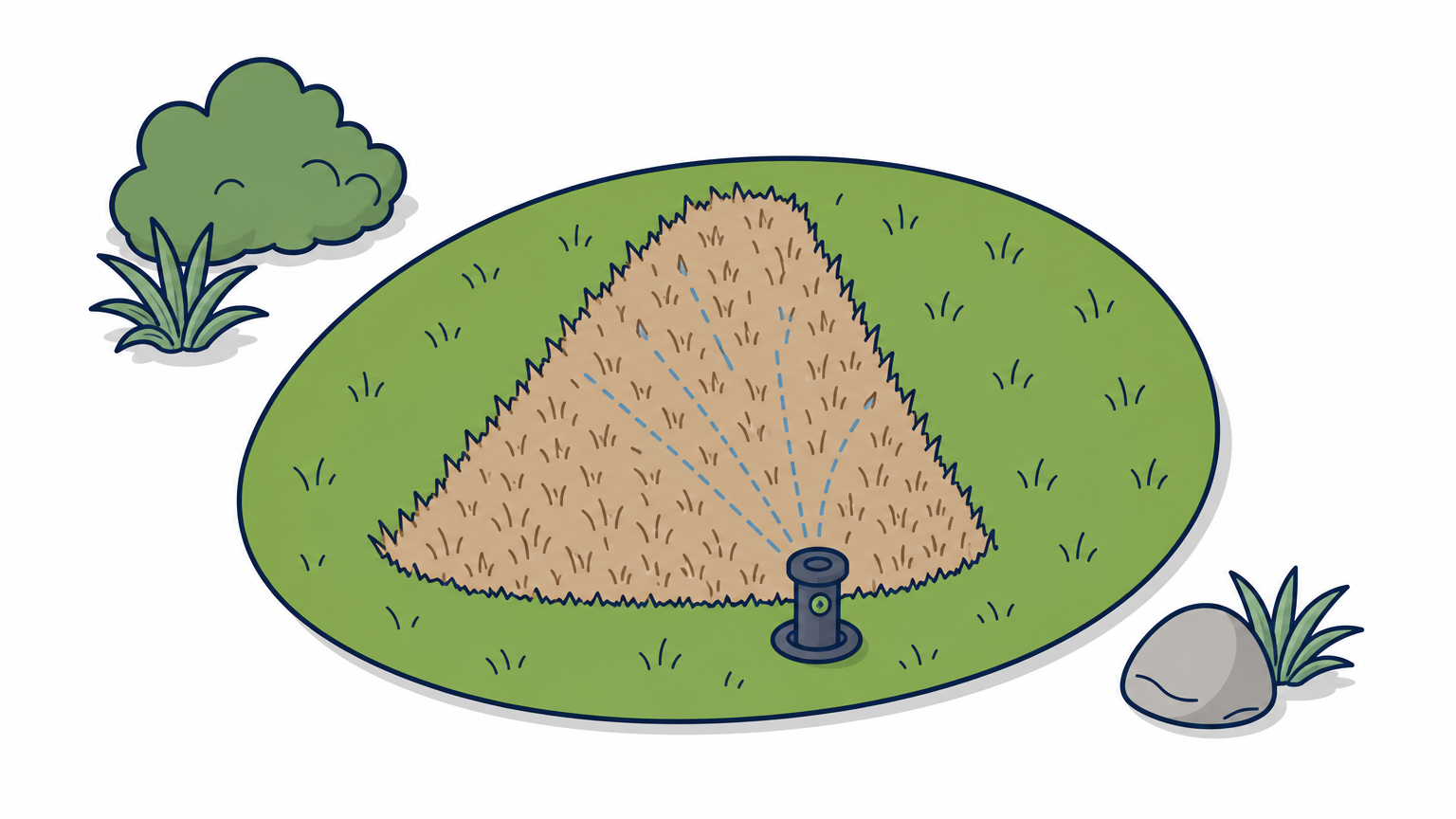
Brown patches that show up even though the system runs on schedule usually mean water isn't reaching that spot at all, not that you're watering wrong. Dead grass next to healthy grass in the same zone is the giveaway that something mechanical, not seasonal, is at fault.
What it looks like
Ring-shaped or wedge-shaped dry spots appear in the same location every time, often at the edge of a zone's reach. The grass turns crunchy and pulls up easily, while the lawn six feet away stays green and springy.
Common causes
A few things usually explain uneven coverage:
- A clogged nozzle blocked by sand or debris
- Low water pressure caused by a leak elsewhere in the line
- A head knocked out of alignment by mowing or foot traffic
- Tree roots blocking the spray pattern
Dead grass next to green grass isn't a watering problem, it's a coverage gap you can pinpoint and fix.
How to fix it
Run the affected zone and watch the spray pattern directly. Clearing a clogged nozzle or adjusting a head takes minutes, but if pressure stays weak across the whole zone, have a technician check for a hidden leak upstream.
4. Sprinkler heads that won't pop up or spray unevenly
A head that stays stuck below the grass line, or one that sprays sideways into the driveway instead of up over the lawn, wastes water and leaves dry patches right next to it. This is one of the easiest signs to catch, since you can watch it happen during a single cycle.
What it looks like
Walking your yard during a watering cycle, you'll spot heads that barely rise an inch, spin erratically, or shoot water in a fan pattern instead of the usual arc. A sprinkler head that won't pop up often stays buried under sod that's grown over it, blocking it completely.
Common causes
A short list covers most cases:
- Sand or debris jammed in the riser mechanism
- A broken spring or seal inside the head
- Sod or soil grown over the top, blocking the pop-up action
- Low pressure caused by a leak elsewhere feeding that zone
A sprinkler head that won't pop up isn't stubborn, it's broken, and it's costing you water and coverage every cycle.
How to fix it
Pulling debris out or trimming grass around the head solves plenty of cases in minutes, and our how to repair a sprinkler head walkthrough covers the rest. When the internal seal is cracked or the riser won't budge, swapping the head is a cheap fix compared to what most sprinkler repairs cost, and a technician can knock it out fast, often during the same visit as a broader inspection.
5. Zones or the controller stop responding
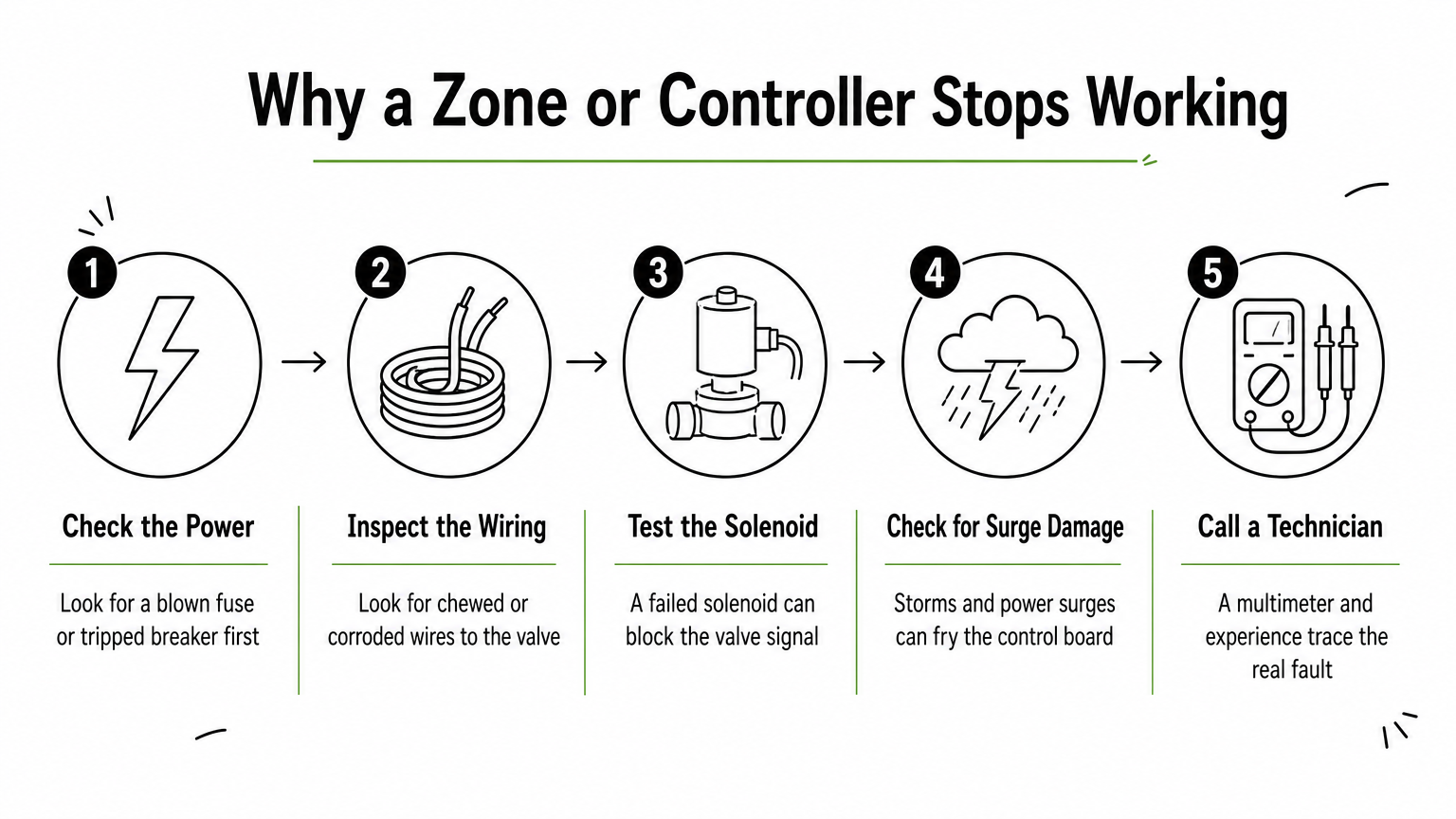
When one zone or the entire controller stops firing on schedule, the problem usually sits in the wiring or the electronics, not the pipes. This sign tends to escalate fast, since a dead zone means an entire section of your lawn gets zero water until someone fixes it.
What it looks like
Your controller shows an error code, a zone skips its turn entirely, or the display goes blank overnight. Sometimes a zone stops responding for a day or two, then works again randomly, which is often worse than a clean failure because it hides the real cause.
Common causes
A handful of issues explain most controller failures:
- A blown fuse or tripped breaker on the controller
- Chewed or corroded wiring between the controller and the valve
- A failed solenoid on the valve itself
- Storm damage or a power surge frying the control board
A dead zone rarely fixes itself. It's almost always a wiring or valve failure waiting on a multimeter and a repair.
How to fix it
Checking the breaker and fuse takes two minutes and rules out the simplest cause. Diagnosing bad wiring or a failed solenoid needs a multimeter and experience tracing buried wire, which is where a professional visit saves you hours of guesswork.
Getting your system back on track
Each of these five signs points to a specific mechanical or electrical failure, not bad luck or bad watering habits. A spiking bill means a leak somewhere underground. Soggy patches mean a cracked line. Brown spots and stubborn heads mean blocked or broken hardware. A dead zone means wiring or a valve needs attention. Catching these early saves you money on water and keeps your lawn from turning into a patchwork of dead grass and mud.
Guessing at repairs on sandy Central Florida soil usually costs more time than it saves, especially once a problem is buried under a driveway or a slab. If you've spotted one of these signs on your own property, don't wait for it to get worse. Reach out to TWQ for a full irrigation wet check, and get your system diagnosed and fixed by people who've handled these exact problems for over 20 years.