
How to Hire a Lawn Care Professional near Me in 4 Steps
Searching for a lawn care professional near me in Sebring ends well when you follow four steps. Write down what your lawn needs, build a shortlist of local pros, compare written quotes line by line, and start with a trial month before you commit. Do that and you pay a fair price for work that shows up on schedule .
The search itself is the hard part. Results mix business listings, booking apps, and Facebook threads where neighbors ask for help. Cheap crews disappear after two visits. Quotes cover different work, so you can't compare them. In Central Florida's long growing season, a skipped mow turns into an overgrown yard fast, and fixing it costs more than the mowing would have.
TWQ is a family-owned landscaping company in Sebring with over 20 years of experience. This guide explains each step the way we would explain it to a neighbor in Sebring, Lake Placid, Avon Park, or Okeechobee. You get a scope template you can copy, a checklist for vetting providers, and a worked example of what a year of mowing adds up to.
What a lawn care professional actually does
A lawn care professional maintains your turf on a regular schedule, and a good one tells you exactly what each visit includes. Before you call anyone, know which kind of provider fits your yard and what drives the price.
Three kinds of provider
Most local options fall into three groups , and the right one depends on whether you need a basic cut or a healthier lawn . Searches for a lawn care specialist, professional lawn care, or residential lawn care near you all describe overlapping services, so compare what each provider does, not what it calls itself.
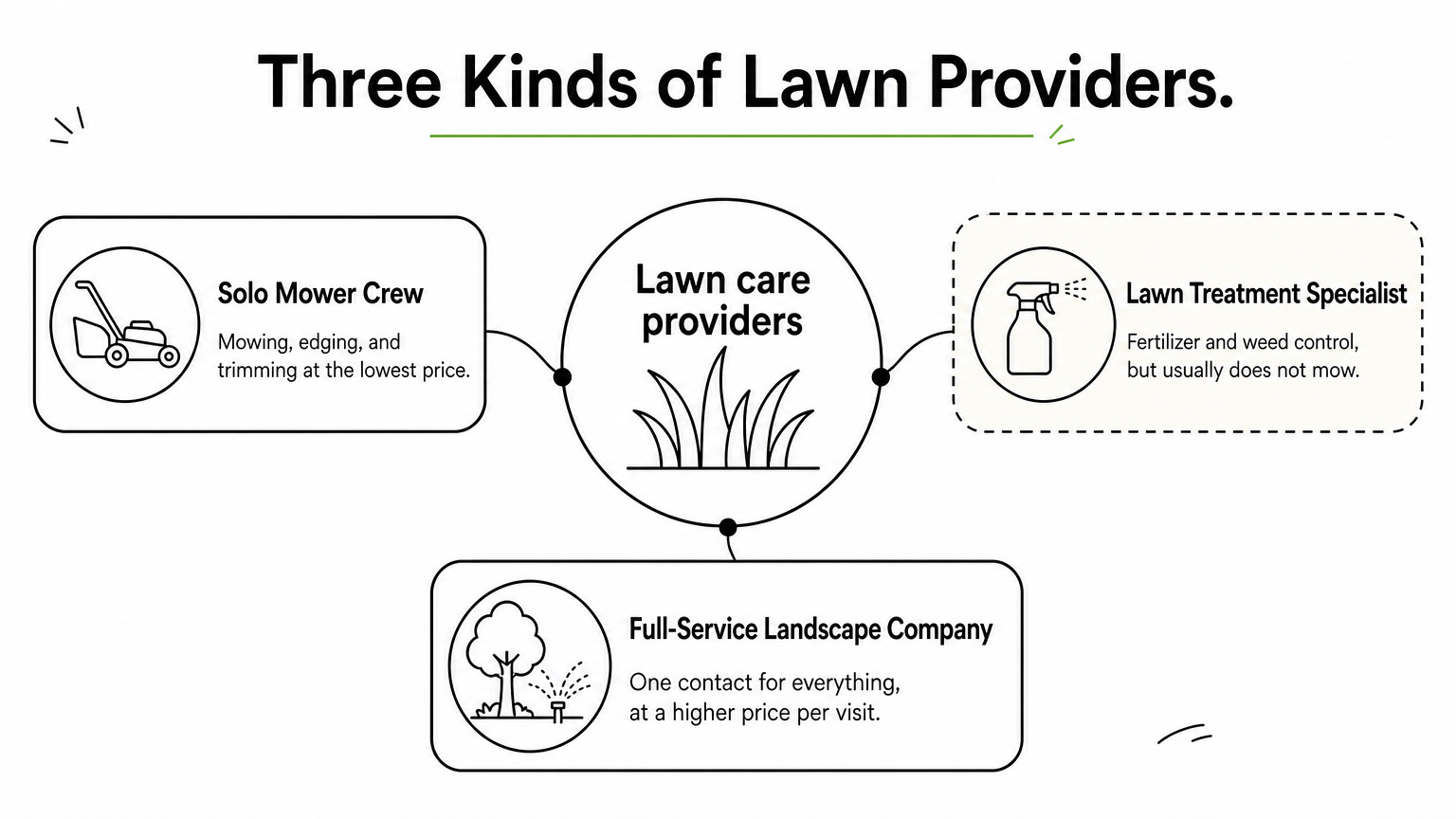
- Solo mower or small crew: mowing, edging, trimming, and blowing off hard surfaces. Lowest price, thinnest backup if equipment breaks.
- Lawn treatment specialist: fertilizer, weed control, and similar treatments. Good for thin or weedy turf, but usually does not mow.
- Full-service landscape company: mowing plus treatments, aeration, cleanups, bed care, and irrigation. One contact for everything, higher price per visit.
What moves the price
Mowing crews usually quote per visit , not per hour, because they price the whole property. Hourly rates show up mostly on cleanups and one-time jobs. Expect your quote to move with these factors:
| Factor | Why it changes the price |
|---|---|
| Lot size | More turf means more mowing time and fuel |
| Obstacles and slopes | Fences, trees, beds, and slopes slow the crew |
| Frequency | Weekly visits are often priced lower per visit than occasional ones |
| Starting condition | Grass that is already tall needs extra passes or a one-time cut |
| Extras | Edging, bagging, cleanups, and treatments are often priced separately |
| Distance | Properties far from the crew's base may carry a trip charge |
Hire for reliability first and price second, because a lawn pro sells a result on a schedule.
Step 1. Write down what your lawn needs
Start by writing a short scope of work, because providers can only quote what you describe. A clear scope also makes every quote comparable later.
Describe the property and the grass
Note your approximate lot size , whether it is fenced, the gate width, and any pets. Add your grass type if you know it. St. Augustine is common on Central Florida home lawns, and it generally wants to be mowed at 3.5 to 4 inches. Mention sprinkler heads, steep spots, and whether the property is a vacant lot, since lots without irrigation or landscaping are priced differently.
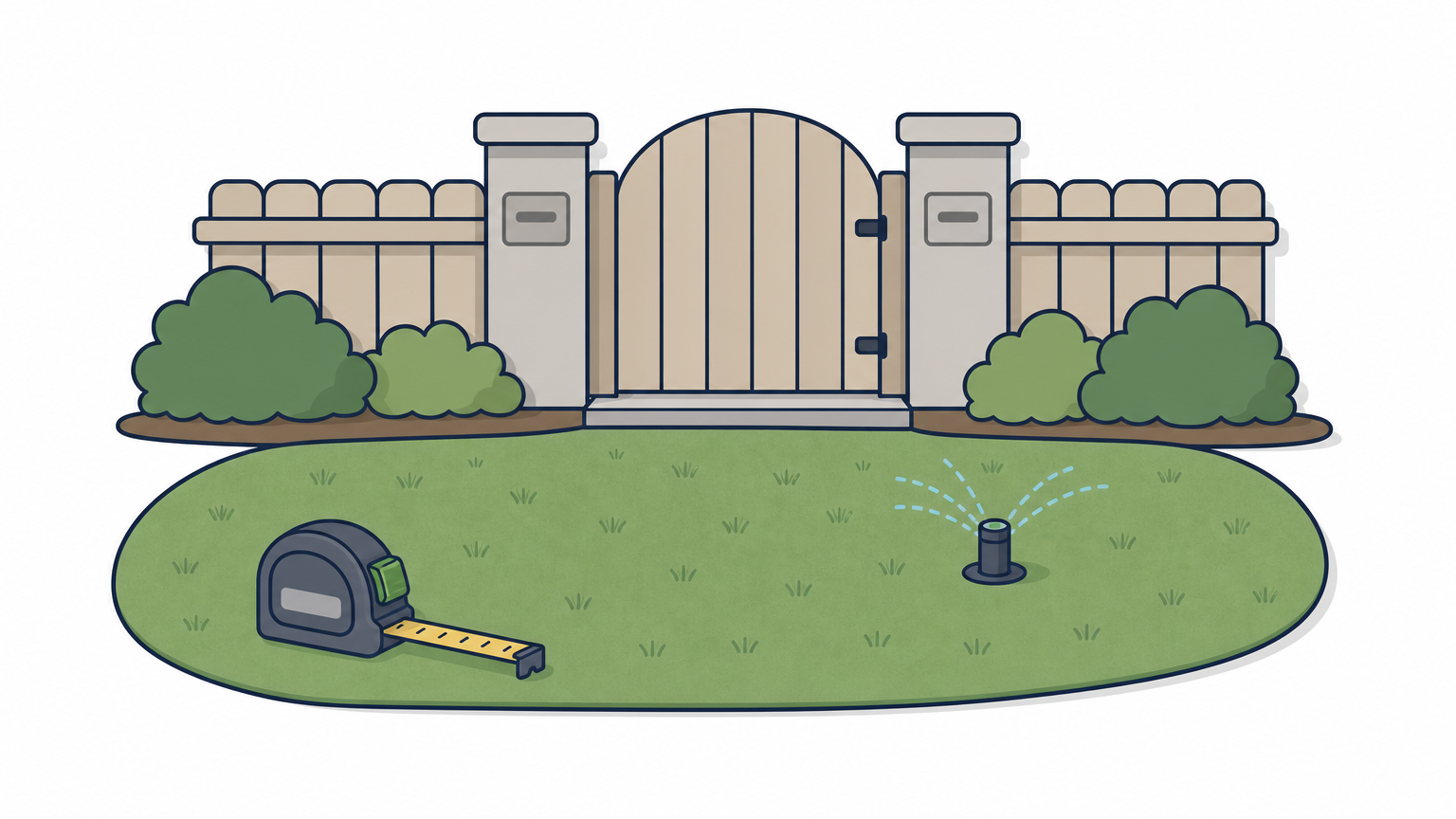
Then choose a frequency. Grass grows fast in the warm, wet months, so weekly mowing is typical there. Growth slows in the cooler months, and every two weeks often works from roughly November through March.
Send the same scope to every provider
Copy this message, fill in the brackets, and send it to each company on your shortlist:
 Hi, I'm looking for regular lawn care at [street address, town].
Property: about [square feet] sq ft, [grass type if known], [fenced or open], [gate width], [pets yes/no].
Service wanted: mowing, edging, string trimming, and blowing off the driveway and walks.
Schedule: weekly in the warm months, every two weeks in the cooler months.
Please price separately: fertilizer and weed control, bed cleanup, one-time cleanup.
Please include: price per visit, what each visit covers, proof of insurance, and your earliest start date.
The same written scope sent to every provider is what makes their quotes comparable.
Step 2. Build a shortlist of local pros
Aim for three candidates who work in your town and can show proof of insurance. A short list is easier to compare and keeps you from chasing every ad.
Where to look
Start close to home. Neighbors with good-looking lawns are the best source, so ask who they use and how long that crew has come. Next, search Google Maps and read the listings of nearby companies, and check local community groups where neighbors post recommendations. Booking apps are convenient, but you may not know which crew arrives, so ask whether the same crew visits each time.
How to screen before you call
Spend ten minutes per company on these checks:
- Reviews: look for patterns about showing up on time and answering calls, not just the star rating.
- Insurance: ask for proof of general liability and workers' compensation coverage.
- State certification: if the company will apply fertilizer or weed killer, ask whether its applicators hold the required Florida certification.
- Base location: a crew based in Sebring serving Okeechobee may add a trip charge, so ask.
- Fertilizer rules: many Florida counties and cities limit fertilizer during the summer rainy season, so ask how the company handles local restrictions.
A provider who can't show proof of insurance is asking you to carry the risk.
Step 3. Compare written quotes side by side
Get three written quotes based on the same scope, then compare what is included before you compare prices. The cheapest bid is rarely the best value when it leaves out tasks you need.
Ask for on-site estimates
A quote built from a satellite photo misses gates, slopes, and sprinkler heads. Ask each company to walk the property first. At TWQ, for example, we offer a free estimate, schedule an on-site walkthrough, and then send a written estimate, and we respond to requests within one business day. Slow replies at the estimate stage usually predict slow service later.
Check what each quote includes
Line up the quotes against this table and ask about anything missing:
| Line item | What to confirm |
|---|---|
| Per-visit price | The tasks covered at that price |
| Edging and trimming | Included every visit or extra |
| Blowing and cleanup | Clippings removed from driveway and walks |
| Rain delays | How missed visits are rescheduled |
| Overgrowth surcharge | When a first cut costs extra |
| Billing | Per visit, monthly, and when payment is due |
Then do the annual math. As an illustration (these are example figures, not a market price), take a $50 quote per visit . With about 30 weekly visits and about 11 every-other-week visits, you get roughly 41 visits a year. That is $2,050 per year, or about $171 a month. A $40 quote that skips edging and cleanup comes to $1,640. It saves $410, but you would be edging 41 times yourself.
Compare price per visit only after every quote lists the same tasks.
Step 4. Start with a trial month
Hire your top pick month to month and judge the first four visits. A trial protects you from long commitments and shows how the crew actually works.
Judge the first four visits
Check the lawn after each cut against this list:
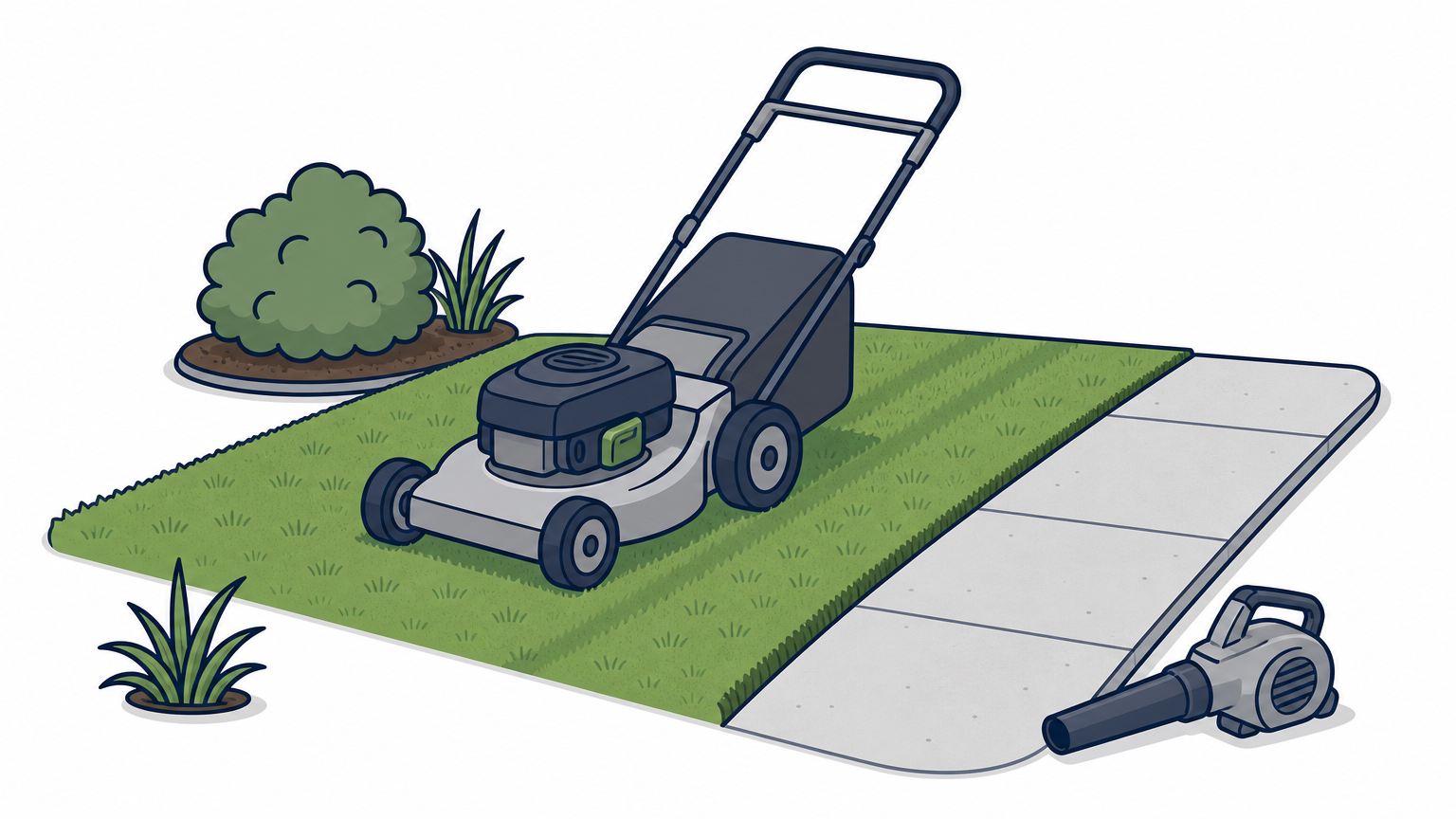
- The crew arrives on the scheduled day or tells you about delays in advance.
- Edges along the walks and beds are clean, and clippings are blown off hard surfaces.
- The gates are latched and the pets are safe.
- The grass is cut at the right height. The one-third rule says never remove more than a third of the blade in one mowing. If grass is 6 inches tall, cut it to 4, not 2. Scalping weakens the turf.
- Cut tips look clean, not ragged and tan, which suggests dull blades.
Put the terms in writing
Before the trial ends, confirm the terms in writing . That means the price per visit, how overgrowth and rain delays are handled, when the price can change, and how either side cancels. Pay after service, not months ahead. If the crew passes the trial, keep them. If not, you have lost four visits, not a year.
Four visits tell you more about a lawn pro than any review does.
Your next move
Hiring a lawn care professional comes down to a clear scope, a short list of insured local providers, written quotes you can compare, and a trial month. Follow those steps and you avoid the unreliable crews and the lowball bids that leave out half the work.
If you'd like to see how this works in practice, request a free estimate from TWQ. We will walk your property, send you a written estimate, and let you decide from there.