
Sprinkler System Repair: Costs, Common Issues, and Fixes
A sprinkler head spraying the sidewalk instead of your lawn, a zone that won't shut off, or a water bill that suddenly doubles all point to the same problem: you need sprinkler system repair . Before you call anyone, you probably want to know what's actually wrong and whether you're about to get overcharged for a five-minute fix.
Most sprinkler problems fall into a handful of categories, and knowing which one you're dealing with helps you talk to a repair tech without getting the runaround. Broken heads, clogged nozzles, and valve failures account for the bulk of service calls we run across Sebring, Lake Placid, and Avon Park. Costs typically range from a simple $75 head swap to several hundred dollars for underground pipe breaks or controller replacements.
This guide walks through the most common issues we see on residential and commercial properties, realistic repair costs for each, and how to tell whether your system needs a quick fix or a full irrigation overhaul.
Why sprinkler system repairs shouldn't wait
A cracked pipe or stuck valve rarely stays a small problem. Water finds the weak spot and keeps working at it every time the system runs, so what starts as a hairline crack in March can become a washed-out flower bed by June. Delaying sprinkler system repair almost always costs more than fixing it the week you notice it, because irrigation problems compound with every cycle instead of staying put.
Your water bill tells the real story
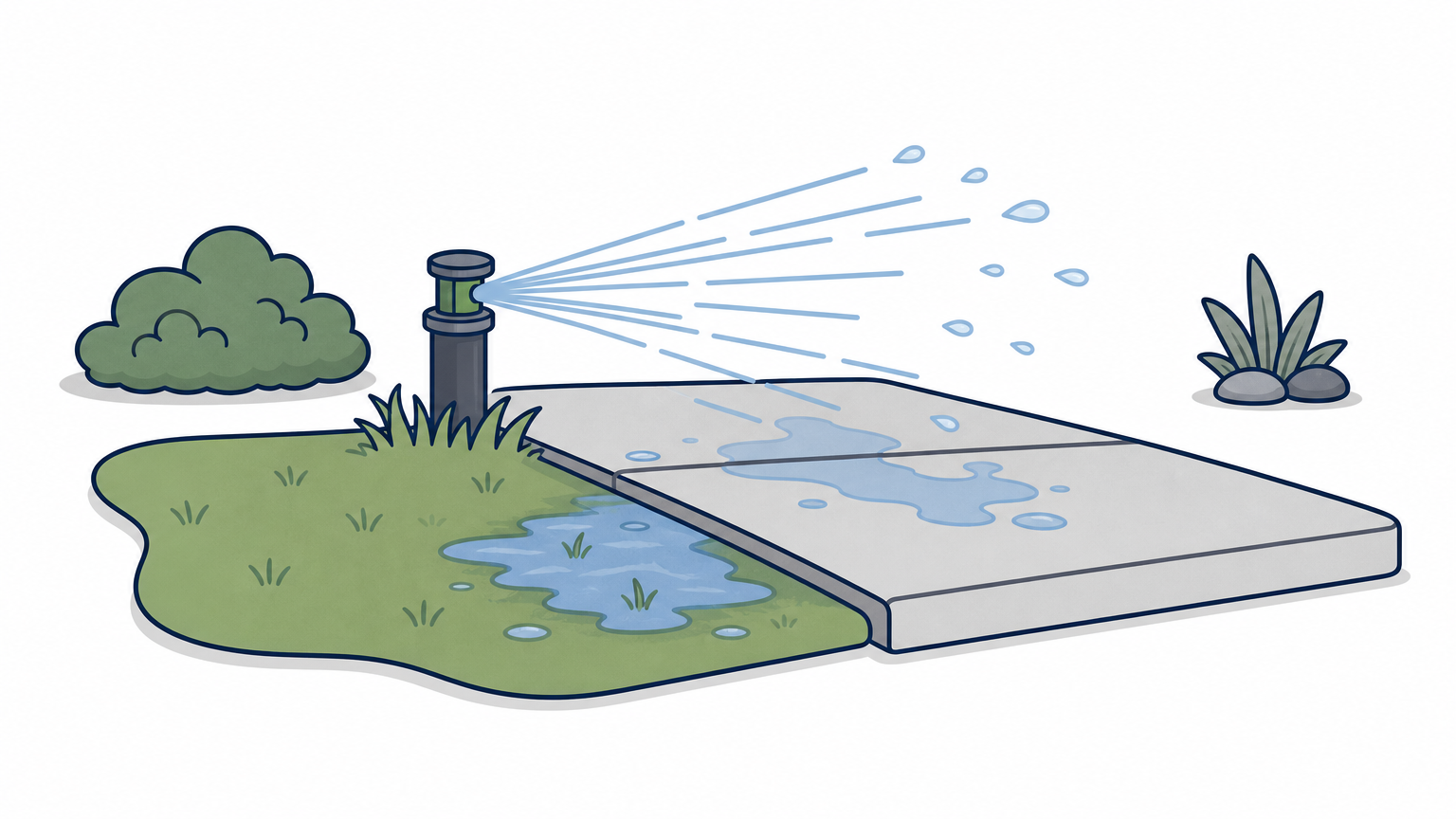
A single broken sprinkler head spraying continuously can waste over 6,300 gallons of water a month, according to the EPA's WaterSense program. That's not a rounding error on a Florida water bill. We've walked onto commercial properties in Lake Wales where a stuck valve had been running one zone nonstop for two weeks before anyone noticed the invoice. The property manager assumed the increase was seasonal. It wasn't. It was a $40 part that needed replacing.
A single stuck valve can waste thousands of gallons before you ever see it on your lawn.
Standing water and turf damage add up fast
Overwatered zones don't just waste money, they create real damage. Central Florida's sandy soil drains fast in most spots, but a broken head or leaking valve saturates the ground faster than it can absorb, and that leads to:
- Fungus and root rot in St. Augustine and Bahia grass, which thrives in overly wet conditions
- Sinkholes and soft spots where underground pipes have burst and washed out soil beneath the surface
- Foundation and driveway erosion near heads that spray water toward structures instead of turf
- Mosquito breeding grounds in standing puddles, a real concern given Florida's climate
Softened, unstable ground is more expensive to repair than a $75 head. Once erosion sets in near a foundation or walkway, you're looking at a hardscape repair on top of the irrigation fix.
Dry zones do damage too
Opposite problem, same outcome. A clogged nozzle, a broken controller wire, or a valve that won't open leaves part of your lawn or landscape beds bone dry while everything around it looks fine. Grass under stress from lack of water turns brown within days in Central Florida summer heat, and by the time you notice the discoloration, the root system may already be too damaged for the zone to recover with normal watering. Reseeding or resodding a dead patch costs far more than the valve repair that would have prevented it.
Commercial properties face bigger stakes
Property managers dealing with HOAs, office parks, or retail centers have less room for delay on irrigation repair for commercial properties. A dead lawn or a puddle at the entrance reflects poorly on the whole property, and tenants notice. We've seen commercial clients lose curb appeal points during lease renewals over irrigation issues that had been ignored for a full season. Scheduling a repair the same week a sprinkler zone starts acting up protects both the landscape investment and the property's reputation.
The bottom line on timing
Quick sprinkler system repair keeps a $75 or $150 fix from turning into a $2,000 sod replacement, a drainage correction, or an emergency plumbing call for a burst underground line. If you notice a soggy patch, a dry patch, a hissing sound near a valve box, or a water bill that jumped for no obvious reason, that's your signal to call a technician, not wait for the next billing cycle to confirm the problem is real.
How to fix common sprinkler system problems
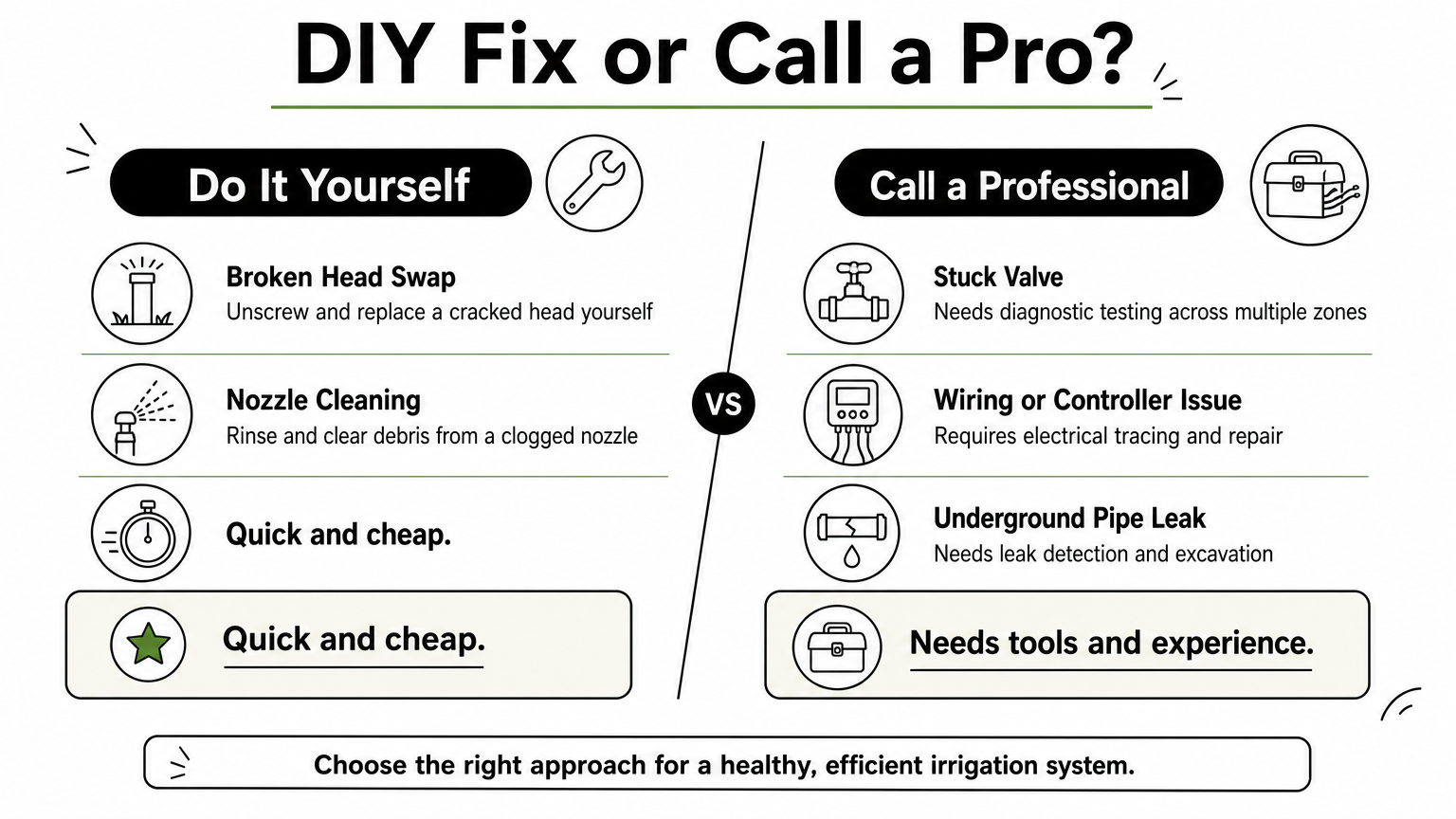
Every irrigation system breaks down in a handful of predictable ways, and matching the symptom to the cause saves you a service call for something you could fix in ten minutes. Sprinkler repair work usually falls into one of five categories: broken or clogged heads, valve failures, wiring and controller issues, low pressure, and pipe leaks. Here's how to spot each one and know whether it's a DIY job or a call to a technician.
| Problem | Common Symptom | Likely Cause | Fix Level |
|---|---|---|---|
| Broken head | Water sprays sideways or pools at one spot | Lawnmower or foot traffic damage | DIY (unscrew and replace) |
| Clogged nozzle | Weak or uneven spray pattern | Dirt, sand, or mineral buildup | DIY (clean or replace nozzle) |
| Stuck valve | Zone won't shut off or won't turn on | Debris in the valve or worn diaphragm | Pro |
| Bad wiring | Zone won't activate from controller | Rodent damage or corroded connection | Pro |
| Low pressure | Heads barely pop up | Leak upstream or clogged filter | DIY to diagnose, pro to repair |
| Underground leak | Soggy spot with no visible head issue | Cracked or separated pipe | Pro |
Fixes you can handle yourself
Replacing a cracked sprinkler head is genuinely a beginner-friendly repair. Shut off the zone, unscrew the old head from the riser, and thread on a matching replacement, which runs $5 to $15 at any hardware store. Nozzle cleaning is even simpler: pop the nozzle off, rinse it under a hose, and check for a filter screen that needs clearing. Simple sprinkler fixes like these take less than fifteen minutes once you know which head is causing the problem.
If you can find the broken part with your eyes, you can probably fix it without a technician.
Problems that need a professional
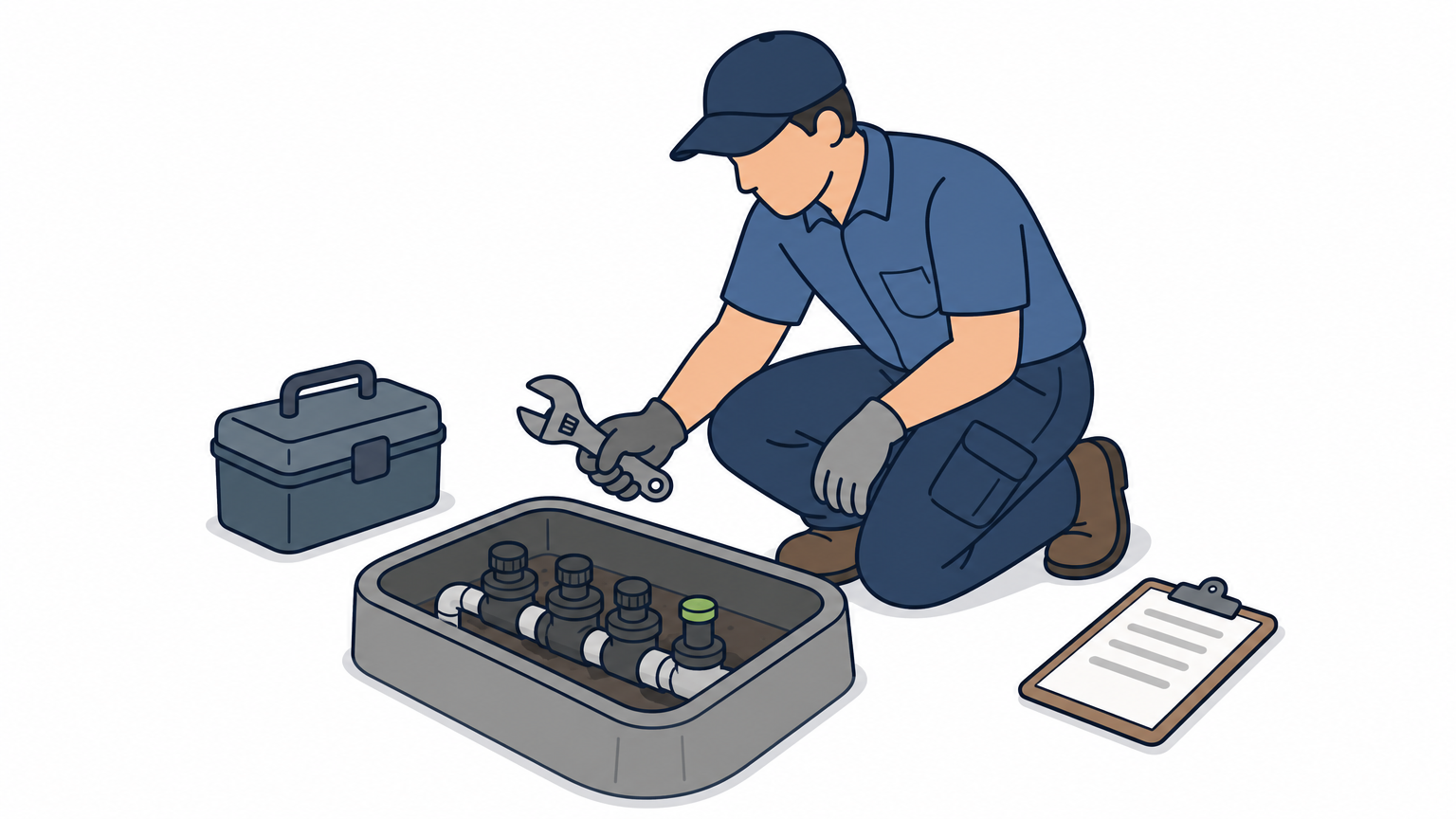
Anything involving the valve manifold, buried wiring, or underground pipe requires digging, electrical testing, or specialized tools most homeowners don't own. Solenoid valves fail from mineral buildup or worn seals, and diagnosing which valve in a multi-zone system has failed takes experience most people don't have time to build. Pipe breaks are worse: you're guessing at the location without a leak detector, and digging in the wrong spot just adds more repairs. For these, calling in a professional irrigation team saves you from turning a contained problem into a bigger excavation project.
What sprinkler system repair typically costs
Pricing for sprinkler system repair in Central Florida generally falls between $75 and $500, depending on what broke and how deep the crew has to dig. A single head swap sits at the low end. A controller replacement, a valve rebuild, or a mainline break sits at the high end. Homeowners calling around for a sprinkler repair cost estimate should expect a range rather than a flat number, since the tech won't know the full scope until they've run the system and traced the problem.
Typical price ranges by repair type
Most service calls in Sebring, Lake Placid, and Avon Park fall into these brackets:
| Repair Type | Typical Cost | Notes |
|---|---|---|
| Head replacement | $75 - $150 | Includes part and labor for one head |
| Nozzle cleaning or swap | $50 - $100 | Often bundled with a full system check |
| Valve repair or replacement | $150 - $350 | Higher if multiple valves need service |
| Wiring or controller repair | $100 - $400 | Depends on wire run length |
| Underground pipe leak | $200 - $600 | Cost rises with excavation depth |
| Full system inspection | $75 - $150 | Recommended annually |
Most sprinkler repairs cost less than a dinner out, but skipping them can cost you a lawn.
What drives the price up
Several factors push a job from the low end of a range to the high end. Older systems built before modern parts standardization often need custom fittings that cost more and take longer to source. Accessibility matters too: a valve buried under a paver patio costs more to reach than one sitting in an open valve box. Commercial properties with larger zone counts and more heads naturally run higher totals than a single residential yard, simply because there's more ground to cover and more parts in play.
When to expect an estimate vs a flat fee
Straightforward jobs, like a head replacement or nozzle swap, usually come with a flat fee quoted over the phone once you describe the symptom. Anything involving digging, valve diagnostics, or controller wiring gets a written estimate after an on-site irrigation wet check, because the tech needs to confirm the cause before pricing the fix. A reputable irrigation repair provider will walk the property with you, point out exactly what's failing, and explain the cost before starting work, not after.
How to choose a trustworthy repair professional
Finding a good technician matters more than finding a cheap one, because a rushed diagnosis often leads to a repeat service call within a month. Licensed and insured providers carry the credentials to back up their work, and that protects you if something goes wrong during a dig or a wiring job. Sebring and Lake Placid homeowners have plenty of options when searching for irrigation systems repair nearby, but not all of them show up with a leak detector or a background in commercial-grade valve systems.
Questions worth asking before you hire
A quick phone call before scheduling can save you from a bad experience, and there are a few ways to find a reliable sprinkler repair company before you commit. Ask these before committing to a company:
- Are you licensed and insured to work in this county?
- Do you charge a flat diagnostic fee, or is the first visit free?
- Will you show me the broken part before replacing it?
- Do you carry parts for older or discontinued systems?
- What's your warranty on labor and parts?
Straightforward answers to all five questions usually signal a company that's used to working with homeowners and property managers, not just running quick jobs and moving on.
A tech who shows you the broken part before charging you for it is a tech worth calling back.
Red flags that should make you hang up
Certain behaviors signal trouble before a technician even shows up. Vague pricing over the phone, refusal to explain what's wrong before starting the repair, and pressure to sign up for a maintenance contract on the first visit are all signs to keep looking. Genuine professionals want you to understand the problem, not just pay for a fix you can't verify. If a company won't give you a rough price range for a common issue like a broken head or a stuck valve, that's a company that hasn't priced the job honestly with other customers either.
Local experience counts for more than a big ad budget
Soil type, water pressure, and grass species vary block by block in Central Florida, and a technician who's worked across Sebring, Avon Park, and Lake Wales already knows how St. Augustine and Bahia react to overwatering or drought stress. That local knowledge speeds up diagnosis and avoids guesswork. TWQ has run irrigation repairs across these communities for over two decades, and that history shows in how fast our irrigation team can spot the cause of a problem instead of just treating the symptom.
Keeping your irrigation system running strong
A sprinkler system rarely fails all at once. It starts with one head spraying the wrong direction or one zone running a little long, and if you catch that early, sprinkler system repair stays cheap and quick. Wait a season, and you're looking at sod replacement, drainage fixes, or a full controller swap instead of a $75 part. The pattern holds across every property we've serviced in Sebring, Lake Placid, and Avon Park: small fixes now beat big bills later.
Getting a trustworthy irrigation team on your side means you catch problems during routine checks instead of after your water bill doubles or your lawn dies in patches. Twenty years of running repairs across Central Florida has taught us where systems typically fail and how to fix them right the first time. If your zones aren't watering evenly or your bill looks off, reach out to TWQ for irrigation repair in Sebring and the surrounding area and get it sorted before it gets worse.