
Sprinkler Line Repair: How to Find and Fix a Broken Pipe
The fastest way to handle sprinkler line repair is to find the wet spot, shut off the water, dig out the pipe, cut out the damaged section, and bridge the gap. Use a slip repair coupling on rigid PVC, or barbed insert couplings with clamps on flexible poly pipe. Test the line under pressure before you backfill. For a single break, parts usually cost less than $40, and the job takes an afternoon.
A broken lateral line is easy to notice and hard to pin down. You see a soggy patch, a geyser, or heads that barely spray, but the pipe sits a foot underground and you don't know its type, its size, or what runs next to it. Dig in the wrong place and you waste an hour or crack a second pipe. In Central Florida, sandy soil makes digging easy, but the trench walls collapse and fill with water fast.
This guide covers each step to repair a sprinkler line yourself: identifying the pipe, buying the right parts, locating the break, making the fix, and testing it. It also puts DIY costs next to hiring a pro. TWQ repairs irrigation systems in Sebring and across Central Florida, so the tips below come from the problems we see in local yards.
What to know before you repair a sprinkler line
Before you pick up a shovel, you need three answers: what your pipe is made of, what size it is, and whether the job is worth doing yourself. Most residential breaks are simple once you hold the right part.
Buying the wrong coupling for your pipe type is the most common reason a first repair fails.
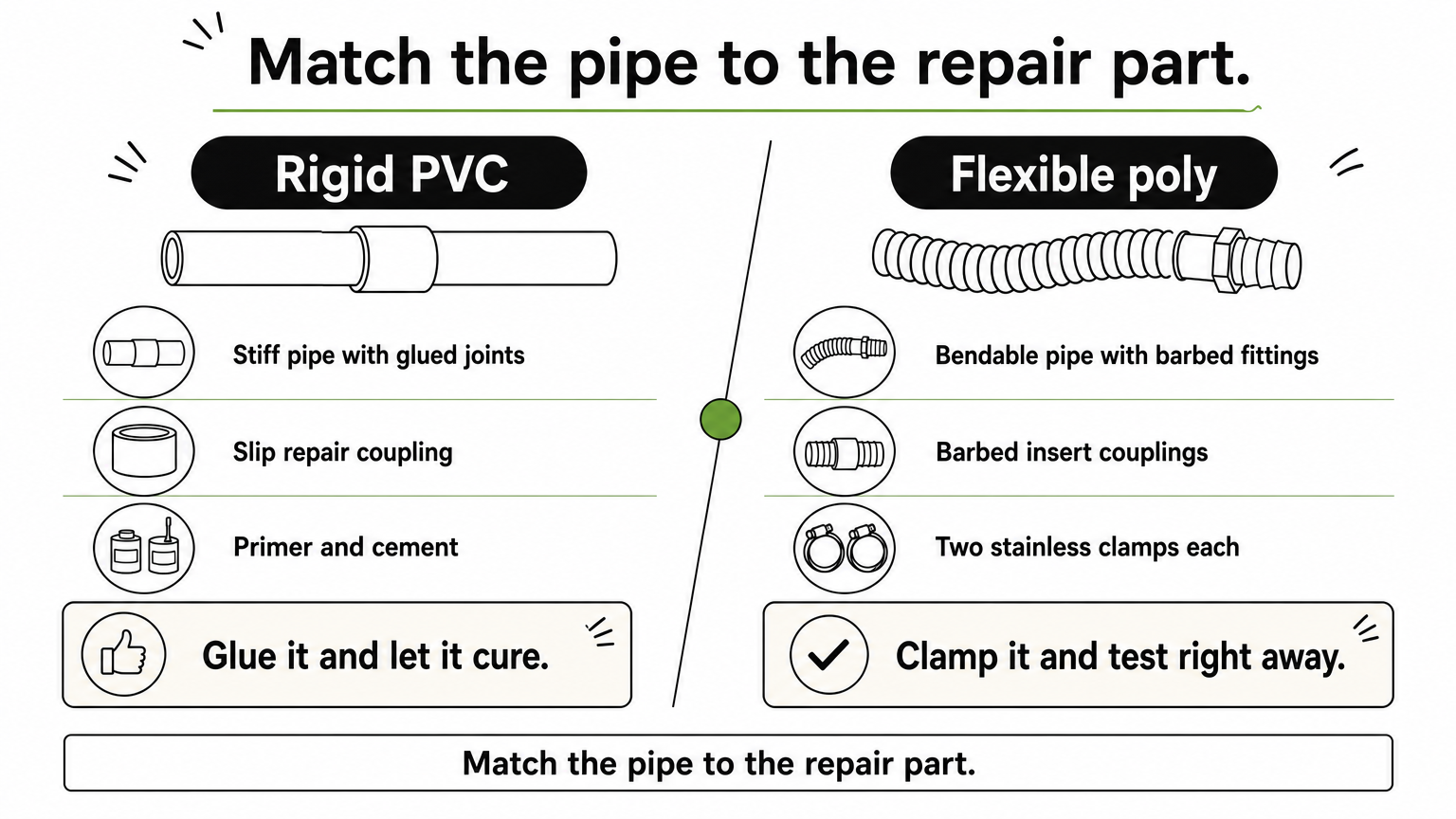
Match the pipe type to the repair part
Look at the pipe where it enters a valve box. Rigid white or gray pipe is PVC. Soft black pipe is flexible polyethylene. The two use different repair parts. The size is printed on the pipe itself, and residential lines are most often 3/4 inch or 1 inch.
| Pipe | How to spot it | Parts to buy |
|---|---|---|
| Rigid PVC | White or gray, stiff, glued joints | Slip repair coupling, PVC primer, PVC cement |
| Flexible poly | Black, bendable, barbed fittings | Barbed insert couplings, two stainless clamps per coupling |
You also need a shovel or trowel, a PVC or ratchet cutter, a rag, a bucket, and a tarp for the soil.
What the repair costs: DIY or a pro
Parts for one break typically run roughly $15 to $40 , depending on whether you already own a cutter. A typical 3/4 inch PVC fix needs a slip coupling (about $5), primer and cement (about $12), and a short piece of spare pipe (a few dollars). That is around $20 if you own a shovel.
A pro costs more because you pay for diagnosis, labor, and equipment. The price depends on pipe depth, how many breaks there are, and how hard the spot is to reach, so no flat number is honest. A written estimate after a site visit is the reliable way to compare.
Step 1. Find the leak
Run each zone one at a time and look for pooling water, a sunken or mushy patch, or weak spray on the heads downstream. The break sits upstream of the first weak head in that zone.
In a zone with weak heads, the break lies between the last healthy head and the first weak one.
Run each zone and read the signs
Turn on one zone and walk it. Water that bubbles up in a lawn that is dry elsewhere marks the area to check. Heads that mist or barely pop up point to a break between them and the valve. If a zone looks fine but the lawn stays swampy, a lateral line may leak only while that zone runs.
Rule out the mainline
The mainline is the pipe from your water source to the valves, and it stays pressurized. Turn off every zone and every water use in the house, then watch your water meter. If the dial keeps moving, you have a mainline leak. Those are often deeper and under constant pressure, so they are harder jobs.
Pin down the exact spot
In sandy soil, water often travels along the pipe and surfaces several feet from the real break. Don't dig under the first puddle. Dig a small test hole at the wet spot, then follow the pipe in both directions until you see water streaming or a visible crack, split, or crushed section.
Step 2. Shut off the water and dig out the pipe
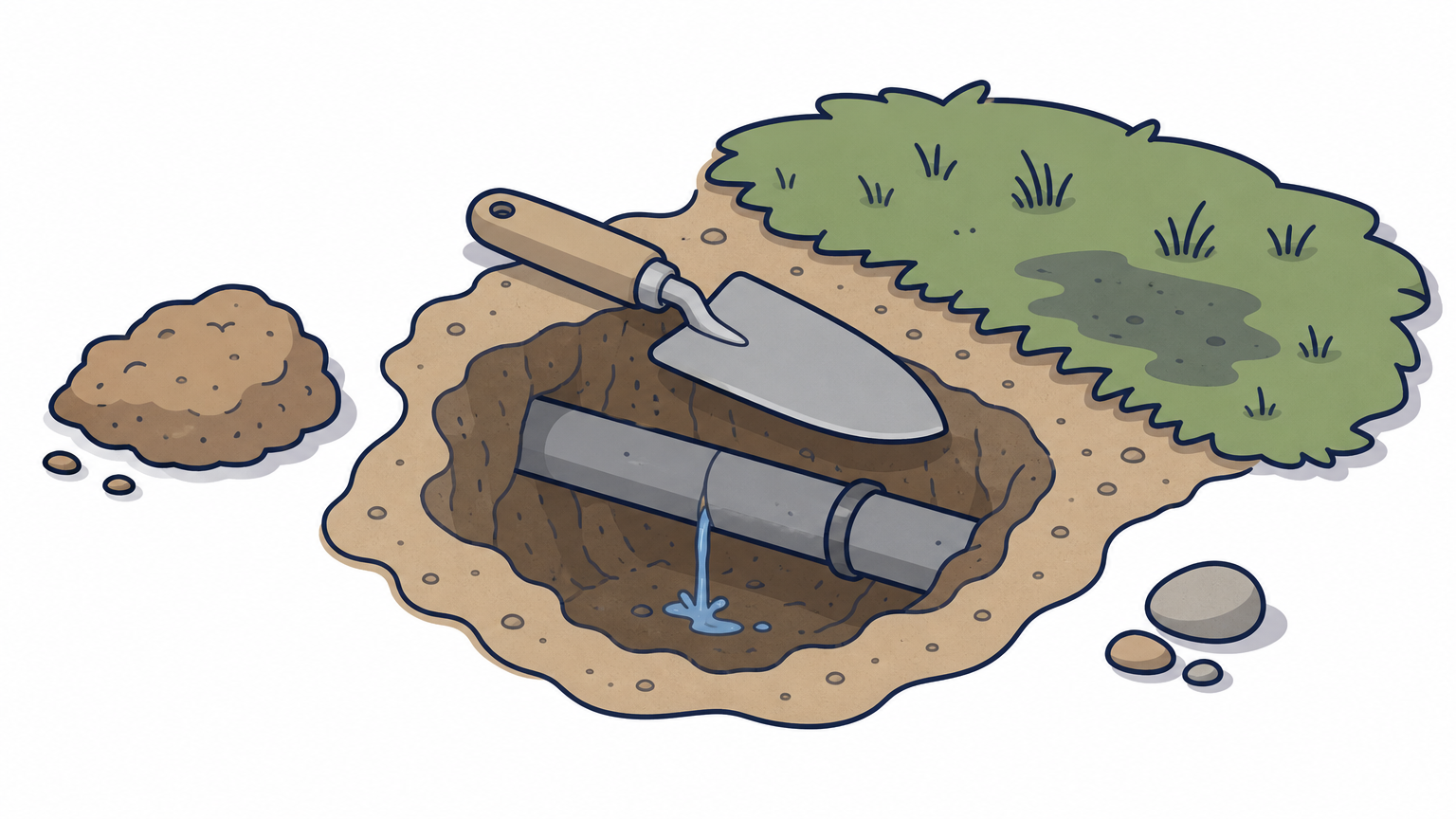
Shut off the irrigation water at the backflow preventer or the main shutoff, then dig a trench that exposes about 12 inches of pipe with room to work under it. Call 811 first.
A clean, roomy trench makes the repair easy, and a cramped one causes crooked, leaking joints.
Call 811 and shut off the water
Florida's Sunshine 811 service marks buried utilities for free. Call or file online at least two full business days before you dig, so request it the day you find the leak. Irrigation pipe is shallow, but gas, power, and communication lines may not be far away. Once cleared, close the shutoff valve and open the zone briefly to relieve pressure.
Dig a trench you can work in
Lay a tarp beside the break and cut the turf in one piece so you can set it back. Dig down at least 6 inches past the break on each side. Use a trowel near the pipe to avoid cracking it. Then scoop out a few inches beneath the pipe so your hands and cutter fit.
Bail out the water and keep dirt out of the hole. In Central Florida, the hole may refill from groundwater, so a small bucket or a wet-dry vacuum helps. The pipe ends must be clean and dry before you cement anything.
Step 3. Cut out the damaged section and fit the repair
Cut out the damaged pipe with square cuts, then bridge the gap with the coupling that matches your pipe: a slip repair coupling for PVC, or insert couplings and clamps for poly.
A square cut and a clean pipe end matter more than any brand of coupling.
Repair rigid PVC with a slip coupling
- Cut out the split plus about an inch of good pipe on each side. Cut square.
- Remove burrs from the pipe ends and wipe them clean. Let the pipe drain.
- Measure the gap. A telescoping slip repair coupling is designed to fit a gap with no pipe flex needed.
- Dry fit first. Mark where the coupling sits on each end.
- Apply primer to both pipe ends and the coupling sockets, then cement, and slide the coupling together.
- Hold the joint for several seconds, as the can directs, so it doesn't push apart.
If the damaged section is long, use two standard couplings and a short piece of matching pipe. For tight spots, the elbow method in many DIY guides works, but it takes more fittings and more glue joints, so each added joint is another place to leak.
Repair flexible poly pipe
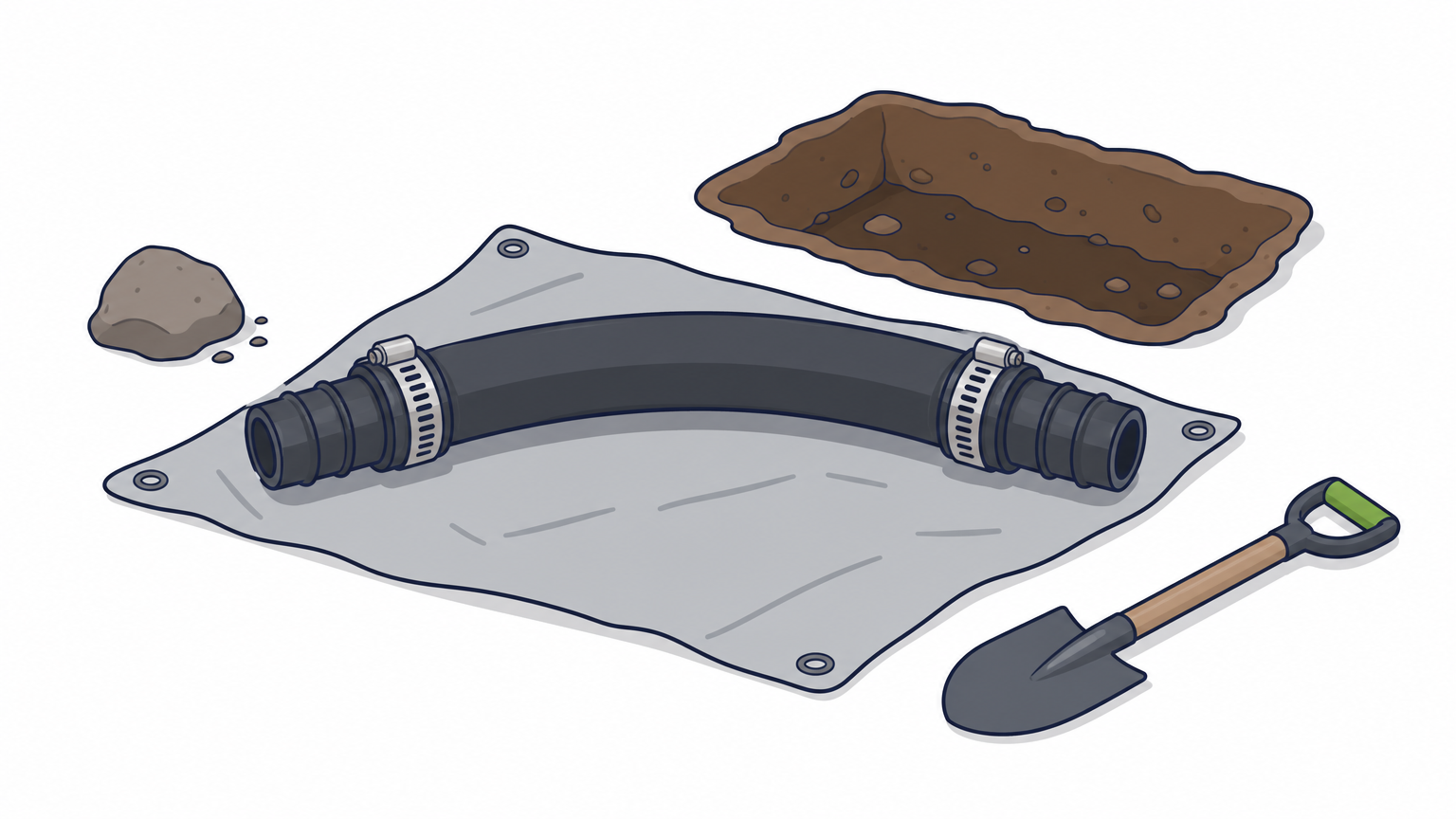
Cut out the damaged section square. Slide a clamp onto each pipe end, push a barbed insert coupling fully into each side, and position each clamp just behind the barbs. Tighten stainless clamps firmly. For a longer gap, insert a short piece of poly with a coupling at each end. Poly is forgiving, so no cure time is needed.
Skip sealants and wraps
Tapes, wraps, and spray sealants such as Flex Seal are not a dependable fix for a buried, pressurized pipe. They can hold for a while on a hairline crack, but a coupling is the permanent repair and costs only a few dollars.
Step 4. Test, backfill, and decide when to call a pro
Wait for the cement's cure time, turn the water on slowly, and watch the repair for several minutes before you fill the hole. Backfill only after the joint stays dry.
Never backfill until the repair has held pressure while you watch it.
Test before you backfill
PVC cement cure times vary with pipe size and temperature, and the can lists them. Wait the stated time, often several hours, before you pressurize. Open the shutoff slowly to avoid a pressure spike, run the zone, and check each joint. Look for drips or beads of water. Poly repairs can be tested right away.
Backfill and recheck
Return the soil in layers, packing each by hand, and keep rocks and clumps away from the pipe. Set the turf back and water it in. Check the spot again the next day for sinking or damp soil.
When to hire a pro
Call a professional when:
- The break is on the mainline or the pipe is very deep.
- The same line keeps breaking, or old PVC crumbles when you cut it.
- You can't find the leak after checking each zone, so an irrigation wet check is the next step.
- Several zones have low pressure at once.
TWQ's irrigation repair team handles broken pipes, leaking heads, low pressure, and uneven coverage in Sebring, Lake Placid, Avon Park, and nearby areas. We offer a free estimate and respond within one business day. We schedule an on-site walkthrough before giving a written estimate.
Fix it once, then keep an eye on it
Good sprinkler line repair comes down to a few habits: identify the pipe, call 811, find the true break, cut square, use the matching coupling, and test before you backfill. Most single breaks are a small, inexpensive afternoon job. Repeated breaks or mainline leaks are different and usually point to a larger problem in the system.
If you would rather not dig, or the leak keeps coming back, request a free sprinkler repair estimate from TWQ and we will inspect the system and tell you what it needs.