
7 Tips for Finding the Best Landscaping near Me
Typing landscaping near me into Google gets you a dozen names, a pile of star ratings, and no real way to tell who actually shows up on time and does clean work. You're left clicking through websites at 9 pm trying to guess which company will turn your yard into a mess of unreturned calls and half-finished projects. That guessing game gets expensive fast, especially if you sign a maintenance contract before checking references.
If you want to actually find a company worth hiring, you need a short checklist, not another scroll through search results. The fastest way to separate real landscaping firms near me from fly-by-night operators is to know exactly what licensing, reviews, and estimates should look like before you ever pick up the phone.
This list walks through seven practical steps for vetting landscaping businesses near me , from checking licensing and insurance to reading between the lines of online reviews and comparing written estimates. We've spent over 20 years doing this work in Sebring and Central Florida, so these tips come from watching what separates a solid landscaping partner from a one-season disappointment.
1. Choose a full-service local landscaping company
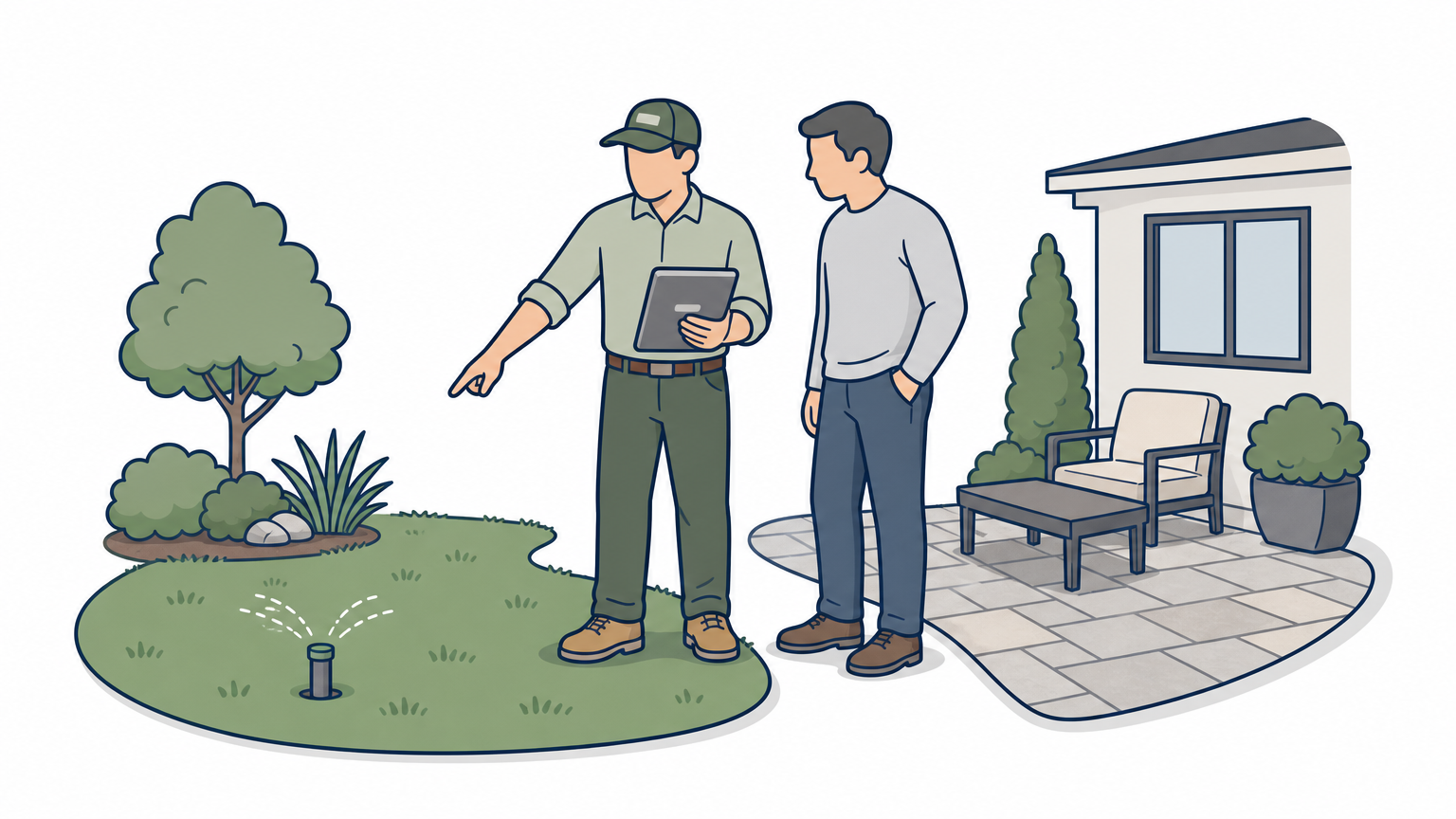
Start your search with companies that handle everything your property needs, not just mowing. A full-service landscaping company can manage lawn care, hardscape construction, irrigation, lighting, and seasonal clean-ups without you juggling three different contractors and three different schedules. When one company handles the whole property, you get consistent quality and someone who actually knows your yard's history instead of a new crew guessing every visit.
What to look for
Check the services page before you check anything else. A company that only lists mowing and edging isn't going to help you when your irrigation system breaks and finding irrigation sprinkler repair becomes its own search, or when you want landscape lighting installed for a backyard patio. Look for a local landscaping partner that covers the full range: routine mowing, fertilization and weed control, aeration and overseeding, hardscape design, pressure washing, and irrigation work. Local knowledge matters too. A company based in Sebring or the surrounding Central Florida area understands what centipede and St. Augustine grass need in our sandy soil and summer humidity, which a national franchise often doesn't.
A landscaper who only mows grass can't fix the irrigation leak that's killing your lawn.
Why it matters
Hiring separate companies for mowing, irrigation, and hardscape means more invoices, more scheduling headaches, and more finger-pointing when something goes wrong. If your sprinkler heads are overwatering a bed and your mowing crew is a different company than your irrigation tech, nobody takes ownership of the problem. A single, full-service provider eliminates that gap. It also means the crew handling your weekly lawn mowing is the same team who'll notice a dying shrub, a clogged drain line, or a fence post that's rotting, and can flag it before it becomes a bigger repair.
Working with one company also tends to save money over time. Bundled maintenance programs, like the ones TWQ builds around each property's actual needs, are usually priced lower per service than hiring separate vendors for lawn care, irrigation checks, and seasonal clean-ups. You're not paying three separate trip charges for three separate trucks showing up on three separate days.
Questions to ask
Before you sign anything, get specific about what a company can and can't do. Here's what to ask during that first call:
- Do you handle both residential and commercial properties, or just one?
- Can you design and install hardscapes like patios or retaining walls, or do you subcontract that work out?
- Do you offer irrigation system installation and repair in-house?
- Is landscape lighting something your crews install, or is that a separate vendor?
- How many years have you operated in this specific area?
- Can I see a project gallery of properties similar to mine that you currently maintain?
A company that answers these clearly, without vague deflections or "we'll have to check with our partner," is one that's built to handle your property long-term. If you're comparing options in Sebring, Lake Placid, Avon Park, or nearby towns, TWQ's professional landscape maintenance in Sebring covers this full range under one roof, which is worth using as a baseline when you're evaluating other quotes.
2. Verify licensing, insurance, and experience
Anyone can buy a mower and call themselves a landscaper. What separates a real business from a weekend side hustle is proper licensing and insurance , plus a track record you can actually verify. Before you let a crew onto your property, confirm they're operating legally and carry coverage that protects you if something goes wrong.
What to look for
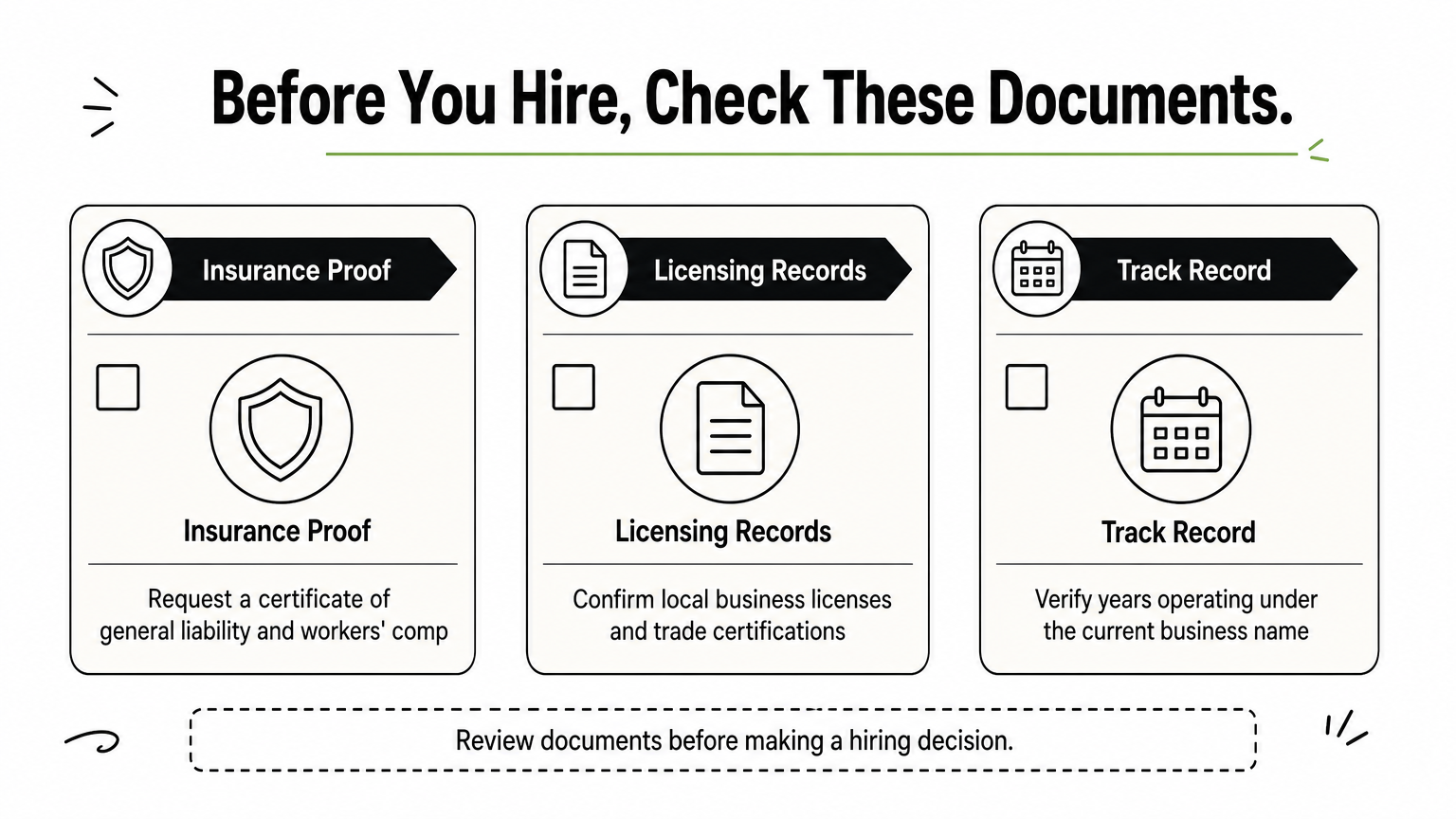
Ask for proof of general liability insurance and workers' compensation coverage, not just a verbal promise. Florida doesn't require a statewide landscaping license for basic lawn maintenance, but many counties and municipalities require local business licenses or occupational permits, and any company doing irrigation or hardscape work should carry the right certifications for that trade. Check how long the business has actually operated under its current name. A company that's rebranded three times in five years, or one whose only proof of experience is a Facebook page from last spring, hasn't earned your trust yet.
No insurance certificate means you're financially responsible if a worker gets hurt on your lawn.
Why it matters
Uninsured crews shift all the risk onto you. If a worker falls off a ladder hanging lights or a mower kicks up a rock that shatters your neighbor's window, you could be on the hook for medical bills or property damage without coverage. Verified experience also tells you the company has survived Florida's brutal summers, drought years, and hurricane cleanup seasons, not just a couple of easy springs.
Questions to ask
Get these answers in writing, not just a verbal yes:
- Can you send a certificate of insurance naming me or my HOA as an additional insured?
- What's your workers' compensation policy number, and can I verify it's active?
- How many years have you been licensed and operating in this county?
- Have you ever had a claim filed against your insurance, and how was it handled?
- Do you carry separate coverage for irrigation or hardscape subcontractors?
Companies confident in their standing will hand over documentation without hesitation. Hesitation or excuses are your signal to keep looking.
3. Read reviews across multiple platforms
Online reviews tell you more than a star rating ever will, but only if you look beyond the first page of Google results. Star counts get gamed, and a single platform never shows the full picture of how a landscaping company actually treats its customers over months, not just one job.
What to look for
Check Google, Facebook, and Nextdoor, not just one source. Nextdoor especially surfaces honest local feedback from neighbors who've actually used the crew on their own street. Look past the star average and read the actual text of recent reviews, particularly ones from the last six to twelve months, since a company's quality can shift when they change crews or take on too many clients at once. Pay attention to how the business responds to negative reviews. A thoughtful, professional reply says more about their standards than a dozen five-star ratings with no comments attached.
A company's response to a bad review tells you more than a hundred good ones.
Why it matters
Patterns matter more than isolated complaints. One bad review might be a fluke, but if three separate reviews mention missed appointments or no-show crews, that's a real pattern you're about to inherit. Reading across multiple review platforms protects you from a business that's paid for fake reviews on one site while its Nextdoor feed tells a very different story from actual neighbors.
Questions to ask
Bring specifics from what you read straight into your conversation with the company:
- Can you explain what happened in this particular review I read?
- How do you handle a customer complaint when a job doesn't go as planned?
- Do you have references I can call directly, not just online reviews?
- Have you had staff turnover recently that might affect service consistency?
- Can you point me to recent projects near my neighborhood I could drive by?
A company willing to discuss a bad review honestly, rather than dismissing it, is usually one that takes accountability seriously.
4. Compare quotes and understand pricing factors
Getting three written estimates is the single best habit you can build when searching for landscaping near me , because pricing swings wildly between companies for the same job. A quote that's half the price of everyone else's usually means shortcuts somewhere, whether that's cheap plant material, no cleanup included, or a crew that's not actually insured.
What to look for
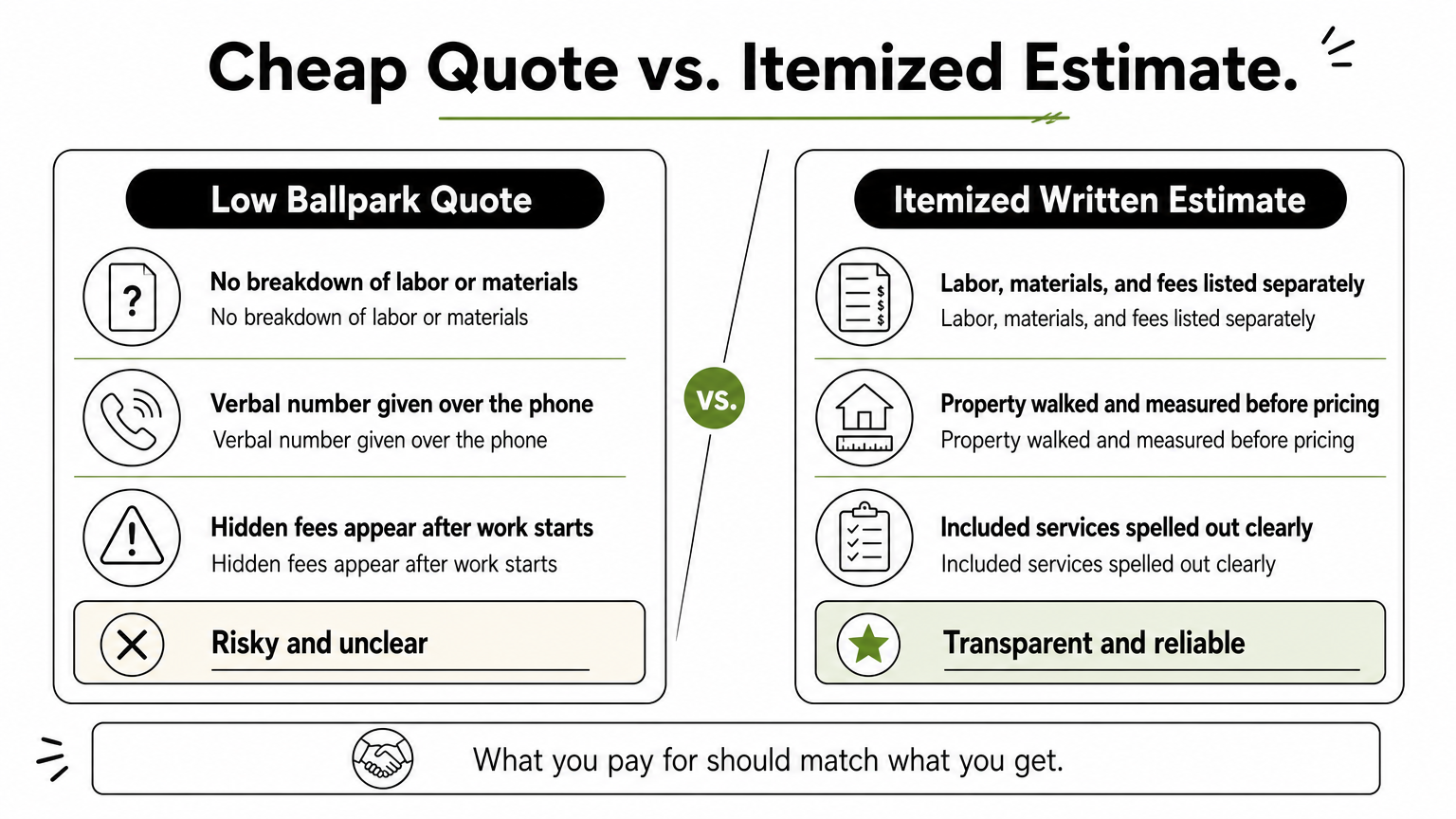
Request a written, itemized estimate rather than a verbal number over the phone. A real quote breaks down labor, materials, equipment, and any recurring service fees separately, so you can see exactly what you're paying for. Compare what's actually included, not just the bottom-line total. Two quotes at $400 a month can mean very different things depending on mowing frequency, bed maintenance, and whether fertilizer treatments are bundled in.
| Pricing Factor | What It Affects |
|---|---|
| Property size and layout | Labor hours per visit |
| Service frequency | Weekly vs. biweekly vs. monthly costs |
| Material quality | Mulch, plants, pavers, and irrigation parts |
| Add-on services | Lighting, pest control, aeration bundled or separate |
| Contract length | Discounts for annual vs. month-to-month agreements |
The cheapest quote almost always costs more once you count the corners it cuts.
Why it matters
Understanding pricing protects you from surprise charges later. A vague quote often turns into add-on fees for edging, debris hauling, or gate access once the crew is already on-site. Solid estimate comparisons also reveal which companies actually walked your property before quoting, versus those who guessed a number based on square footage alone.
Questions to ask
Bring these questions to every estimate conversation:
- What exactly is included in this monthly or per-visit price?
- Are there separate charges for debris removal or seasonal clean-ups?
- Does the quote change based on a contract length or number of visits?
- What happens if my property needs extra work mid-season?
- Can I get this estimate in writing before signing anything?
A company willing to walk your yard and explain their numbers line by line is one worth trusting with your budget.
5. Confirm the range of services offered
Most properties need more than a weekly mow, and the best time to find out if a company can grow with you is before you sign, not six months in when you need aeration or landscape lighting installed. Searching for landscaping near me should turn up companies that list a real menu of services, not just "lawn care" and a phone number.
What to look for
Scan the service list for depth, not just length. A company worth hiring should cover fertilizer and weed control , turf aeration and overseeding, irrigation installation and repair, hardscape construction, pressure washing, and seasonal clean-ups, all delivered by their own crews rather than a rotating cast of subcontractors. Ask specifically whether commercial landscape maintenance work like tree care or pest control is handled in-house, since that tells you whether the company is set up for larger properties or HOAs, not just small residential yards.
A company that can't handle your irrigation or hardscape today won't magically gain that skill next season.
Why it matters
Properties change. The turf that looks fine this spring might need aeration by fall, and a patio project you're not thinking about yet could come up next year. Sticking with a full range of landscaping services from one provider means you're not starting a new vendor search every time a new need pops up. It also means the crew already knows your soil, your irrigation zones, and your property's quirks, so new work gets done faster and with fewer surprises.
Questions to ask
Push past the homepage list and confirm capability directly:
- Do your own employees perform hardscape and irrigation work, or is it subcontracted?
- Can you handle a mid-season addition, like landscape lighting installation or a paver patio?
- What's your process for diagnosing turf problems before recommending treatment?
- Do you offer commercial-specific services like tree trimming or pest control?
- How do you scale service for larger commercial or HOA properties versus a single home?
A clear, specific answer to each of these is a strong sign the company can handle whatever your property throws at it down the road.
6. Evaluate communication during the consultation
How a company talks to you before you sign anything predicts exactly how they'll treat you once you're a paying customer. If a landscaping consultation feels rushed, vague, or hard to schedule in the first place, that's not a fluke, it's a preview of what every future service call will feel like.
What to look for
Notice how quickly someone returns your first call or email, and whether they show up on time for the walkthrough. Watch whether the estimator actually walks your property, measures beds, checks your irrigation zones, and asks about your goals, or just eyeballs the yard from the driveway and promises to "email something over." A good local landscaping company sends a real person who asks questions about your soil, sun exposure, and how you actually use the space, not a salesperson reciting a script.
If a company can't communicate clearly before you're a customer, don't expect it to improve after.
Why it matters
Communication during the sales process is the best window you'll get into ongoing service. Companies that are hard to reach for an estimate tend to be even harder to reach once you've got a billing dispute or need sprinkler system repair for a dead zone mid-July. Clear, responsive contractor communication upfront usually means a dedicated point of contact, a real phone number, and someone who follows up without you having to chase them down.
Questions to ask
Use the consultation itself to test how the company operates day to day:
- Who will be my point of contact once service starts?
- How do you handle service requests or complaints, phone, email, or app?
- What's your typical response time for a non-emergency question?
- Will the same crew lead visit my property each time?
- How far in advance will I know about schedule changes or weather delays?
A company that answers these without hesitation, and follows through with a prompt written estimate afterward, is showing you exactly how they'll operate for the life of your contract.
7. Ask about long-term maintenance plans
A one-time property clean-up feels great for about three weeks, then the weeds come back and the lawn looks tired again. The real value in long-term maintenance plans comes from a company that treats your property as an ongoing relationship, not a single invoice. Anyone still searching for landscaping near me every spring hasn't found a partner yet, they've just found a series of one-off vendors.
What to look for
Before signing anything, find out whether the company offers a structured maintenance program with a defined schedule, or whether they only take calls as problems come up. Good programs spell out mowing frequency, fertilization timing, seasonal aeration, and irrigation checks across the whole year, not just the busy growing months. Ask whether the plan adjusts for Florida's wet season versus the slower winter months, since a seasonal maintenance schedule built for our climate looks different than a generic national template.
A maintenance plan that only shows up in spring isn't a plan, it's a hope.
Why it matters
Consistent care catches small problems, a fungus patch, a clogged sprinkler head, a fence line overtaken by weeds, before they turn into expensive fixes. Properties on a year-round maintenance program also tend to hold their value better, whether that's curb appeal for a home sale or a professional look for a commercial building that attracts tenants. Skipping structured care to save money upfront almost always costs more once turf has to be replaced or irrigation systems fail from neglect.
Questions to ask
Get clarity before the first invoice arrives:
- What does your standard maintenance plan include month by month?
- How does service change between summer growth and winter dormancy?
- Can the plan flex if my property's needs change mid-year?
- Is there a contract length, or can I adjust services seasonally?
- Who do I call if something looks off between scheduled visits?
Companies that walk you through a full annual calendar, rather than a vague promise to "take care of it," are the ones actually built for the long haul.
Finding the right landscaping partner
Searching for landscaping near me doesn't have to mean gambling on the first name that pops up in your results. Run each candidate through these seven checks: full-service capability, licensing and insurance, honest reviews, itemized quotes, service range, consultation communication, and a real maintenance plan. Together they separate companies that show up once from a trusted landscape partner who sticks around for years.
Quit settling for guesswork every time a sprinkler head breaks or your lawn needs another emergency clean-up. The property owners who stop repeating this search every season are the ones who found a crew that answers these questions clearly the first time. That's exactly how TWQ has operated across Sebring and Central Florida for over 20 years, handling everything from mowing to hardscape under one roof.
If you're ready to stop vetting strangers and start working with a licensed, insured local team , get your free estimate from TWQ and see what a real maintenance partnership looks like.